
BetterHelp Alternatives for Couples: When You Need to Be in the Room Together
BetterHelp is built for one person, not two. If you need to be in the room together, compare Regain, Talkspace, OurRelationship, apps, and in-person therapy.

BetterHelp Alternatives for Couples: When You Need to Be in the Room Together
BetterHelp is strong solo. If you are one person looking for a therapist you can message from your couch, it does that job well, and a lot of people use it for exactly that. But a marriage is not one person, and when the problem lives between two people, solo therapy can feel like fixing half a bridge. You can learn to carry your own side better, and that matters, but nobody is in the room with both of you, watching how the two of you talk, interrupt, repair, or go quiet.
That is the fork this article is about. If you need to be in the room together, literally or on the same video call, here are the routes couples actually take, how they differ, and which one fits your situation. Prices change often and vary by plan, so no dollar amounts are printed here. Check current pricing on each provider’s own site before you sign up.
One disclosure up front: BetterHelp’s own couples route is Regain. Regain is not a rival to BetterHelp. It is the same company’s couples service, a second door in the same building. That fact shapes the whole comparison, and it is why Regain sits first in the table below.
This article gives general information for couples weighing their options. It is not medical advice, it does not diagnose or treat anyone, and it is not a substitute for a licensed professional. If your situation involves abuse, threats, addiction, or thoughts of harming yourself, skip to the red-flags box near the end first.
Why solo therapy misses the couple
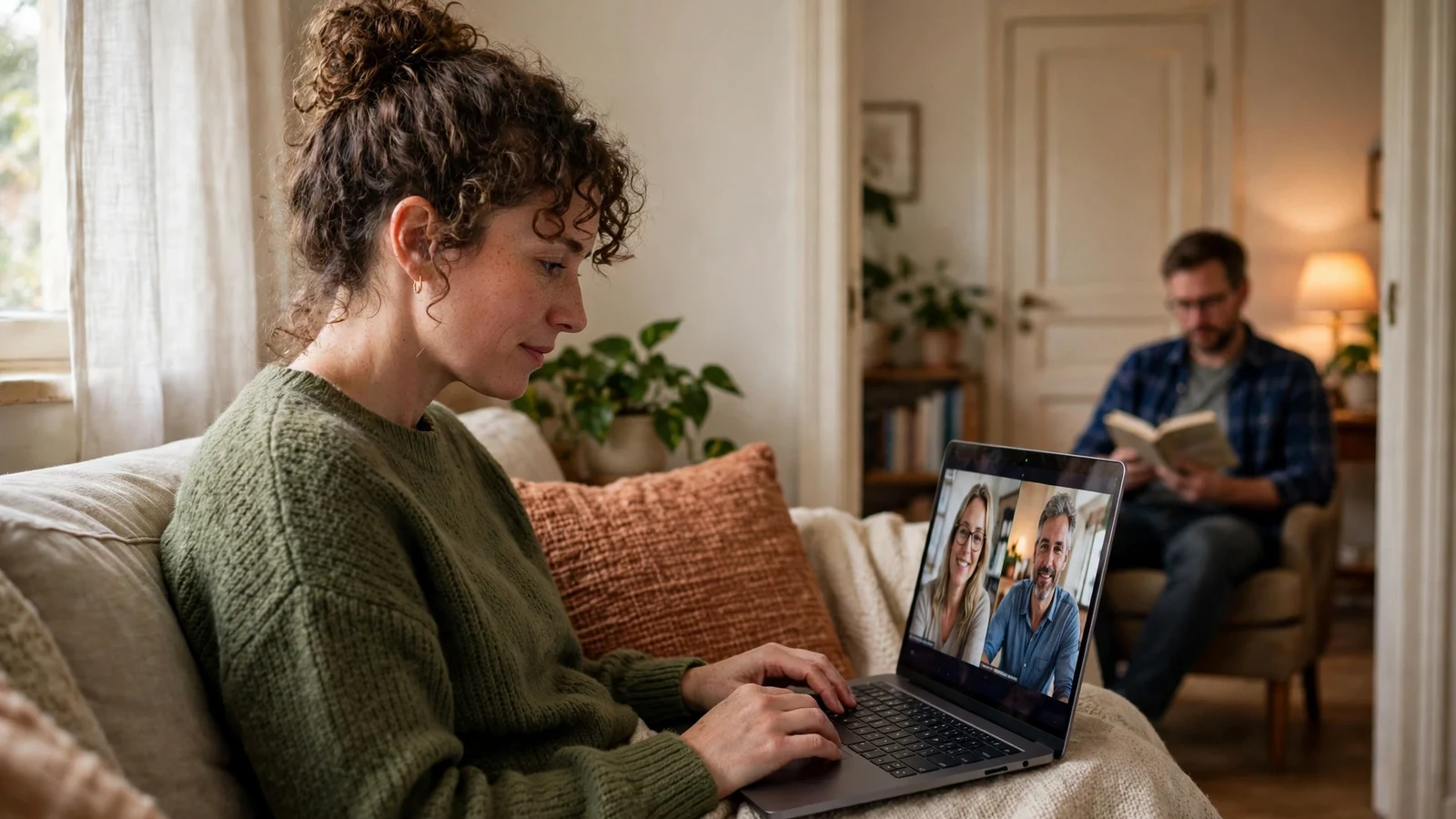
Solo therapy helps one person understand their own patterns, calm their own reactions, and speak more clearly. That is real help, and many couples get further because one partner did that work. But some problems only show up when both partners are in the same conversation. A wife who sounds calm in her own session can still shut down the moment her husband raises his voice. A husband who practices listening skills alone can still fall back into old habits when his wife brings up money. The therapist in a solo session only ever hears one side of the story, told after the fact, and the couple’s actual dance stays offstage.
Couples work puts the dance onstage. Both partners talk, both get heard, and the therapist sees what happens between them in real time. That is the difference that matters, and it is the reason every option below is judged by one question first: are both partners in the session together, or is one of you working alone?
If you are still deciding between solo help and joint help, marriage counseling vs couples therapy lays out how the two kinds of help differ in practice, and alternatives to couples therapy covers the wider set of options beyond online platforms, including books, workshops, and community support.
Side by side: the couples options

| Option | Format | Both partners in the session | Live therapist | Free tier | Long-distance fit |
|---|---|---|---|---|---|
| BetterHelp (solo baseline) | Online messages and video with a licensed therapist | No, one person at a time | Yes | No | Good for one partner anywhere |
| Regain | Online couples therapy from BetterHelp | Yes, both partners join the same sessions | Yes | No | Good, both partners can join from different places |
| Talkspace couples therapy | Online couples therapy with a licensed therapist | Yes, both partners join the same sessions | Yes | No | Good, both partners can join from different places |
| OurRelationship | Self-guided online program couples work through together, with optional coach support | Yes, built for both partners together | No, coaches are not required to be licensed therapists, per the program’s own site | No | Good, fully online and self-paced |
| Lasting | Couples app with guided sessions and exercises | Yes, both partners use it together | No, app-based guidance | Limited free content, full program paid | Good, built for phones |
| Paired | Couples app with daily questions and short exercises | Yes, both partners answer together | No, app-based | Limited free content, full access paid | Good, built for phones |
| In-person couples therapy | Weekly sessions in a therapist’s office | Yes, both partners in the room | Yes | No | Poor, both partners must be in the same town |
Read the table with your own situation in mind. A couple living in the same house with a flexible schedule has different needs than a couple in two cities, or a couple who can afford one month of help but not six. The right choice is the one that fits your life, not the one with the longest feature list.
A note on cost: every provider above changes its prices, and some show different prices by region or by plan. That is why this article prints no dollar amounts. Check current pricing on the provider’s own site, and check whether your insurance covers any of it before you commit. Regain’s own site states it does not take insurance. For the rest, ask the provider directly, and do not take a review site’s word for coverage.
For a deeper look at how online couples therapy compares with sitting in a room with a therapist, alternatives to couples therapy walks through the trade-offs in plain terms.
Who this is for, and who it is not for
This comparison is for couples who want to work on the relationship together, in the same session, and who are weighing online options against in-person help. It is for couples in different cities, couples with odd schedules, couples who tried solo therapy and found it only went halfway, and couples who want a lower-cost starting point, like an app or a self-guided program, before committing to weekly sessions.
It is not for couples in crisis. If one partner is unsafe, if there is abuse, coercion, addiction that needs treatment first, or thoughts of harming yourself or someone else, an app or a self-guided program is the wrong tool. Those situations need a licensed professional, promptly, and in person where possible. The red-flags box below has numbers to call.
It is also not for couples who need a diagnosis or a treatment plan for a mental health condition. Online therapy platforms can help with a lot, but they are not a replacement for an evaluation by a clinician who can see you, take a full history, and coordinate care. If either of you has a condition that needs treatment, start with a doctor or a licensed therapist, and use the options above as a complement, not a substitute.
If this, choose that

Situation verdicts beat general advice, because two couples asking the same question can need opposite answers.
If you are in two different cities, choose Regain or Talkspace. Both are built for video sessions with both partners joining from different places, and both use licensed therapists. Check current pricing on each site, then pick the one whose format feels easier. The best platform is the one you will actually show up for.
If one of you has already tried BetterHelp solo and liked it, choose Regain. It is the same company, the same style of platform, and the step from solo to couples is short. You already know how the messages and video work, and your partner joins the same kind of sessions with you.
If money is tight and you want to start small, choose Paired or Lasting. Both are apps, not therapy, so go in with clear eyes about what they can do. They give a couple shared questions and short exercises, which is a real start, and they cost far less than weekly sessions. If the app helps you talk more, it did its job, and you can step up to live therapy when you are ready.
If you want structure without weekly appointments, choose OurRelationship. It is a self-guided online program the two of you work through together, at your own pace, with optional coach support. The program describes itself as built on relationship research, and that claim belongs to the program, not to this article. If you want a live licensed therapist in the room, this is not that, and you should pick Regain, Talkspace, or in-person help instead.
If you want the deepest help and you live in the same town, choose in-person couples therapy. A therapist in the room sees body language, hears tone, and catches the small moments a video call flattens. It costs the most and takes the most scheduling, and it is also the option most likely to catch what the others miss. Marriage counseling vs couples therapy can help you sort out what to ask a local therapist at the first call.
If you are choosing between two named approaches, like Gottman and emotionally focused therapy, Gottman method vs emotionally focused therapy compares them side by side, so you can pick by your pattern rather than by a brand name.
Red flags: when you need a professional now
Stop shopping for platforms and get help promptly if any of these are true.
If you feel unsafe at home, or your partner threatens you, call the National Domestic Violence Hotline at 1-800-799-7233, or text “START” to 88788. If you are in immediate danger, call 911.
If you are thinking about harming yourself, call or text 988 in the United States, any time, day or night. The 988 Suicide and Crisis Lifeline is free and confidential.
If one partner has an addiction that is driving the fights, or a mental health crisis is unfolding, contact a doctor, a licensed therapist, or an emergency service first. An app cannot hold a crisis, and a self-guided program cannot keep anyone safe. Get a professional involved, then come back to the options above once the urgent need is covered.
Regain’s own site states it declines some high-risk situations, and the other platforms have their own limits. That is not a flaw in the platforms. It is a sign that some situations need a higher level of care than a screen can give.
Exact words to say
Bringing up couples help is delicate, and the wrong sentence can sound like blame. These sentences keep it joint.
To raise the idea at all, try this. “I have been thinking about us getting some help together, not because anything is broken, but because I want us to talk better. Would you look at a couple of options with me?” That sentence makes it a shared project, and it gives your partner a real choice.
To explain why solo help did not go far enough, try this. “My own sessions helped me, and I still feel like the two of us need a room together, so a therapist can see how we talk to each other.” That sentence honors the solo work and names what is missing.
To pick between two options together, try this. “Regain is the couples side of BetterHelp, and Talkspace has a couples option too. Can we both read one page each and then decide?” That sentence splits the homework and keeps the decision joint.
To start small with an app, try this. “Before we pay for sessions, can we try a couples app for two weeks and see if it gets us talking?” That sentence lowers the stakes, sets a time limit, and makes the next step easy to say yes to.
To say no to an option that does not fit, try this. “That one is not right for us, and here is why, and here is the one I would rather try.” That sentence is honest without being dismissive, and it keeps the conversation moving toward a choice.
Frequently asked questions
Is BetterHelp for couples, or just for individuals?
BetterHelp itself is built for individual therapy, one person and one therapist. Its couples route is Regain, a separate service from the same company, where both partners join the same sessions. If you sign up for BetterHelp expecting couples sessions, you will get solo therapy instead, so pick Regain if you want to be in the room together.
Are couples therapy apps a real substitute for therapy?
No, and the honest apps do not claim to be. Paired and Lasting give a couple shared questions, exercises, and guided sessions, which can improve daily conversation and help a couple spot patterns. They do not diagnose, they do not treat, and they do not replace a licensed therapist. Treat them as a starting point or a complement, and step up to live therapy when the problems need a professional.
How much does online couples therapy cost?
It varies by provider, by plan, and by region, and prices change often. That is why this article prints no dollar amounts. Check current pricing on each provider’s own site, ask whether your insurance covers any of it, and confirm what a subscription includes before you sign up. If a review site quotes a price, treat it as a starting point, not a promise.
Sources
- Regain, BetterHelp’s couples therapy service: https://www.regain.us/
- BetterHelp: https://www.betterhelp.com/
- Talkspace couples therapy: https://www.talkspace.com/online-therapy/couples-therapy
- OurRelationship, self-guided online program for couples: https://www.ourrelationship.com/
- ChoosingTherapy, BetterHelp alternatives roundup: https://www.choosingtherapy.com/best-online-therapy/betterhelp-alternatives/
- HelpGuide, BetterHelp review: https://www.helpguide.org/mental-health/therapy/betterhelp-review
- National Domestic Violence Hotline: 1-800-799-7233, https://www.thehotline.org/
- 988 Suicide and Crisis Lifeline: call or text 988, https://988lifeline.org/
So, which fork fits your situation, the app you can start tonight, the video sessions from two cities, or the therapist’s office down the street? Tell us in the comments, if you are willing. Your answer might help another couple pick the door that fits them.
Keep Reading
If this hit home, these might too:
- Marriage Counseling vs Couples Therapy
- Alternatives to Couples Therapy
- Regain vs BetterHelp
- Gottman Method vs Emotionally Focused Therapy
Going through something similar?
Share your experience anonymously with the Ever After Daily community. Every story is read by a human editor before anything is published.
Share Your Story


