The Couple Who Still Holds Hands at 70
At seventy, they still hold hands on the same walk every morning. Why it never stopped, whose hand reaches first, and the years it mattered most of all.

The Couple Who Still Holds Hands at 70
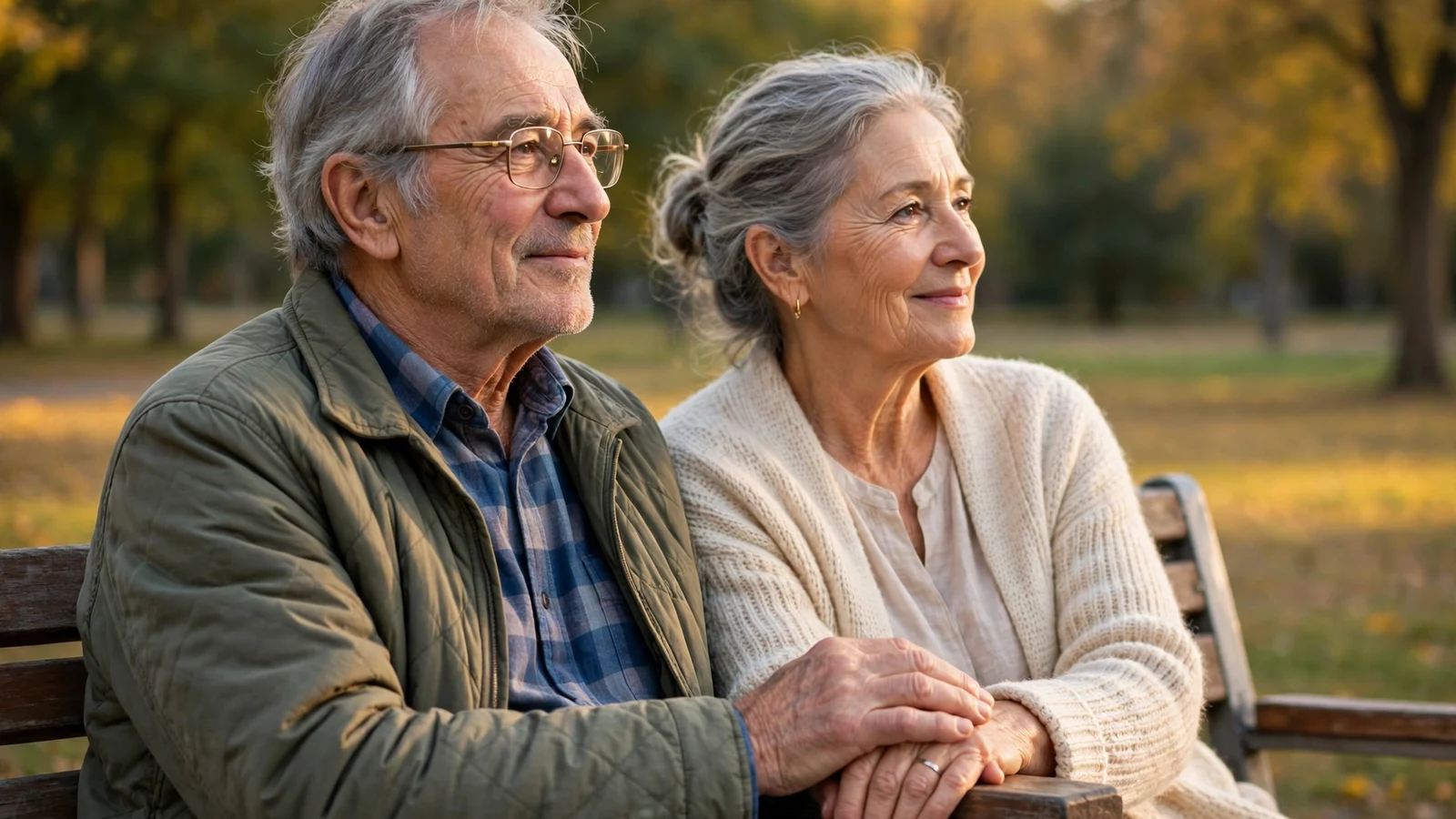
Every morning at eight, rain or shine, they come down the front steps and turn left at the corner, the same way they have for forty years. He is seventy-three now, and she is seventy, and they walk slower than they used to. They stop at the bench by the pond. They wave at the mailman. And the whole way, they hold hands.
Not the polite kind of hand-holding, where two hands hang loose and barely touch. The real kind, fingers laced, his thumb over the back of her hand, the way young couples hold hands when they are still new. People in the neighborhood notice. The woman at the corner house told me once, “I watch for them every morning. If I see them holding hands, I know it is going to be a good day.” It is a small thing, and it is also the whole story.
The walk: same route, slower now
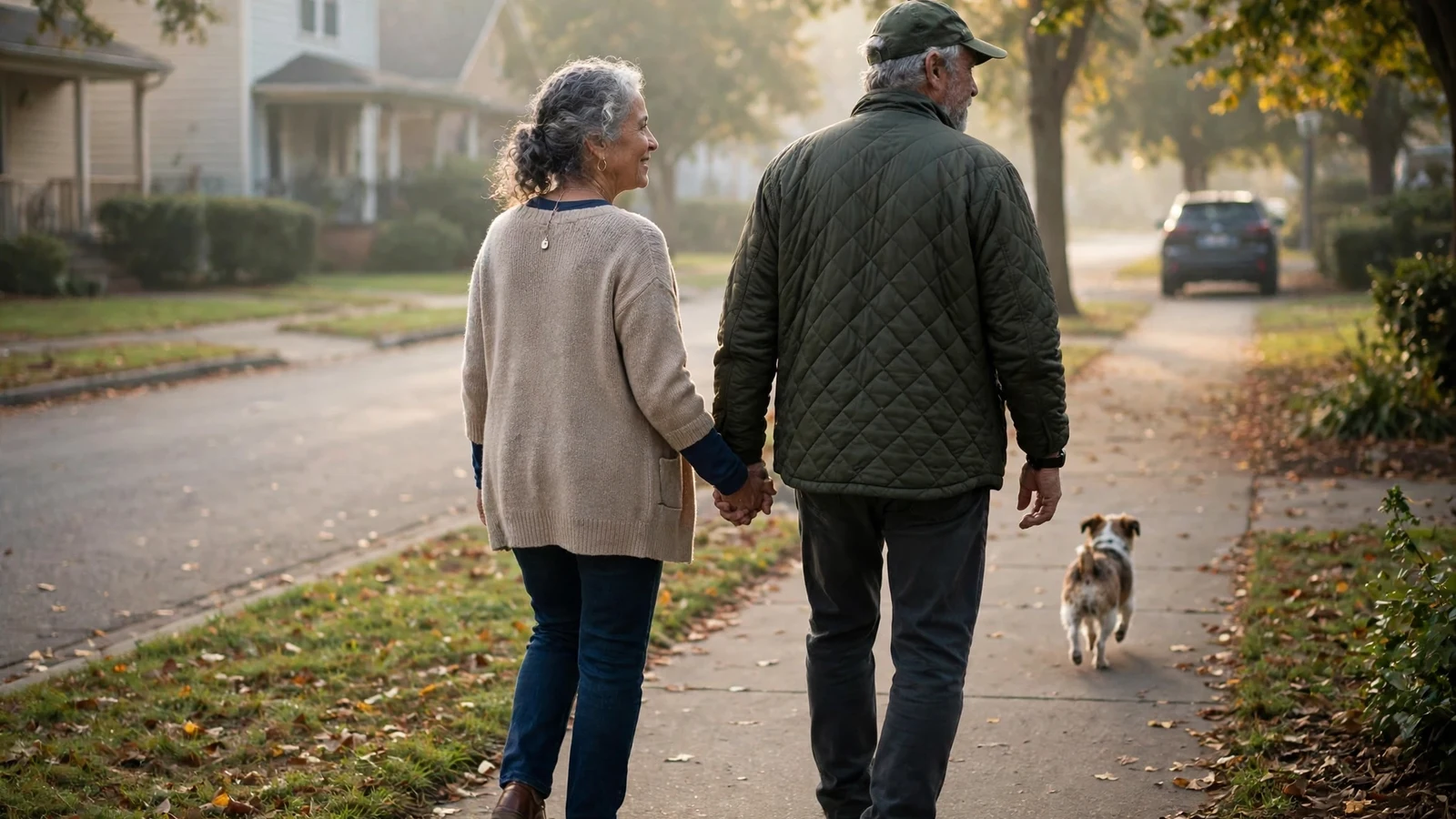
The route has not changed in forty years. Out the front door, left at the corner, past the house with the red door, down to the pond, around it once, and home again. It takes twenty minutes now. It used to take twelve. They do not mind. The walk was never about the exercise. It was about the twenty minutes, or the twelve minutes, when the two of them were alone together and the day had not started yet.
The walk has seen everything. It saw them the morning after their daughter was born, when they walked slow and quiet because they were both still stunned. It saw them the year money was tight, when the walk was free and the coffee at home was the treat. It saw them the spring he lost his job, when they walked farther than usual because neither of them wanted to go back inside and face the quiet. And it saw them last winter, when she slipped on the ice and he caught her, and they stood there on the sidewalk laughing, because falling down at seventy is funny only when someone you love catches you.
The route is the same, but the pace has changed, and so has the reason. At thirty, they walked to start the day. At seventy, they walk to hold on to it. The bench by the pond is new, or rather, it is not new, it is just the first time they have needed to sit on it. They sit for a minute, and they look at the ducks, and then they get up and walk home. The walk is shorter now. The hand-holding is not.
A short evening walk does the same work in a different hour: it gives a couple a place to be together with nothing to fix and nowhere to be.
Whose hand reaches first
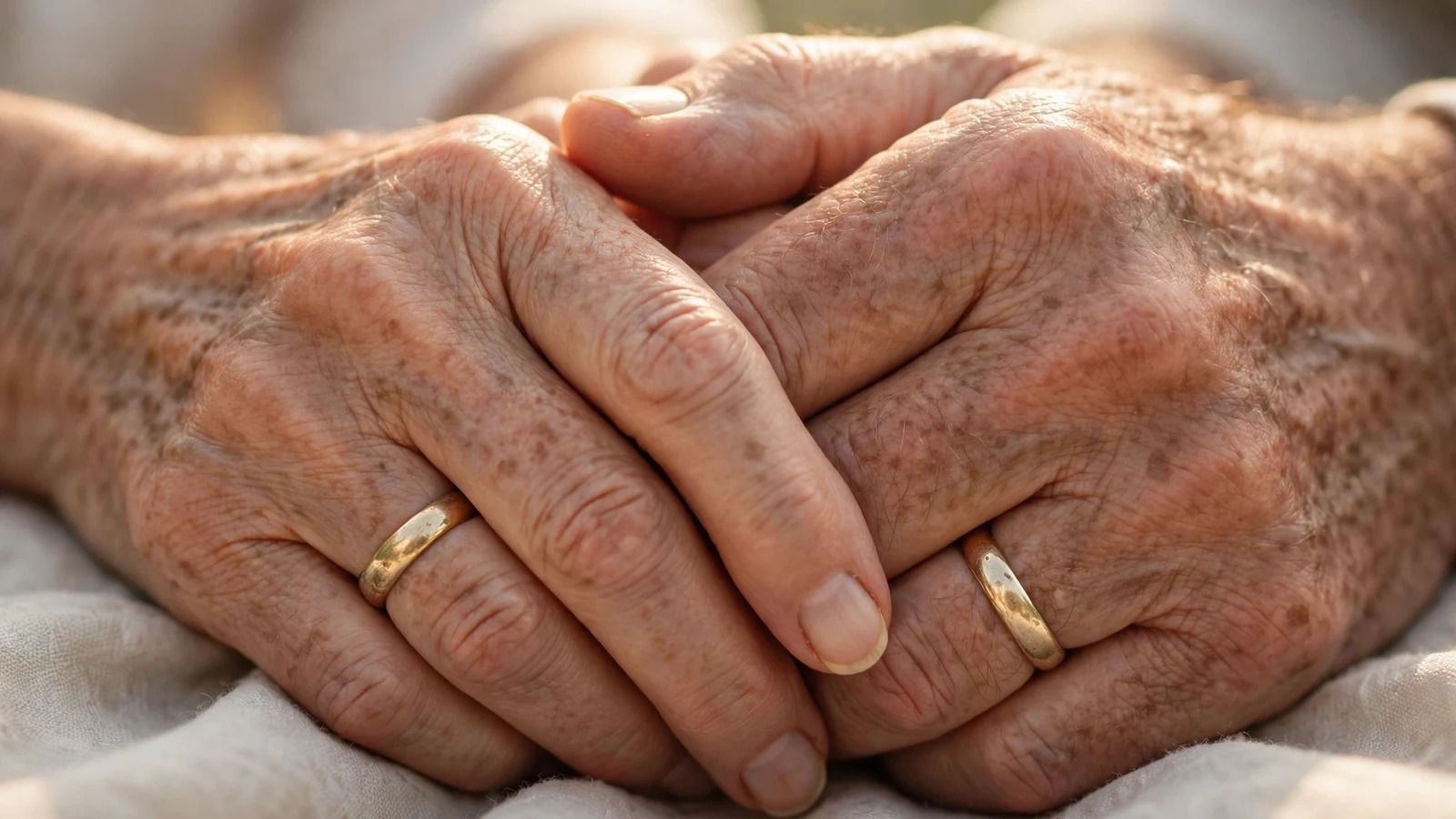
Ask them, and they will disagree. He says it is her. She says it is him. The truth is that it changes, and it always has. On cold mornings, it is him, because her hands get cold first and he has always known it. On the mornings after a hard night, it is her, because she reaches for him first when she needs to know he is still there. On ordinary mornings, it is whoever gets to the bottom of the front steps first, and the other one meets them halfway.
That is the part nobody tells you about holding hands for fifty years. Two people take turns, without keeping score. Some years he needed it more. Some years she did. The hand that reaches first is the hand that needs the other one that morning, and the hand that gets reached for is the one that answers. After fifty years, neither of them has to think about it. The hands just find each other, the way they always have.
There was a year, once, when the hands stopped finding each other. It was the year of the big fight, the one about the house and the money and the move, and for three weeks they walked the same route without touching. She told me later that those three weeks felt longer than the whole year. Then one morning he reached for her hand at the bottom of the steps, and she let him take it, and neither of them said a word about it. The walk went back to normal that day. Not because the fight was over, but because the hands came first, and the words could wait until the hands had done their work.
If your hands have drifted apart, reach first. Do not wait for the other one to reach. Do not make a speech about it. Just reach, at the bottom of the steps, or across the couch, or in the car at a red light. The hand that reaches first is not the weaker hand. It is the braver one.
The years it mattered most

Every couple has a year when holding hands mattered more than all the other years put together. For them, it was the year she got sick. Not the big kind of sick, but the kind that takes months, the kind with appointments and waiting rooms and results that come back slow. That year, they held hands in every waiting room in the county. They held hands in the car on the way home from the appointments, when there was nothing to say and everything to feel. They held hands at night, in bed, when the house was dark and the worry was loud.
She got better. That is the good part, and they both know how lucky they were. But the year left a mark on the hands, not a scar, but a habit. After that year, the hands never stopped reaching. The walk got slower, and the hands got surer. The doctors said she was fine, and the hands said the same thing, in their own language: I am here, you are here, we are still going.
The years it mattered most were not the easy years. They were the hard ones, the years when a hand in yours was the only thing that made sense. The year the money ran short. The year the kids left. The year her mother died, and his father, and the funerals came two months apart. In every one of those years, the hands did the talking when the words ran out. A couple that watches the sunset from the same spot every evening knows the same truth: it is the small habit, kept for years, that carries a marriage through the years that try to break it. The couple who watches the sunset learned it on a bench at the top of a hill. This couple learned it on a walk around a pond.
So here is the whole secret, and it is not a secret at all. Hold hands. On the walk, on the couch, in the car, in the waiting room. Hold hands when it is easy, and hold hands when it is hard, and hold hands most of all in the years when you need it and cannot say so. Fifty years from now, someone will watch you from a window and think, “I want that.” And you will not even notice, because your hand will be busy holding the one it has always held.
Frequently asked questions
Is it ever too late to start holding hands again?
No. It is never too late. Start small, on a walk or on the couch, and do not make a speech about it. A hand offered without words is easier to take than a hand offered with an explanation. Give it a week of quiet tries before you decide it did not work.
What if my spouse pulls away when I reach for their hand?
Then do not push it, and do not take it as a rejection of you. Some people pull away because they are not used to being touched, or because they are tired, or because the moment feels strange. Try again in a different place, a different hour, without a word about the first try. If the pulling away keeps happening, ask gently, in a calm moment, what touch feels good to them and what does not.
Does it have to be a walk, or can it be anywhere?
Anywhere works. The walk is only the excuse. The couch works, the car works, the kitchen works while the coffee brews. What matters is the regular moment, the one that repeats, so the hand has a place to land every day.
When was the last time you held your spouse’s hand, just because? Tell us in the comments, if you are willing. Your answer might send another couple out for a walk tomorrow morning.
Going through something similar?
Share your experience anonymously with the Ever After Daily community. Every story is read by a human editor before anything is published.
Share Your Story