The Coffee Shop That Became Our Second Living Room
Every morning, the same table, the same orders, the same regulars who know your names. How a couple’s neighborhood coffee shop became their second living room.
The Coffee Shop That Became Our Second Living Room
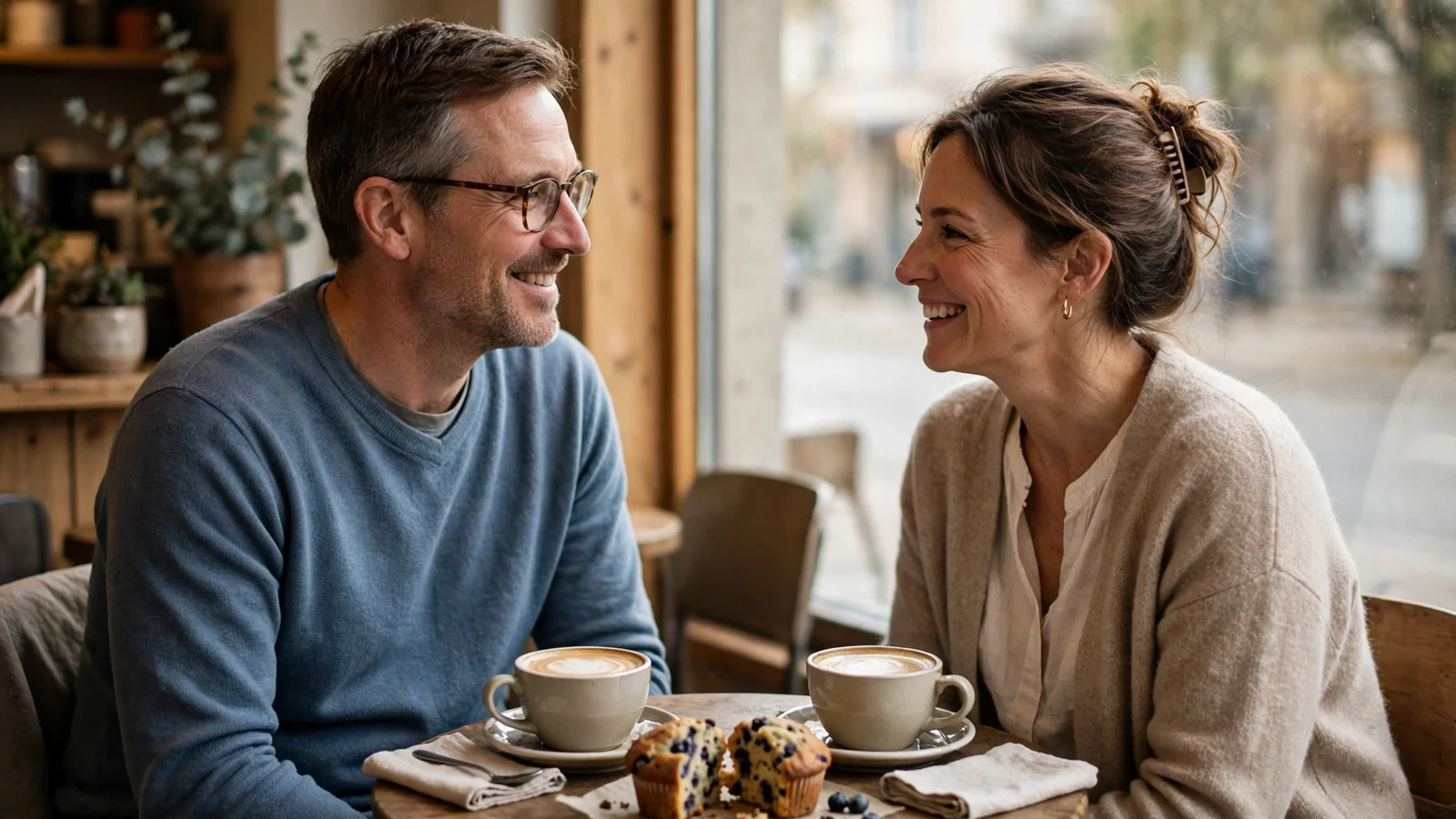
Every morning at seven-fifteen, give or take five minutes, we walk into the same coffee shop on the corner, and the bell over the door rings the way it always does. Maya is already behind the counter, and she has our order started before we reach the register. Two flat whites, one with oat milk, one regular, and a blueberry muffin cut in half, because we split one every morning and have done so for three years. She does not ask. She just nods toward our table, the one by the window with the wobbly leg, and says, “Your spot is free.”
That table is our second living room. We have had some of our best conversations there, and some of our hardest ones too, in low voices over cooling coffee while the morning rush swirls around us. We have planned vacations at that table, talked through a job offer that would have moved us across the country, and sat in comfortable silence on the mornings when there was nothing to say and nowhere else we wanted to be.
It did not start out that way. The first time we walked in, it was just a coffee shop, one of four within walking distance of our apartment. We picked it because the line was short. We stayed because of the people.
The usual table

The usual table is not the best table in the shop. The best table is the big one in the back, near the outlet, where the laptop people camp all day. Ours is small, round, and by the front window, with one leg that wobbles unless you fold a napkin under it. The chairs are mismatched. The sunlight hits it hard at eight in the morning and fades by nine. It is ours because we sat there on a Tuesday three years ago, and then again on Wednesday, and by Friday, Maya was saving it for us without us ever asking her to.
There is a rhythm to it now, and the rhythm is the point. We arrive, we order, we sit, and for twenty minutes the day has not started yet. No email, no errands, no list of things that need fixing around the apartment. Just two cups, a split muffin, and the street waking up outside the window. Some mornings we talk the whole time. Some mornings we read the paper and trade sections across the table. The coffee is good, but the coffee is not the reason we come. We come because for twenty minutes, the world is small and quiet and ours.
Couples who guard a small morning ritual like this one know what it does for a marriage. It is the same idea as the morning coffee ritual that starts the day as a pair instead of as two people rushing past each other, and it works because it is daily, ordinary, and easy to keep.
The regulars


A coffee shop is only a room with chairs until the regulars make it a place. Ours has a whole cast, and we know them the way you know neighbors, in small pieces that add up to something warm.
There is Ray, seventy-four, who arrives at seven sharp with the crossword folded under his arm and orders black coffee, no sugar, in the same chipped mug he has used for years. He does the crossword in pen, which still impresses us, and he saves the sports page for my husband, sliding it across the table without a word. There is Priya, who runs the bakery two doors down and stops in for a cortado before her ovens heat up, flour still on her apron, and who once brought us a whole loaf of sourdough on the morning we told her we were getting married. There is Tom, the night-shift nurse, who comes in at dawn after his shift with tired eyes and orders a large latte and a cinnamon roll, and who always asks how my husband’s back is doing, because he remembers the week my husband could barely stand up straight.
The small kindnesses are the whole story. Maya remembers that I take oat milk and that my husband does not, and she remembers it on the mornings when I forget to say it. Ray holds our table when we are running late, just by sitting at it and telling newcomers, “That one is taken, those two are coming.” Priya leaves a day-old croissant in a paper bag on our table with a note that says “for the road.” Nobody makes a big deal of any of it. That is what makes it a big deal.
We know their orders the way they know ours. Ray’s black coffee. Priya’s cortado. Tom’s latte and cinnamon roll. Knowing someone’s order is a small thing, but it is also a way of saying you notice them, you remember them, and you are glad they showed up today. In a city where most people pass each other without a word, a room full of people who know your order is a rare and gentle thing.
The morning the shop was closed

One Tuesday in February, we walked up to the shop and the lights were off. A handwritten sign on the door said “Closed today. Family emergency. Sorry, friends.” We stood on the sidewalk holding our travel mugs, staring at the sign like it had personally betrayed us. It was only a coffee shop, and it was only one morning, but we felt genuinely lost, the way you feel when a plan you did not know you depended on suddenly disappears.
We went home and made coffee in our own kitchen, and it tasted fine, and the morning felt wrong anyway. The coffee was never the point. The point was the table, and Maya’s nod, and Ray doing his crossword in pen, and Priya with flour on her apron. Without the shop, we were just two people drinking coffee in a quiet apartment, and the quiet was the lonely kind instead of the comfortable kind.
That was the morning we understood what the shop had become. It was not a habit. It was a small community, and we were part of it, and it was part of our marriage. The next morning, the lights were on again, the bell rang the way it always does, and Maya looked up from the counter and said, “You two look lost without us.” She was right. We were. And when we sat down at our usual table, Ray slid the sports page across without a word, and the morning was right again.
A marriage needs places like that, places outside the house where you belong together. Couples who unplug for the first hour protect the same kind of space at home, and the coffee shop is the version of it that lives out in the world, with other people in it. You do not need a lot of places. One is enough, if it is the right one.
Frequently asked questions
What if our town has no coffee shop like this?
It does not have to be a coffee shop. Any place with regular hours, regular faces, and a reason to show up will do the same work: a diner, a library, a bakery, a park bench where the same dog walkers gather. The place matters less than the pattern. Show up at the same time, sit in the same spot, learn one name, and the rest grows from there.
How long does it take for a shop to feel like yours?
Longer than a week, shorter than you think. A few weeks of showing up at the same time is usually enough for the staff to learn your order and for the other regulars to start nodding at you. The feeling of belonging comes from repetition, not from a single grand gesture, so the only real requirement is that you keep coming back.
What if my partner does not want a morning ritual?
Ask what part of it they resist. Some people hate mornings, and a coffee shop at seven in the morning sounds like a punishment. Try a different time, an afternoon coffee, a Saturday pastry run, a Sunday walk to the same place. The ritual is the shared hour, not the hour on the clock, and a version that fits you both will last longer than a version one of you dreads.
So, do you have a place like this, a table or a counter or a corner that feels like yours? Tell us in the comments, if you are willing. We would love to hear about the regulars who know your order.
Going through something similar?
Share your experience anonymously with the Ever After Daily community. Every story is read by a human editor before anything is published.
Share Your Story