Couples Who Take Up a Hobby Together in Their Second Act
The house is quiet, the calendar is yours, and you need one thing to do. How couples pick a hobby, survive being bad at it, and find the one that sticks.

Couples Who Take Up a Hobby Together in Their Second Act
The house goes quiet, the calendar opens up, and one day you look at each other across the table and realize you have free time. Real free time, the kind you have not had in twenty years. No practices to drive to, no games on Saturday, no permission slips on the fridge. Just an evening, and a weekend, and the two of you, wondering what to do with them.
That is when a hobby starts to sound like a good idea. Not a chore, not a project, not another thing on the to-do list. A hobby is the opposite of all that. It is something you do because it is fun, because it is yours, because the two of you picked it together and nobody is grading the result.
The couples who take up a hobby together in their second act are not trying to fill a hole. They are trying to build something new in the space the kids left behind, and a hobby is the smallest, happiest way to do it. It gives the week a shape, it gives the two of you something to talk about besides the house, and it gives you a reason to laugh at yourselves on a regular basis. Which, after twenty years of being serious about everything, is exactly what a marriage needs.
Picking it, one try each
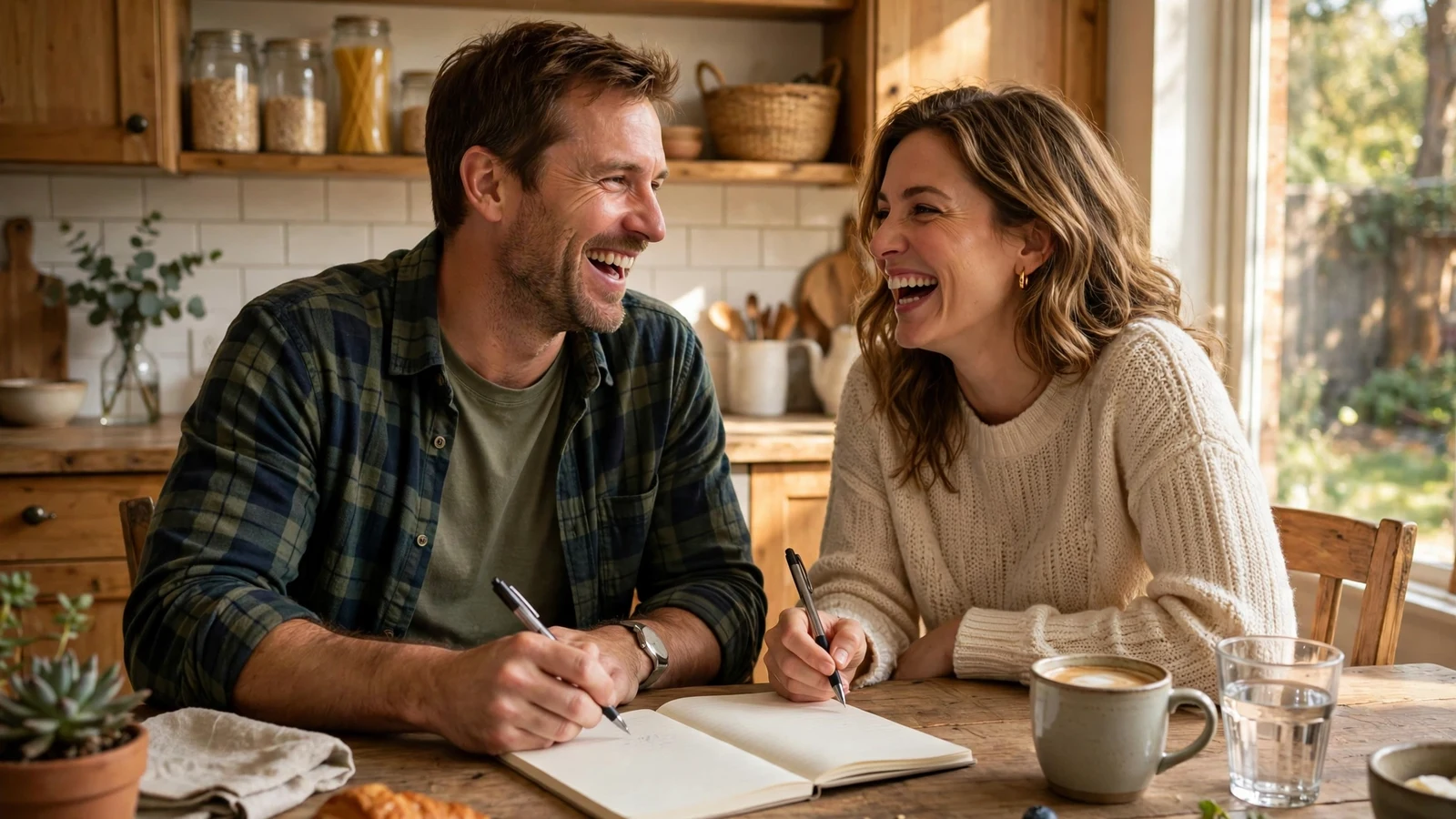
Picking a hobby together starts with a rule, and the rule is simple: one try each, and no veto on the first try. Each of you picks one thing to try, and the other one has to show up and give it a fair shot. No eye-rolling, no “that is not my thing” before you have even tried it. One try, together, and then you decide.
The list can be anything. Pottery, with clay under your nails and a wheel that will not do what you tell it. A cooking class, where you burn the first batch and eat the second one anyway. Gardening, with a patch of dirt and a packet of seeds and no idea what will grow. Photography, with a walk around the neighborhood and a hundred pictures of the same tree. Dancing, with two left feet and a teacher who has seen it all before. The hobby does not matter nearly as much as the picking does, because the picking is the part where you learn what your spouse actually wants to try, and that is worth more than the hobby itself.
Say this when you sit down to pick, out loud, before anyone names a hobby: “You pick one, I pick one, and we try both before we say no to either.” That sentence keeps the choice fair. Nobody gets to be the one who always decides, and nobody gets to be the one who always gives in. You each get a turn, and the hobby you end up with is something you both chose, not something one of you dragged the other into.
Some couples pick fast, in one conversation over dinner. Some take a week, writing ideas on a piece of paper stuck to the fridge, crossing off the ones that make them laugh and circling the ones that make them curious. Either way works. The point is not to pick the perfect hobby. The point is to pick something, and to start. A hobby you actually try beats a perfect hobby you only talk about, every single time. A weekly check-in is a good place to keep the list alive; a simple weekly check-in gives the two of you one evening a week to compare notes on what worked and what did not.
Bad at it together


Here is the part nobody tells you about a new hobby: you will be bad at it. Both of you. At the same time. And that is the best part.
The first pottery class ends with two lopsided bowls and clay on your elbows. The first dance lesson ends with stepped-on toes and a teacher saying, “Again, from the top,” in a voice that is far too cheerful. The first garden bed ends with seeds planted upside down and a row of nothing where the carrots were supposed to be. If you wanted to be good at something, you would have picked something you already knew how to do. A hobby is for being bad at something together, and laughing about it on the drive home.
Being bad at it together does something good for a marriage. It puts you both on the same level, at the same time, in a way that daily life rarely does. At home, one of you is better at cooking and the other is better at fixing things, and the split is so old you do not even notice it anymore. In a pottery class, neither of you knows anything, and the teacher treats you both like beginners, and the bowls come out lopsided in exactly the same way. That shared clumsiness is a gift. It reminds you that you are a team, not a pair of experts, and that the fun is in the trying, not in the result.
Do not quit after the first bad session. The first session is always the worst, and it is also the funniest, if you let it be. Give it three tries before you decide. Three classes, three walks with the camera, three evenings in the garden. By the third try, your hands start to remember what to do, and the laughs get easier, and the hobby starts to feel like yours. If it still feels like a chore after three tries, let it go and pick the next thing on the list. There is no shame in quitting a hobby. The shame would be in never trying one. The couples who stay close through the learning curve are often the same ones who keep choosing each other in small daily ways, and a shared hobby is one of those ways.
The hobby that stuck
Every couple has a story about the hobby that stuck, and the story is never about the hobby itself. It is about the Tuesday night it became a habit, or the Saturday morning it became the thing they look forward to all week, or the moment they realized they had gotten good enough to enjoy it without thinking about it.
For some couples, it is the garden. They started with one raised bed and a packet of seeds, and now the back yard has tomatoes in the summer and a compost pile that one of them tends like a pet. They argue about watering, they brag about the zucchini, they bring bags of vegetables to the neighbors. The garden is not about the food. It is about two people who go outside together every evening and check on something they grew.
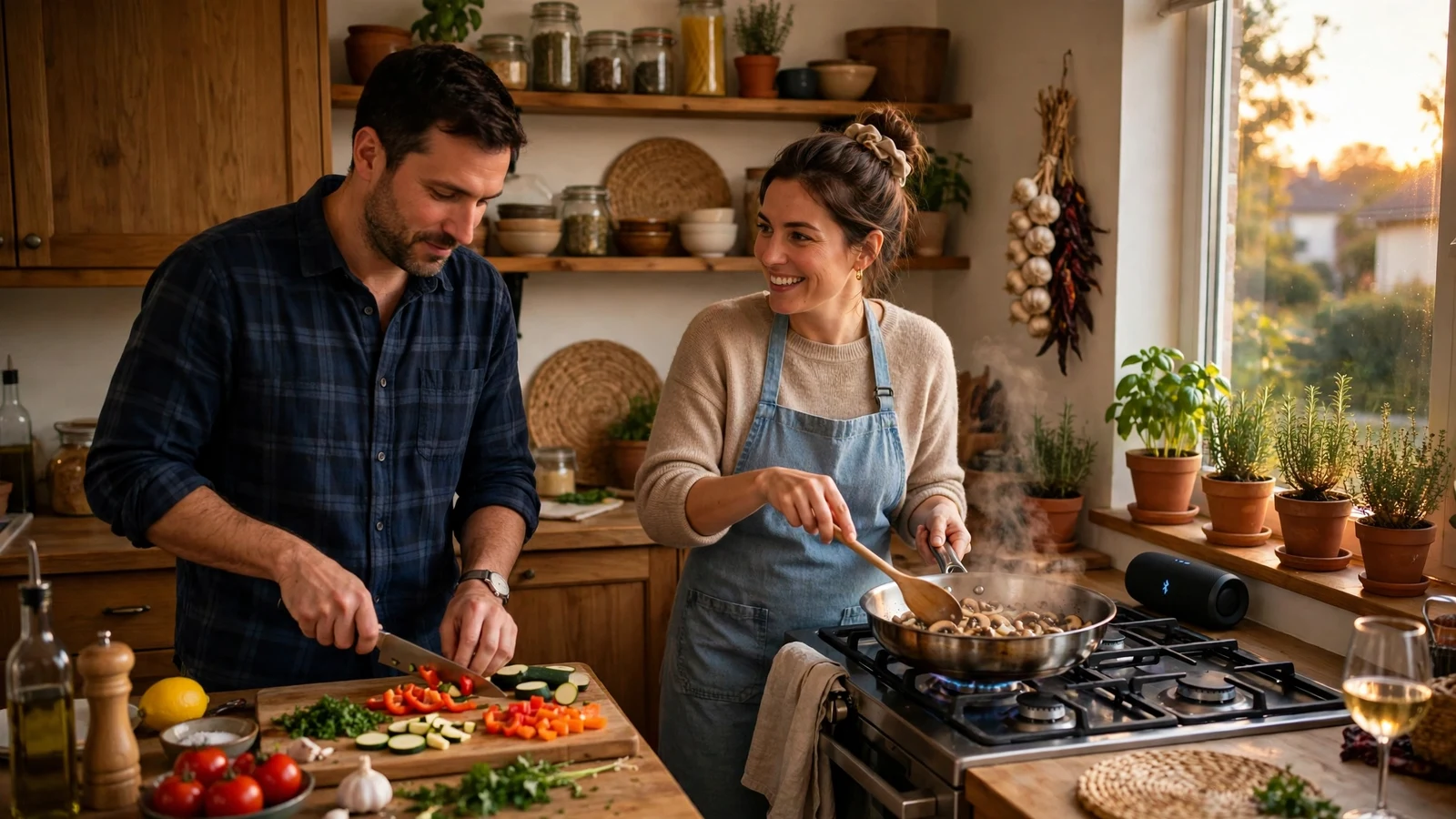
For others, it is the kitchen. They took one cooking class and kept going, one new recipe a month, one cuisine at a time, until the spice rack outgrew the cabinet and Friday night became the night they cook together, with music on and the phones in the other room. The food is good now, most of the time, but the real recipe is the evening itself: two people, one cutting board, and a meal they made together.
And for some, it is the walk. They bought two cheap cameras, or they just started walking with their phones, and now they walk the same loop every morning, taking pictures of the light, the trees, the neighbors’ dogs, and each other. The walk is the hobby, and the pictures are the proof, and the morning belongs to them in a way it never did when the mornings belonged to school runs and packed lunches. A slow walk after dinner can grow into the same kind of habit; an after-dinner walk is how many couples turn a hobby into a daily ritual without even trying.
The hobby that sticks is the one that fits your life, not the one that looks best on paper. It is the one you still want to do on a tired Tuesday, the one you miss when you skip a week, the one that makes you laugh and talk and forget to check the time. When you find it, protect it. Put it on the calendar. Guard the evening it lives on. A hobby that sticks is more than a pastime. It is a small piece of the second act that belongs to the two of you, and nobody else.
Frequently asked questions
What if we cannot agree on a hobby to try?
Use the one-try-each rule, and try both picks before either of you says no. Most couples find that the hobby they resist at first becomes the one they enjoy most, because the fun is in doing it together, not in the hobby itself. If both picks fail, pick again. The list is longer than you think.
What if one of us is much better at it than the other?
Let the better one teach, and let the other one learn at their own speed, without a scoreboard. A hobby is not a contest. The couple that enjoys it most is usually the one where the better partner cheers the other one on instead of keeping count. If the gap bothers you both, pick a second hobby where you start even.
How much should a new hobby cost?
Start cheap. A used camera, a community class, a packet of seeds, a borrowed guitar. Spend the small money first, and only spend more once the hobby has survived three tries and a month on the calendar. The best hobbies in a second act are often the ones that cost almost nothing and give back a whole evening a week.
What hobby did you and your spouse try together, and which one stuck? Tell us in the comments, if you are willing. Your answer might put the exact idea another couple needs on their fridge tonight.
Going through something similar?
Share your experience anonymously with the Ever After Daily community. Every story is read by a human editor before anything is published.
Share Your Story