Couples, Separate and Shared Hobbies That Work
Too much togetherness can crowd a marriage, and too much time apart can starve it. One shared hobby plus one separate hobby each keeps a couple close.

Couples, Separate and Shared Hobbies That Work
Every couple runs into the same quiet question sooner or later: how much of life should we do together? The answer matters more than most people expect, because hobbies are where a marriage gets its texture. They are what you talk about at dinner, what fills a Saturday, what gives you something to look forward to besides errands and work. Get the balance wrong and the house starts to feel either crowded or empty, sometimes both in the same week.
The good news is that the balance does not need a spreadsheet or a negotiation worthy of a peace treaty. It needs one shared hobby you both enjoy, one separate hobby each that belongs to one person alone, and a little protection around both. That shape, one shared and one separate, gives a couple something to do together and something to bring home to talk about.
The everything-together trap

The everything-together trap usually starts with good intentions. A couple falls in love, merges friend groups, takes up the same gym class, watches the same shows, and slowly stops doing anything apart. At first it feels romantic. We do everything together. Then, quietly, it starts to feel small. One partner gives up a hobby because the other is not interested, then another, until the calendar has no entry that belongs to just one person.
Sarah learned this the slow way. She loved painting, big messy watercolors on the kitchen table, but her husband Mark did not paint, so she stopped setting up the table. She told herself it was easier to do things together. Within a year she had less to talk about at dinner, less energy for the things they did share, and a low-grade irritation she could not name. She had not lost her marriage. She had lost a piece of herself inside it, and the marriage felt thinner for it.
The trap is sneaky because togetherness looks like closeness from the outside. But closeness built on one person quietly dropping what they love is not closeness. It is accommodation, and accommodation kept up for years turns into resentment. A partner who never gets an evening to themselves starts to feel like a supporting character in someone else’s week. That feeling does not arrive with a fight. It arrives with a sigh, on a Tuesday, when someone realizes they cannot remember the last time they did something purely because they wanted to.
If you recognize this pattern, do not panic and do not blame each other. Most couples slide into it without meaning to, especially in busy years with small kids or long commutes. The fix is not to pull apart. The fix is to hand each person one evening back.
The nothing-together trap
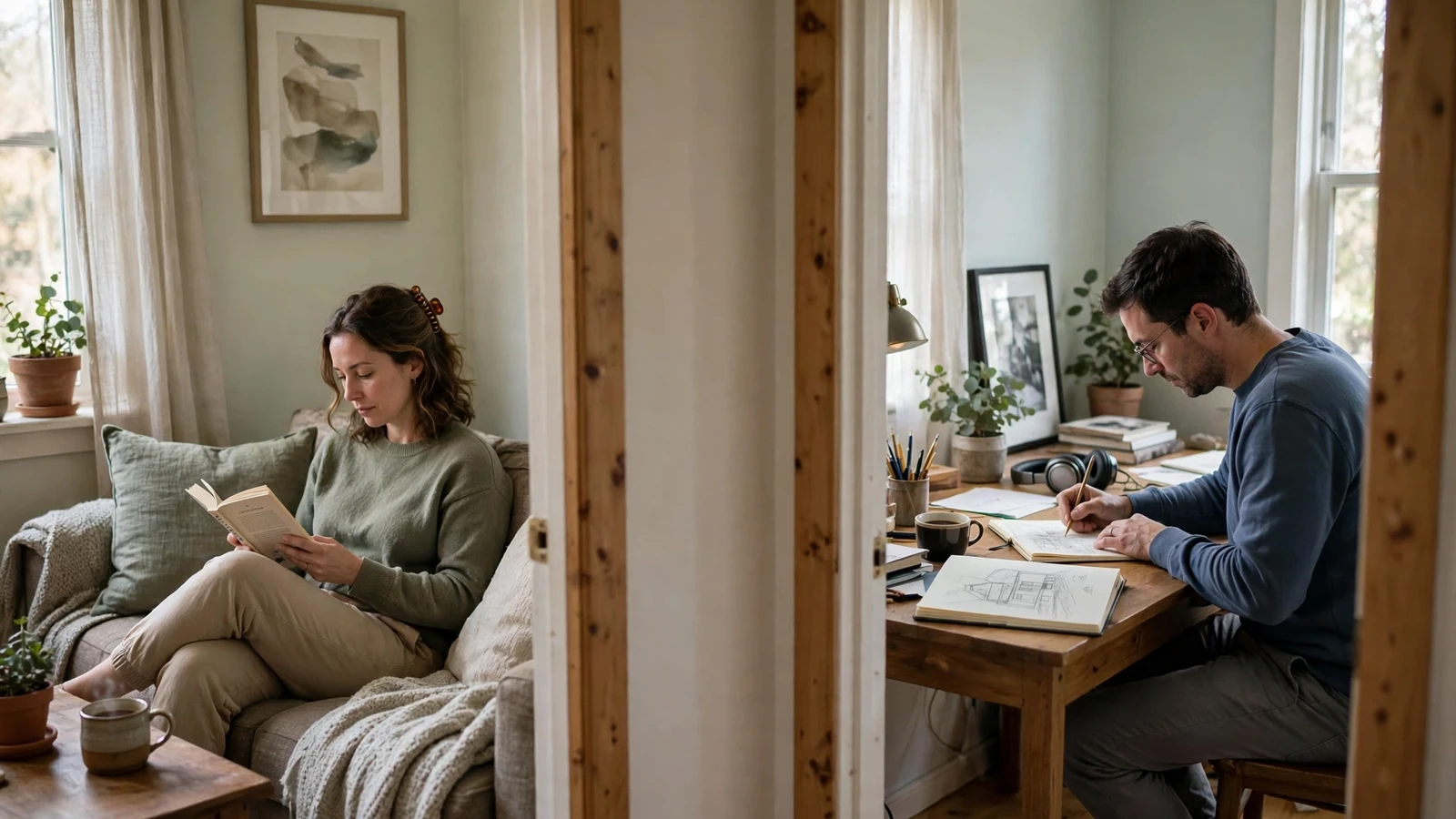
The opposite trap looks like freedom and feels like distance. Two people keep full separate lives: separate gyms, separate friends, separate shows, separate Saturday plans. Nobody fights about hobbies, because hobbies never overlap. But over time, the shared life thins out. Dinner conversation turns into schedule updates. Weekends pass in parallel, in the same house, like polite roommates who happen to share a bed.
Mark and Sarah hit this version too, after they overcorrected. Sarah went back to painting, Mark went back to weekend cycling, and for a while it felt wonderful. Then Sarah noticed they had not done anything together, just the two of them, in almost a month. They were both happier alone than they had been, and lonelier together than either wanted to admit. Separate hobbies had fixed the crowding. They had not fixed the marriage.
Drift is harder to notice than crowding, because nothing is actively wrong. There is no argument to point to, no single bad night. There is just a growing stack of evenings where each person entertained themselves, and a growing sense that the other person is becoming a stranger who knows your coffee order. Couples in this trap often say they are fine, and mean it, right up until one of them says, “I miss you,” and both of them realize they have been in the same house all along.
The warning signs are small and worth watching for: you stop telling each other the details of your day, you choose your phone over the couch, you plan weekends without checking with each other first. None of these alone means trouble. Together, over months, they mean the shared thread is fraying, and shared threads need regular mending.
The one-shared-one-separate rule

The rule is simple enough to fit on a sticky note. Each partner keeps one separate hobby that is theirs alone. Together, the couple keeps one shared hobby they both enjoy. That is it. One shared, one separate, each protected.
A shared hobby does not need to be grand. It needs to be something both people actually look forward to, not something one person tolerates while the other leads. Cooking a new recipe together on Fridays, walking the same trail on Sunday mornings, a puzzle on the kitchen table that stays out all week, a show you watch only together and never alone. The form matters less than the feeling: this is ours, we both chose it, and we both miss it when a week slips by without it.
The shared hobby works best when it has a regular slot, because regular beats ambitious every time. A couple who walks together every Sunday morning will get more out of it than a couple who plans a grand monthly outing and cancels half of them. Put it on the calendar like an appointment, and treat it with the same respect. This is the same reason a weekly marriage check-in helps so many couples: a small habit, kept weekly, does more than a big gesture kept rarely.
Separate hobbies need a slot too, and they need the same respect. Sarah paints on Thursday evenings, door closed, table covered in newspaper, phone on silent. Mark cycles on Saturday mornings, back by lunch. Neither hobby is up for debate, and neither is treated as time stolen from the marriage. That last part matters. A separate hobby only restores a person if the other partner treats it as legitimate, not as an indulgence to be apologized for.
Choosing the shared hobby takes one honest conversation. Sit down and each name two things you would enjoy doing together, then pick the overlap, or try one for a month and see if it sticks. If nothing overlaps, pick something new to both of you, a class, a trail, a recipe book, so nobody feels dragged into the other’s world. New ground is fair ground.
How to protect a separate hobby without guilt

Guilt is the part nobody warns you about. The first time Sarah closed the painting room door, she felt selfish. The first time Mark left on a Saturday ride while the laundry sat unfolded, he felt lazy. Those feelings are normal, and they fade once the hobby proves its worth, once a partner comes home from their own evening a little brighter and a little easier to live with.
A few plain agreements make guilt easier to carry. First, agree on the time, and then defend it like any other commitment. “Thursday evenings are my painting time” is a clear sentence, and clear sentences are easier to keep than vague hopes. Second, handle the handoff before you go: kids covered, dinner planned, the house left in reasonable shape, so your evening does not hand your partner a second shift. Third, come home and tell a story about it. “I finally got the sky right on that watercolor” gives your partner a window into your evening, and that window is what turns separate time into shared conversation.
Exact words help when guilt shows up mid-week. Try saying, “I love our time together, and I also need Thursday to paint. Both of those are true.” That sentence does two jobs at once: it reassures your partner, and it states the need without apology. If your partner feels left out, invite them to watch once, or to share the finished thing, without inviting them to take over the hobby. Watching a painting dry is not the same as painting, and that distance is the point.
It also helps to link the separate hobby back to the shared life in small ways. Mark’s cycling stories became dinner conversation. Sarah’s paintings went up on the hallway wall, where both of them see them every day. A shared meal still anchors the week, and couples who eat dinner together often find that separate hobbies give them better stories to tell over that meal, not fewer.
Watch for one quiet warning sign: if a separate hobby starts eating every free evening, or if one partner’s hobby always wins while the other’s always waits, the balance has tipped again. The rule is one shared and one separate, not one partner’s life and the other’s leftovers. A short, kind check-in fixes most tilts before they harden: “Are we both still getting our evening? Is our shared thing still happening?” Couples who keep asking that question rarely drift far in either direction.
Frequently asked questions
What if we do not share any interests?
Start with something new to both of you, so neither person feels like a guest in the other’s hobby. A beginner cooking class, a walking trail neither of you has tried, a puzzle, a garden bed, a show you start together from episode one. Shared interests are often built, not found. Give a new thing four honest tries before deciding it is not yours. Many couples discover a shared hobby by accident, on the third try, when they finally relax enough to enjoy it.
How much separate time is too much?
There is no number that fits every couple, but there is a test that works: does the separate time leave you with more to bring home, or less to share? If you come home brighter, with stories and energy, the amount is working. If weekends pass without a single shared hour, or if one partner regularly feels lonely in their own house, the balance has tipped. Talk about it early, while it is still a small adjustment, not a big complaint.
What if my partner resents my separate hobby?
Ask what the resentment is really about, because it is rarely about the hobby itself. Often it is about an uneven load at home, or about feeling left out, or about a shared hobby that quietly died. Say, “Help me understand what feels unfair about Thursdays, and we will fix that part.” Then fix the load or rebuild the shared time, and keep the hobby. A marriage needs both people whole, and wholeness needs room.
So here is the question to take to dinner tonight: what is one thing you would love to do together, and what is one thing each of you would love to do alone? Tell us in the comments, and tell us the exact words you used when you asked for your own evening back. Another couple reading this might borrow your sentence tonight.
Keep Reading
If this hit home, these might too:
Going through something similar?
Share your experience anonymously with the Ever After Daily community. Every story is read by a human editor before anything is published.
Share Your Story