How to Forgive Your Spouse Without Forcing It
Forgiving a spouse rarely arrives in one moment. This guide walks through anger that lingers, the decision you remake, and what repair asks of you both.

How to Forgive Your Spouse Without Forcing It
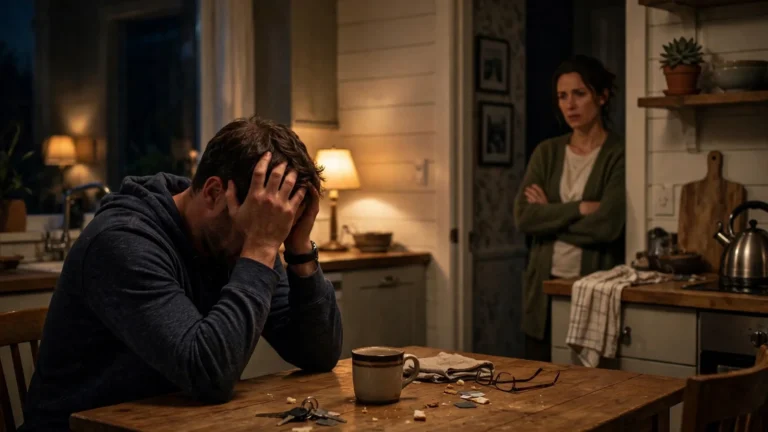
Nobody tells you what to do with the week after you say “I forgive you.” The words come out late at night, raw or just tired, and for a moment the whole thing feels closed. Then Wednesday arrives and you are still angry about Saturday, and guilt shows up right behind the anger, because you already said the words. So now you are angry and ashamed of being angry, which is a terrible combination.
I have been there. If you are searching for how to forgive your spouse at midnight, you probably are too. What I have learned, in my own marriage and in every honest conversation I have had about this, is that forgiveness almost never works the way we were told it works. Forget the single moment of release. What actually happens is a decision you make, and then remake, sometimes daily, for a while, until one day you notice you have not remade it in weeks.
The myth of the single moment

We grow up on the movie version: one tearful speech, one swelling soundtrack, cut to the couple laughing over breakfast. Real forgiveness is slower and far less photogenic. There is the night you decide, and then there is the month your feelings catch up to the decision. Both count. The decision is the real part.
Expecting one clean moment sets a trap. Every time anger returns, you conclude you failed at forgiving. You did not. When anger returns, take it as a sign the work is still underway, not as proof you failed.
What forgiveness actually is
Here is what it looked like in my house. Two years ago my husband repeated something I had told him in confidence, a worry about money, as a joke at his brother’s barbecue. Everyone laughed. I smiled with a face that felt like it might crack. He apologized that night, and he meant it. I said I forgave him, and I meant it too. And then for the next three weeks, I replayed that laugh every time I was alone in the car.
That is what forgiveness actually is. The decision was made on barbecue night. The work was the three weeks after: each time, choosing not to build a case out of the memory. Forgiveness is deciding, over and over, that the hurt gets a smaller vote in how you treat the person who caused it.
The anger timeline: why anger outlasts the decision

Anger runs on its own schedule and it does not check yours. In my experience it comes in waves: sharp the first days, quieter for a stretch, then one random Tuesday at the grocery store it is back at full volume because something small rhymed with the original hurt. That is normal. It does not mean you lied when you said you forgave.
What matters is the direction of the wave. Anger that shrinks over weeks is forgiveness doing its job. If the anger is louder in week six than in week one, that is information, not failure. It usually means something is still unresolved: a need you have not named, or a repair that never happened. The practice below is built for exactly that.
The 4-part practice

This is the part nobody gives you. Four steps, in order, each one concrete.
1. Name the hurt precisely
Vague anger cannot be repaired. “You always disrespect me” gives your spouse nothing to work with and gives you nothing to release. Sit down alone first and finish this sentence: “I am hurt because you ___.” One sentence. Mine was: “I am hurt because you turned something I told you in private into a joke for other people.” When you can say it that plainly, you know what you are actually forgiving. So does he.
2. Decide what repair you need, and say it
An apology names the past. Repair builds the future, and most couples skip it entirely. Ask yourself what would make this hurt less likely to happen again, or less heavy right now. Then say it out loud, plainly. Here are words you can borrow:
“I don’t need another apology. What would help me let this go is knowing it won’t happen again. Next time I tell you something in confidence, I need you to keep it between us, even as a joke.”
Be specific and be fair. “Never embarrass me again” is a vow no one can keep. “Keep my private worries private” is a promise a good man can make.
3. Set the check-in date
Forgiveness feels endless when it has no horizon. Give it one. Pick a day, a week or two out, and agree to talk about it once, briefly. Words to use: “Can we talk about this again next Sunday? Not to fight about it. I just want to check where I am with it, and I want you to know I’m working on letting it go.”
The check-in does two things. It tells your spouse the door is open, and it tells your own brain there is a plan. Often that is all the anger needed to start standing down.
4. Stop prosecuting the old case
This is the hardest one. After a real apology and real repair, there is a line between processing and prosecuting. Processing asks for something new. Prosecuting just wants the other person to feel bad again, so the old hurt gets dragged into every new disagreement.
My rule for myself: I can mention the old hurt again only if I need something new from it, something I can say out loud. “I want you to feel bad” is a sentence, not a need, and saying it never made me feel better anyway.
What forgiveness is not
Forgiveness does not mean forgetting. You will remember the barbecue. The goal is a memory that informs you, not one that ambushes you.
Forgiveness does not mean trusting instantly. Trust rebuilds on evidence, slowly, and on its own schedule. If trust is the part that broke, read how long it takes to rebuild trust alongside this one, because the two run on different clocks.
Forgiveness does not mean dropping your boundaries. You can forgive someone and still say “that can never happen again.” Boundaries are how forgiveness survives contact with real life.
The honest caveat: forgiveness does not require staying

Everything above assumes a marriage worth repairing. I want to say this plainly: forgiving someone and staying with them are two separate decisions. You can forgive a spouse who hurt you at betrayal level, an affair, a long pattern of lying, and still decide the marriage cannot continue. Forgiveness is about your freedom. Staying is about the relationship’s future.
And if the hurt is at betrayal level, do not try to work through it with a blog post alone. A good counselor, one trained in couples work, can hold what an article cannot. I am not a therapist, and nothing here is treatment. It is one woman’s honest map of the territory.
Frequently asked questions
How long does it take to forgive your spouse?
There is no standard timeline, and anyone who gives you one is guessing. In my experience, small hurts resolve in days once repair happens. Deeper ones take weeks or months of the decision being remade. The sign you are moving is not the absence of anger. It is anger arriving less often and leaving sooner.
Can you forgive your spouse without an apology?
Yes, and sometimes you have to, because the apology you need is never coming. Forgiving without an apology is harder, because you do all the work alone, and it helps to name that. What you cannot do is skip the repair. If nothing changes, forgiveness becomes a performance, and performances do not last.
Does forgiving mean everything goes back to normal?
No. It means you stop living in the worst day. What comes after is not the old normal. It is a new one, built on what you both learned. Some couples say the new normal is better. Nobody I trust says it arrived quickly.
What if I forgave but the anger keeps coming back?
Then something is unfinished, usually an unnamed need or a missing repair. Go back to step two and ask yourself what you have not said yet. If you have said everything and the anger still will not move after months, that is worth bringing to a counselor. It is not a sign you are bad at forgiving.
Now I want to hear from you, because this is the part no article can write for you. What are you trying to forgive right now, and which part is hardest: naming the hurt, asking for the repair, or stopping the prosecution? Leave a comment. Tell it straight. Someone reading this at midnight needs to know she is not the only one still working on it weeks later.
Keep Reading
If this hit home, these might too:
- how long it takes to rebuild trust
- what forgiveness feels like
- how to apologize after a fight
- rebuild trust after lying
Going through something similar?
Share your experience anonymously with the Ever After Daily community. Every story is read by a human editor before anything is published.
Share Your Story