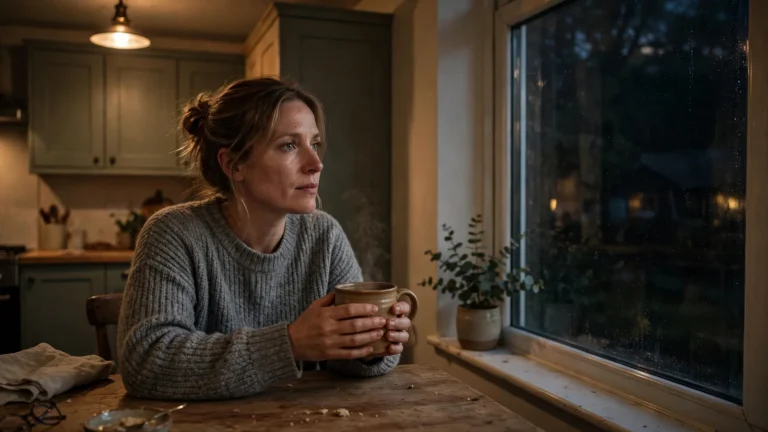
Why Do I Feel Lonely Even Though I’m Married? 9 Possible Reasons
Feeling lonely in marriage even with your spouse beside you? 9 reasons explain married loneliness — plus how to say it out loud and 7 small ways back.

You can sleep next to someone every night, share the same bills, raise the same children, and still feel completely alone.
That’s the sentence I wish someone had said to me years ago — plain, no sugar on it. Because if you’re reading this, you’ve probably been carrying that exact loneliness around like a secret. You’re married. You have a person. And yet, in the quiet moments — brushing your teeth side by side, sitting on opposite ends of the couch, lying awake while they snore softly — there’s a hollow feeling that doesn’t make sense on paper. You’re not supposed to feel alone when someone’s right there.
But you do. And I want you to know two things right away: you’re not crazy, and you’re not the only one. This is one of the most quietly common experiences in marriage, and almost nobody talks about it out loud — which is exactly why it feels so lonely.
Let’s talk about why it happens, what to do about it, and when to get help.

Is It Normal to Feel Lonely in a Marriage?
Yes — more normal than anyone admits at dinner parties.
Marriage promises companionship, but a wedding certificate doesn’t automatically deliver emotional closeness. Life intervenes. You get busy, you get tired, you get efficient. You start functioning like a well-oiled household machine, and somewhere in the middle of all that functioning, the part where you actually feel each other goes quiet.
Loneliness in marriage doesn’t usually arrive with a crisis. There’s no dramatic moment. It’s the slow fade — the week you stopped telling each other about your days, the month the couch got wider, the year you realized you feel more understood by your best friend or your sister than by the person you married.
Here’s the important distinction: feeling lonely doesn’t mean your marriage is failing. It means something in the connection needs attention. Loneliness is a signal, not a verdict. It’s your heart’s way of saying, “I signed up for more than this.”
And no — it doesn’t mean you’re ungrateful. You can love your spouse deeply and still feel lonely. Those two things live side by side in the same heart all the time.
9 Reasons You May Feel Lonely Even Though You’re Married
1. You stopped having meaningful conversations. Somewhere along the way, “how was your day?” became a formality you say while unloading the dishwasher. The real stuff — what you’re worried about, what you’re dreaming about, what scared you last week — stopped getting airtime. Without meaningful conversation, you’re sharing a house, not a life.
2. Most conversations are about responsibilities. When 95% of what you say to each other is logistics — the plumber, the permission slip, the grocery run — your brain starts filing your spouse under “operations manager” instead of “partner.” You can talk all day and still feel unheard, because nothing you said touched anything real.
3. You don’t feel emotionally understood. This is the big one for a lot of people. It’s not that you never talk — it’s that when you do, something gets lost. You say “I’m overwhelmed” and he says “it’ll be fine.” You tell her about the hard thing at work and she changes the subject to the kids’ dentist appointment. The message your heart receives: what I feel doesn’t land here. If your spouse never seems to really hear you, [when it feels like your husband never really listens](/my-husband-doesnt-listen-to-me/) might explain what’s happening in those moments.
4. Physical affection has decreased. Not just sex — the casual stuff. The hand on the back. The forehead kiss. The sitting-close-on-purpose. Physical affection is emotional connection made tangible, and when it fades, the loneliness gets a body. You start to feel untouchable in your own home.
5. One person is carrying more of the relationship. Maybe you’re the one who plans everything, initiates every conversation, remembers every birthday, suggests every date night. Over time, being the only one rowing starts to feel like being the only one in the marriage. Loneliness loves an unbalanced effort — because effort that isn’t met feels like shouting into an empty room.
6. Unresolved resentment has accumulated. The fight you never finished. The thing you swallowed three years ago. The pattern you stopped bringing up because bringing it up never changed anything. Resentment is loneliness with a grudge attached — it builds a wall between you, and then you feel alone on your side of it. Sound familiar? There are clear [signs of resentment in marriage](/signs-of-resentment-in-marriage/) worth checking before it hardens.
7. Work or parenting consumes your relationship. The marriage became the thing you do around everything else instead of the thing everything else supports. You’re co-workers in the family business. You’re business partners with great kids. But the “us” part — the part with no agenda — got scheduled out of existence.
8. You’re afraid to be vulnerable. This is the sneaky one, because it can look like everything’s fine. You’re cheerful. You’re capable. You never cry, never admit you’re scared, never say “I need you.” But vulnerability is the price of admission for closeness, and if you’ve stopped paying it, you’ve stopped getting the closeness. Sometimes the loneliest people in a marriage are the ones who look the most “together.”
9. You’ve slowly grown in different directions. Different shows. Different friends. Different interests. Different opinions about things that used to be easy. Nobody did anything wrong — you just drifted toward different shores, and one day you looked up and realized you can’t see each other across the water anymore.
What Does Emotional Loneliness Feel Like?

It’s not dramatic. That’s what makes it so hard to name.
It feels like being the only one awake in a house full of sleeping people. Like sending a text to a friend about something funny that happened because you know your spouse won’t find it funny. Like crying quietly in the shower so nobody has to ask what’s wrong. Like rehearsing conversations in your head that never happen out loud.
It feels like being a guest in your own marriage — polite, welcome, and somehow not quite home.
And the cruelest part: you can feel it most sharply when you’re physically closest. Holding hands at a restaurant and feeling nothing. Lying in the same bed, back to back, three feet of mattress feeling like three miles. That’s the loneliness that really gets you — the kind that proves closeness isn’t about proximity. It’s about being known.
If any of that sounds like your life right now, keep reading. This is fixable. Not always easily, not always quickly — but fixable.
How to Tell Your Spouse You Feel Lonely

This is the conversation most people dread, because “I feel lonely” sounds like an accusation even when you don’t mean it that way. Here’s how to say it so it lands as an invitation instead:
Lead with love, not blame. “I love you, and I miss feeling close to you” hits completely differently than “you never pay attention to me.” One opens a door. The other starts a trial.
Be specific about what you miss. Vague loneliness is hard for a spouse to act on. “I miss the way we used to talk on the porch after dinner” gives them something real to work with. Paint the picture of the closeness you want, not just the loneliness you feel.
Pick the right moment. Not bedtime, when you’re both running on fumes. Not during a fight. Not as a grenade tossed on the way out the door. After dinner, phones down, kids asleep — that’s your window.
Ask for one small thing. “Could we sit together for ten minutes tonight, no phones?” Small asks get yeses. Big speeches get defenses.
For the full playbook — exact scripts, timing, what to do when they get defensive — read [how to talk to your spouse about feelings without starting a fight](/talk-to-spouse-about-feelings/). It was written for exactly this moment.
7 Small Ways to Reconnect

You don’t need a grand gesture. You need small, repeated proof that you’re still in this together. Pick two or three and start this week:
1. The ten-minute check-in. Every night, ten minutes, no phones. Not about logistics — about each other. “What was the best and hardest part of your day?” It sounds almost too simple. That’s why it works.
2. Touch on purpose. A hand on the shoulder when you pass. A longer hug at the door. Sitting close enough that your knees touch on the couch. Physical affection is the shortcut back to emotional closeness.
3. Share something small before it’s old. Tell them the funny thing before you tell your group chat. Share the worry while it’s fresh. Being someone’s first audience is what closeness is made of.
4. Ask a question you’ve never asked. After years together, you’d think there’d be nothing left — but there always is. “What’s something you believed at 20 that you don’t anymore?” “What would you do with a totally free Saturday?” Curiosity is romantic. Never underestimate it.
5. Do one thing a week that’s just fun. Not productive, not for the kids — just fun. A bad movie, a drive somewhere new, dessert before dinner. Fun is the glue nobody talks about.
6. Say the quiet part out loud. “I miss us.” Three words. Terrifying to say, transformative to hear. Most lonely marriages are two people waiting for the other to say it first.
7. Remember what you used to do — and do a little of it. Not to relive the past, but to remind yourselves it was real. The porch coffee. The late-night talks. The inside jokes. You don’t have to go back to who you were. You just have to visit.
For a fuller roadmap when the distance has been there a while, here’s [how to reconnect with your spouse emotionally](/how-to-reconnect-with-your-spouse-emotionally/), step by step.
When Is It Time to Seek Outside Help?
Most loneliness in marriage responds to honest conversation and consistent small effort. But sometimes it doesn’t — and that’s not failure, that’s information.
Consider talking to a counselor if the loneliness has lasted months despite real effort. If every conversation about it collapses into the same fight. If there’s contempt in the room — eye-rolls, mockery, disgust — because contempt is the one thing couples can’t usually fix alone. If either of you feels persistently hopeless, flat, or unable to enjoy anything; a professional can help you understand what’s yours, what’s the marriage’s, and what’s something bigger that deserves its own support.
A counselor isn’t a last resort. It’s a shortcut — a neutral third person who can translate when you’ve both forgotten the language. The strongest thing a couple can do is ask for help before they’re sure they need it.
And if what you’re feeling has a roommate-flavored shape to it — efficient, polite, parallel — you might also recognize [the signs your marriage has slipped into roommate mode](/marriage-feels-like-roommates/). The two often travel together.
The loneliness test: three evenings that tell you what kind
Loneliness wears more than one shape, and the shape matters, because each shape asks for a different next move. You can learn a lot from a small test spread over three evenings. There is no score. You just pay attention on purpose and write down what you notice afterward.
Evening one is the quiet evening. Sit in the same room for twenty minutes with no phones, no television, and no task to finish. Notice what the quiet does. For some couples the quiet feels soft, like a room you both like being in, and the loneliness lives somewhere else, in the daytime hours when you never really talk. For others the quiet turns heavy fast. You start checking the clock, reaching for your phone, thinking of a chore you could be doing. That heaviness tells you something plain: you are not short on time together. You are short on ease together, and ease comes back through small shared routines, not through one long talk.
Evening two is the honest evening. After dinner, say one true sentence out loud. Keep it short, and keep it about you. Try this: “I have felt lonely lately, even with you right here, and I wanted you to hear that from me.” Then stop, and let him answer. Watch what happens next, because the answer tells you a lot. If he leans in and asks what you mean, you have a door that opens. If he goes quiet or turns it into a joke, you have learned that the next step is smaller still, one sentence at a time, not one large talk. If he gets defensive, that tells you the loneliness is tangled up with something unresolved, and the two of you may need help from outside the marriage to untangle it.
Evening three is the ordinary evening. Pick one small thing to do side by side. Fold laundry together. Take a short walk around the block. Make tea and drink it at the table instead of in separate rooms. Do not try to make it deep. Notice whether doing something together feels different from sitting together. Some people feel closest while their hands are busy, and if that is you, your loneliness may be less about talking and more about shared hours. A simple morning coffee ritual can do more for you than another long conversation, because it puts the two of you in the same hour every day, with nothing to solve.
When the three evenings are done, read your notes together and look for the pattern. If the quiet evening was the hard one, your next move is a shared routine that makes togetherness easy again, something like a morning coffee ritual. If the honest evening was the hard one, your next move is smaller and braver: one true sentence a day, said kindly, until saying it stops feeling dangerous. If the ordinary evening was the one that felt best, your loneliness is probably a shortage of shared hours, and the fix is calendar-shaped, not conversation-shaped.
One note of caution. If all three evenings feel flat, and the loneliness has lasted months despite real effort on your side, that is not a failed test. It is the clearest signal in this article that outside help is the honest next step. A counselor can hear what two tired people cannot hear in each other anymore, and asking for that help is not giving up on the marriage. It is refusing to let loneliness have the last word in it.
A weekly check-in gives these three evenings a place to live after the test is over. Ten minutes, once a week, phones down, where you ask each other how the week felt. It turns a one-time test into a habit, and habits are what carry a marriage through the weeks when feelings are harder to name.
FAQ
Can you love someone and still feel lonely? Absolutely. Love and closeness are different muscles — one can stay strong while the other weakens. Feeling lonely next to someone you love is one of the most common and most confusing experiences in marriage. It doesn’t make you ungrateful or broken.
Does loneliness mean my marriage is failing? No. Loneliness is a signal that the connection needs attention, not a verdict that the marriage is over. The marriages that fail are usually the ones where nobody noticed the loneliness — or nobody said it out loud.
Should I tell my husband I feel lonely? Yes — gently, specifically, and at a calm moment. Unspoken loneliness curdles into resentment. Spoken loneliness, said with love, is an invitation. Most spouses would rather hear “I miss you” than discover months later how alone you’ve been feeling.
Can emotional intimacy return? Yes. It comes back through small, repeated bids for connection — not one dramatic conversation. Ten honest minutes a day does more than one tearful weekend. Closeness is rebuilt in layers, and it starts the moment someone goes first.
How long does it take to reconnect? Honest answer: you’ll usually feel a shift within a few weeks of consistent effort, and something solid within a few months. It feels slow because you’re rebuilding trust in the small moments. But slow doesn’t mean stuck — it means it’s real.
—
So here’s my question for you: when was the last time you told your spouse you felt lonely — or is this the first time you’ve even admitted it to yourself? There’s no wrong answer. There’s just the next step.
You don’t have to fix your whole marriage tonight. You just have to do one small thing differently tomorrow. Ten minutes. One question. One honest sentence. That’s how closeness comes back — not all at once, but one brave little moment at a time.
Tell me in the comments: what’s the one small thing you’re going to try first? I read every one.
Going through something similar?
Share your experience anonymously with the Ever After Daily community. Every story is read by a human editor before anything is published.
Share Your Story