Questions for Couples That Make Long Car Rides Better
Silence and logistics talk can fill a long drive. These ten car-ride questions, grouped by memory, dreams, funny, and honest, turn miles into real conversation.

Questions for Couples That Make Long Car Rides Better
Something loosens in a car. You sit side by side, facing the road, with no dishes to wash and no screen asking for your eyes. The miles roll past, the radio stays low, and a conversation that would feel stiff across a dinner table suddenly feels easy. That is why a long drive is one of the best places for a couple to actually talk, if you can get past the usual fillers: gas stops, arrival times, and whether anyone needs a bathroom break.
The questions below beat those fillers. They are short, they invite a story instead of a yes or no, and they work best when you take turns, one question each, with room to follow up. You do not need to work through all ten in one trip. Pick two or three, let the talk wander where it wants to go, and save the rest for the drive home.
Why the car works
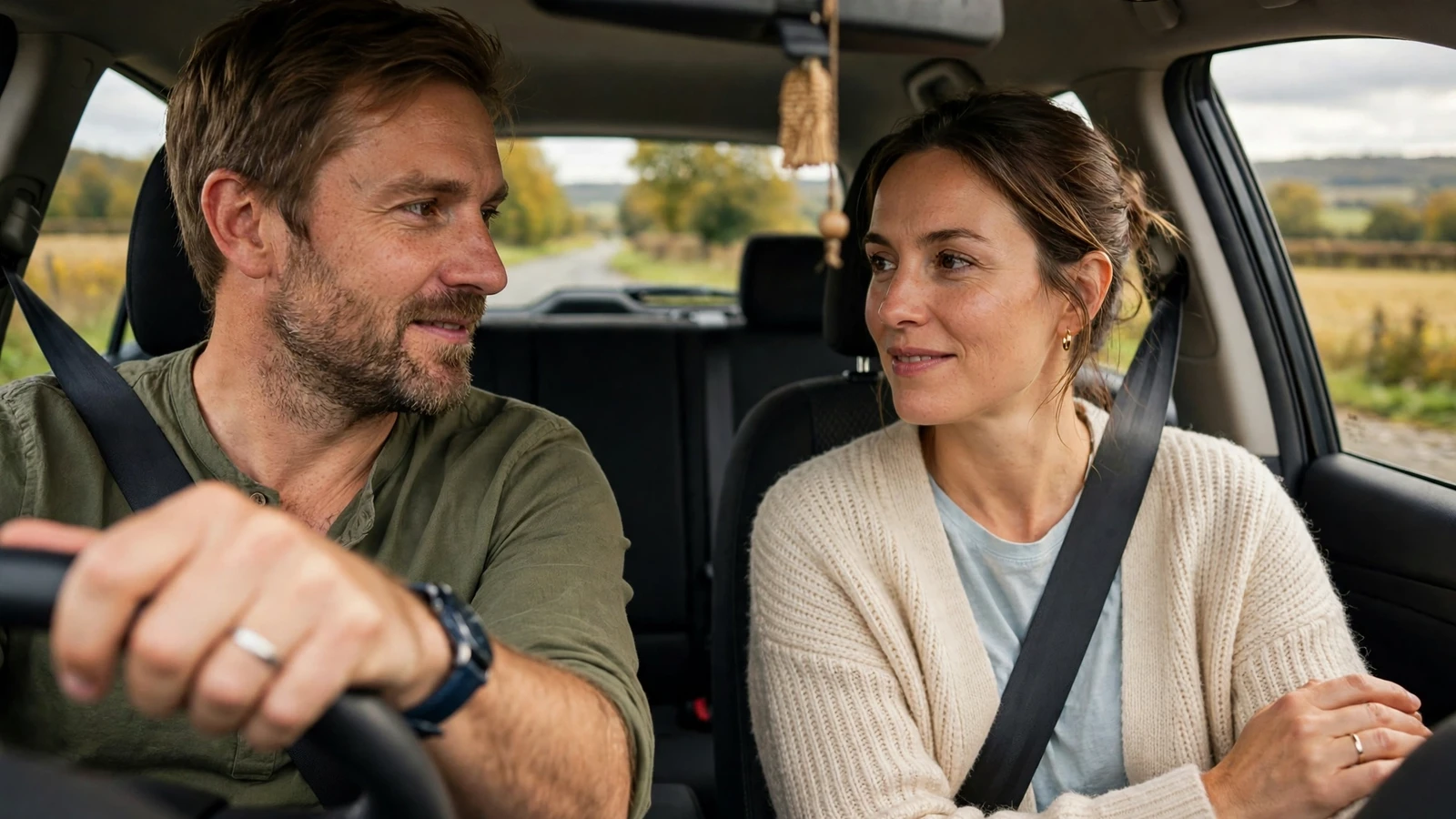
A car removes the two things that usually block a good talk: eye contact pressure and competing tasks. Sitting side by side feels safer than sitting face to face when a topic is tender, because neither person has to hold a gaze while they find the right words. At the same time, the driver has a job, watching the road, which gives the talk a relaxed pace. Pauses feel natural. Silence feels comfortable, not awkward, because the road fills it.
The car also gives you a shared stretch of time with a clear end. You know you have two hours, or four, until you arrive, and that boundary makes it easier to start a real topic. At home, a talk can be interrupted by laundry, a phone call, or a child asking for a snack. In the car, the interruptions are small, a gas station, a song you both love, and then you are back to the talk.
Use that setting well. Put phones away, or at least face down in the cup holder. Keep the music low enough to talk over. And let one person answer fully before the other jumps in with their own version. A car talk works when it feels like a conversation, not a quiz, so follow a good answer with “tell me more about that” instead of rushing to the next question.
A regular time to talk helps at home, too, between drives. Our guide to a weekly marriage check-in shows how a short standing talk keeps small topics from piling up between drives.
Questions about memory and dreams

Start with memory, because memory questions are warm and easy to answer. They let you both remember who you were before the mortgage, the schedules, and the group chats took over.
- What is the earliest trip you remember taking with someone you loved?
- Which meal from our life together would you eat again tomorrow?
- What song takes you straight back to age seventeen?
Listen for the detail in the answers, past the headline. The earliest trip might be a bus ride to a grandmother’s house, and the meal might be a cheap taco stand on a trip that went wrong in every other way. Those details are the good part. Ask what it smelled like, who was there, and what made it stick in memory after all these years.
Then move to dreams, which are memory pointed forward.
- If we could live for one year anywhere, where would you pick, and what would you do on a normal Tuesday there?
- What is one small dream you have never said out loud?
The Tuesday detail matters, because it turns a fantasy into a life you can picture. A year in a small coastal town sounds lovely, but what would Tuesday look like: coffee, a walk, work, dinner, and who would you miss? A small, unspoken dream is often more revealing than a big one, like learning to bake bread properly, or taking a night class, or visiting a place from childhood with your spouse beside you.
Questions that are funny and honest

Funny questions keep a long drive light, and they often tell the truth sideways, in a way a serious question cannot.
- What is the most ridiculous argument we have had in a car?
- Which of my habits would you ban from road trips, if you could?
Answer these with a laugh, and keep the tone kind. The most ridiculous car argument in our house involved a wrong turn, a map, and a gas station sandwich, and retelling it still makes us laugh because we both know neither of us was really angry about the sandwich. A banned habit should be small and funny, like singing the wrong words to every song, not a real complaint dressed up as a joke.
Then, when the mood is warm, try the honest ones. These work best after the funny ones, because laughter makes honesty feel safer.
- When do you feel most like yourself with me?
- What is one thing you need more of from me right now?
- What part of our life feels heavy right now, and what would lighten it a little?
Do not rush these. Question 9 can be as simple as “more patience in the morning” or “more help with the evening dishes,” and that simple answer is plenty. Question 10 is not an invitation to solve a whole life problem at highway speed. It is a chance to name one weight and one small relief, and then to sit with that answer for a few miles before you talk about fixes.
A small, kind note between trips can keep that honesty going at home. Our piece on texts thinking of you in marriage is full of short, warm messages couples send when they cannot be side by side.
The one rule

Here is the one rule for car questions: no heavy topic at highway speed when either of you is tired. A hard talk about money, family, or a hurt from last week deserves a parked car, a quiet room, and two people who are rested enough to listen. At 70 miles an hour, with tired eyes and a long road ahead, even a kind question can land wrong, and a wrong landing at speed is hard to repair.
Agree on a pause phrase before you start. “Let us park this one for home” works well, and it means exactly what it says: this topic matters, and it deserves a better setting than a highway. Either person can use it, at any time, without an argument about whether the topic counts as heavy. When someone says it, the other person honors it, and you switch to music, or a funny question, or comfortable silence until the next stop.
That rule also protects the good talks. When both of you know a heavy topic can be paused without a fight, you will be braver about the honest questions, because you know there is an exit. A car is a great place to talk, and it stays great when you treat it as a place for connection, not a place for verdicts.
Our piece on after a big fight, what matters covers the same idea at home: timing and setting shape a talk as much as the words do, and a paused talk is not a lost talk.
So, which of these ten questions would you ask first on your next long drive, and which answer from your spouse do you most want to hear? Tell us in the comments. Your pick might become another couple’s favorite road-trip question.
Frequently asked questions
What if my spouse hates question games?
Do not call it a game, and do not run through a list. Offer one question, casually, like a thought that just came to you, and accept a short answer without pushing. Many people who resist a list will happily answer one good question, especially if you answer it first and show that it is safe to be honest.
What if a question starts an argument?
Pause it, kindly, and switch to music or a lighter topic. Use your pause phrase, “let us park this one for home,” and mean it. A car at speed is a poor place to settle a disagreement, and returning to the topic later, rested and face to face, usually goes better for both of you.
Can we use these questions with kids in the car?
Yes, with a filter. Memory and funny questions work beautifully with kids in the back seat, and they often give the best answers. Save the honest questions, numbers 8 through 10, for a drive when it is just the two of you, since those answers deserve privacy.
Keep Reading
If this hit home, these might too:
Going through something similar?
Share your experience anonymously with the Ever After Daily community. Every story is read by a human editor before anything is published.
Share Your Story