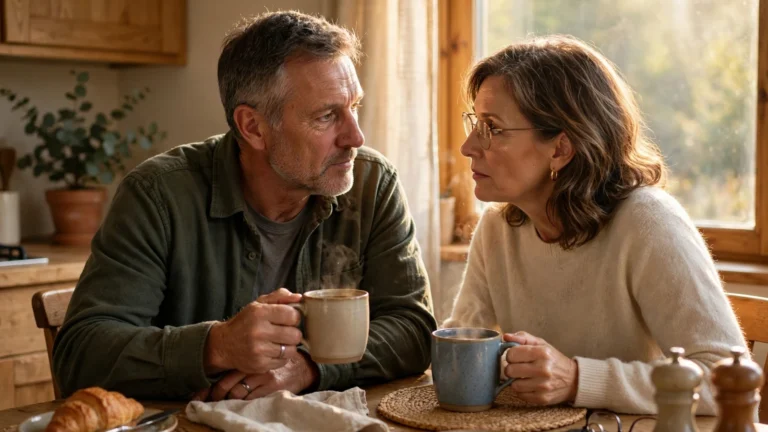
The Honeymoon Phase Is Over. Now Comes the Good Part
The butterflies fade for every couple, usually 12 to 30 months in. Here is what ends, the grief nobody names, and the steadier love that replaces the high.

The Honeymoon Phase Is Over. Now Comes the Good Part
You remember the version of your marriage that could not keep its hands off each other. The version that texted all day and stayed up too late talking about nothing. And lately you have caught yourself wondering: is that gone forever? Did we do something wrong?
Here is the truth nobody puts on a wedding card: the honeymoon phase ends for everyone. Not because you failed. Because that is what it is for. It is a season, not a report card.
The honeymoon phase is a season, not a report card
The early rush of a relationship, the part where your person can do no wrong and your heart races when the phone lights up, usually runs its course somewhere between 12 and 30 months in. It is biology doing its job: intense early bonding gets you attached, and then it steps back so real life can move in.
When it fades, couples tend to read the fade as a verdict. We must have married the wrong person. The spark is gone. Something is broken. None of that follows. The season ending is not a sign you chose wrong. It is a sign the calendar turned. If you have been wondering whether what you felt was ever the real thing, infatuation vs love walks through the difference honestly.
What actually ends, and what does not have to

Let us be specific, because vague mourning is the worst kind. What ends: the constant urgency, the feeling that you might die if they do not text back in an hour. The idealization, the phase where their snoring was cute and their opinions were all fascinating. The effortlessness, the way closeness just happened without anyone scheduling it.
What does not have to end: delight in the person. Physical affection. Pursuit, the active choosing of each other. Laughter at the same old joke for the ninth year. None of those are honeymoon-exclusive. They are just no longer automatic, which means they are now yours to protect on purpose. Couples who stay close tend to stay in love in marriage by treating these things as practices, not accidents.
The grief nobody names

Nobody throws a funeral for the honeymoon phase, so nobody gets to grieve it out loud. But plenty of married people quietly miss it: the electricity, the newness, the version of themselves that felt that alive. And then they feel guilty for missing it, as if missing it means the marriage was a mistake.
Missing it does not mean you chose wrong. It means you are a human being who liked feeling that way. You can love your marriage deeply and still feel a pang for month three. Both things fit in the same heart. The grief only becomes dangerous when it stays unnamed and turns into a quiet story that today is a downgrade from back then. Name it, feel it, let it pass through. It was a season you loved, not a standard you failed.
What replaces the high

The high gets replaced by something with less voltage and more weight. It looks like his hand settling on the small of your back while you wait in the grocery line, not because he wants anything, just because that is where his hand goes. It sounds like the two of you laughing at the same old joke, the one about the rental car in Denver, and the laugh is better now because of the nine years of retellings packed inside it.
It looks like her remembering, without being asked, that your presentation is Thursday, and texting at 8 a.m.: “You have got this.” It looks like the argument you have in the car that ends with both of you cracking up because you are fighting about dishwasher loading again and you both know it. Call it a different currency. Once you learn to spend it, most couples would not trade it back. The deeper shape of that closeness is what emotional intimacy actually looks like once the newness wears off.
How to stop measuring today against month three
The comparison is the thief here, not the calendar. Month three had no mortgage, no colicky baby, no in-law surgery, no 6 a.m. alarms. Measuring a marriage with a decade of real life in it against a season with none is not honest, and it will make today lose every time.
Try this instead: measure today against last year. Are you kinder than you were? Do you repair faster? Do you know each other better? That is the honest scoreboard. Mature love is not trying to be month three again. It is trying to be a better year ten than year nine.
Three practices that feed mature love

First, novelty on purpose. The honeymoon had built-in newness; now you schedule it. Not grand gestures. A new recipe on Thursdays. A neighborhood you have never walked. One unfamiliar thing a month keeps your brains associating each other with discovery instead of routine.
Second, uninterrupted time. Not errands together, not TV in the same room. Time where the point is each other: a walk, a drive, twenty minutes on the porch after the kids are down. Phones elsewhere. This is the soil everything else grows in.
Third, say the quiet appreciations out loud. You think “I love how steady he is” forty times a year and say it twice. Say it. “I noticed you handled bedtime so I could rest, and I am grateful” takes eight seconds and lands for days. The honeymoon told you constantly; mature love tells you deliberately. A sibling piece on keeping that deliberate tenderness alive: how to keep the spark alive in a long marriage.
Questions couples ask about the honeymoon phase
Q: Is it normal for the honeymoon phase to end after just a year?
A: Yes. The 12 to 30 month window is typical, and the shorter end is common for couples who moved quickly or spent nearly every day together. The speed of the fade says nothing about the strength of the marriage.
Q: Does the end of the honeymoon phase mean we are less in love?
A: No. It means the kind of love changed. The urgent, idealizing kind steps back, and the steadier, chosen kind takes its place. Less voltage does not mean less love.
Q: We never really had a honeymoon phase. Is something wrong with us?
A: Not necessarily. Couples who married after long friendships, or who built their bond during stressful seasons, sometimes skip the fireworks and go straight to the steady part. If you feel close and chosen, you did not miss anything required.
Q: Can you get the honeymoon feeling back?
A: You can get flashes of it: a trip somewhere new, a stretch of real novelty, a season of pursuing each other hard. But chasing the permanent return of month three will make you miss the good thing sitting in front of you. Aim for aliveness now, not a rerun.
If you are past the honeymoon phase, tell us in the comments: what replaced it for you? What is the small, steady thing your marriage does now that month-three you could never have imagined? Your answer might be exactly what a nervous newlywed needs to read today.
Keep Reading
If this hit home, these might too:
- infatuation vs love
- how to stay in love in marriage
- what emotional intimacy actually looks like
- how to keep the spark alive in a long marriage
Going through something similar?
Share your experience anonymously with the Ever After Daily community. Every story is read by a human editor before anything is published.
Share Your Story