10 Signs Trust Is Quietly Breaking Down in Your Marriage
Signs trust is breaking down are rarely loud. Here are the quiet early signs couples miss, what they tend to mean, and when it’s time to get help together.

10 Signs Trust Is Quietly Breaking Down in Your Marriage
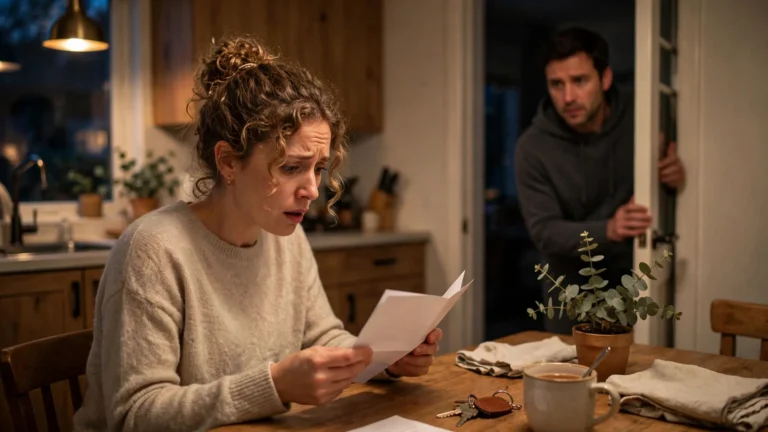
It rarely starts with a shocking discovery. It starts on a Tuesday.
You’re loading the dishwasher and your husband says his meeting ran late. You nod. You believe him, mostly. But later, brushing your teeth, you catch yourself doing quiet math you never used to do: What time did he actually leave? Why did his voice go flat on that one detail?
Trust doesn’t always break in one loud crack. More often it thins out, a little at a time, until ordinary moments start to feel like work.
If you’re here because you’re sensing that thinning, this isn’t a test to diagnose your marriage. It’s a mirror. Read for the patterns that feel familiar, and notice what your body does when you recognize one.
A quick note: this piece is general information, not a substitute for personal guidance. If there is fear, control, threats, or ongoing deception in your home, please reach out to a licensed therapist or a trusted local support line. You deserve support that knows your full situation.
What Trust Is Really Doing in a Marriage
Trust isn’t one big feeling. It’s a pile of small predictions you’ve learned you can make.
When the sink is full, he’ll rinse his plate without being asked. When money gets tight, she’ll tell you before the bank app does. When a hard story comes home from work, you’ll hear it from each other first, not from someone else three days later.
Researchers at the Gottman Institute (gottman.com) describe trust as something built through everyday moments of turning toward each other — answering a small bid for attention, telling the truth in a boring moment, showing up when you said you would. Shirley Glass, in her book Not Just Friends, showed how trust can erode long before anything physical happens, as boundaries blur in private ways. Esther Perel, in The State of Affairs, writes about how couples learn to listen for what a breach means instead of only arguing about what happened.
You don’t need to agree with every idea in those books to use this simple truth: trust is proved in repetition, not in promises. When it starts to thin, your daily life shows it first.
If you want a picture of what the steadier version feels like from the inside, the walkthrough of what emotional trust looks like names the small behaviors that couples tend to notice when safety is still strong.
10 Signs Trust Is Quietly Breaking Down

You don’t need all ten for this to matter. Most couples land on two or three and think, “Oh. That’s us lately.” Read each one for the pattern, not for a score.
### 1. You Edit the Story Before You Tell It

Last spring, a wife told me she stopped mentioning her lunch with a coworker — not because anything had happened, but because explaining it felt like more trouble than skipping it. Her husband hadn’t accused her of anything. He’d just gone quiet the last two times she’d mentioned the same name.
Editing looks like this at home: You say “traffic was bad” instead of “I stopped by my sister’s because I needed to vent.” You leave out the part where you lent money, cried in the car, or felt flattered by someone’s attention. None of these edits are affairs. All of them teach your nervous system that the full truth isn’t welcome here.
Try this exact line tonight if you catch yourself trimming: “I left out a small part earlier because I didn’t want a tense talk. Can I add it back in? It’s not big, but I don’t want to practice hiding.”
### 2. The Phone Changed Sides
One month the phones live face-up on the counter. The next month his is face-down, angled away, carried into the bathroom without thinking. She starts taking calls in the laundry room “for quiet.” Nobody announced a new rule. The room just learned it.
A changed phone habit doesn’t prove anything by itself. People get busy. What matters is the new secrecy around something that used to be open. If you’ve found yourself reading more into a lock screen than you ever wanted to, the pain of that loop is real. The cost of that habit for the other partner is covered from the other chair in why you check partner’s phone — and in this cluster, in the piece about nightly checking.
When you notice this one, name the habit, not a verdict: “I noticed we both started carrying our phones everywhere. I miss when they just lived on the counter. Can we talk about what would help us both feel steadier?”
### 3. You Hear a Second Meaning in Normal Sentences
He says, “I’m going to be a little late,” and you hear a cover story. She says, “Nothing’s wrong,” in the exact tone that used to mean something is definitely wrong, and your stomach drops before your brain can argue.
This is one of the earliest signs trust is breaking down because it changes listening itself. You stop hearing words. You start scanning them. At the dinner table it sounds like this:
“Did you talk to anyone interesting today?” “Why? Who told you something?” “I was just asking about your day.”
If ordinary questions start to feel like traps, trust is already tired. A calmer opener can help you test the water: “I want to ask about your day without it sounding like an interrogation. What was the best ten minutes of it?”
### 4. Small Lies Start Feeling Safer Than Small Truths
He says he spent $40 when he spent $70. She says she’s fine with his parents visiting when she isn’t. He says the text was from work when it was from a friend he’s afraid you’ll dislike.
None of these are dramatic. That’s the point. When telling a ninety-second truth feels harder than telling a ten-second version that skips the sore spot, your marriage is training itself toward distance.
The repair here isn’t a confession marathon. It’s noticing the exit ramp and choosing the on-ramp instead. If you’re the one who has been smoothing corners, the steps in rebuild trust after lying walk through how to stop the trickle before it becomes the pattern.
### 5. You Stop Bringing Each Other the First Draft
In a trusting stretch, your spouse gets the messy first version: “My review went badly and I’m embarrassed.” “My mom said something that stung and I don’t know if I’m overreacting.” “I got a weird text and I feel shaky about it.”
When trust thins, first drafts go elsewhere — to a friend, a sibling, a group chat, or nowhere at all. By the time your spouse hears anything, it’s the polished press release, and even that arrives late.
If you realize your partner is hearing your life in summary form, try a repair line that doesn’t demand a huge talk: “You used to get the first version of my day. I want you to have it again. Can I try the unedited one for a minute?”
### 6. Affection Gets Careful
Trust isn’t only about honesty. It’s also about whether closeness feels safe.
You might still hug goodbye. You might still share a bed. But a hand on a back lingers half a second less. A kiss becomes a peck you give while looking at the clock. In the kitchen, you step around each other with that polite apartment dance people do when they’re trying not to ask for more than the other person wants to give.
This can be grief, exhaustion, or a rough season. It can also be the body keeping score when words have stopped lining up with actions. If affection has gone careful in your house, don’t force a big romantic fix. Start with one honest sentence: “I miss feeling easy near you. I don’t need to solve it tonight. I just wanted you to know I notice.”
### 7. You Keep a Private Scorecard
Scorekeeping sounds like this in your head: “I got up with the baby twice. He owes me.” “I apologized last time. It’s her turn to start.” “I told the truth about the money. Why can’t he tell the truth about his mood?”
A scorecard makes sense when you feel unseen. It also guarantees you’ll both feel behind. Trust breaks down faster when every repair has to be perfectly even before anyone softens.
If you notice the tally running, say the need under it: Not “You never help,” but “I’m wiped out and I need the next night feed to be yours. Can we trade before I get resentful about it?” Specific asks rebuild trust. Silent tallies erode it.
### 8. Jokes Start Doing the Talking
A lot of couples use humor to survive hard stretches. The shift to watch for is when jokes become the only safe way to tell the truth.
“Must be nice to have secrets,” said while laughing at a locked phone. “Ask his other family,” tossed out when he works late again. Everyone smiles. Nobody feels closer.
If a joke lands and the room goes a little tight, try circling back within the hour: “That joke I made about the late meeting — there was a real worry under it. Can I say it straight for a second?” It feels awkward. It’s also how a couple stops letting punch lines do the work of honesty.
### 9. You Would Rather Be Right Than Be Known
During arguments, the goal quietly changes. It stops being “help me understand” and becomes “prove I have a case.” You collect examples. You remember dates. You rehearse in the shower.
At home it can sound like this during a fight about dishes, of all things:
“You always leave the pans.” “I left one pan on Tuesday. You left three last week. Should I start photographing them?” “See? You care more about winning than about the fact that I’m drowning here.”
When being known feels riskier than being right, trust is thin. If your talks keep sliding into courtroom mode, the framing in talk to spouse about feelings can help you trade evidence for need without pretending the problem away. When an apology is actually owed, how to apologize after a fight shows what repair sounds like when it isn’t a performance.
### 10. Hope Starts to Feel Naive
This is the quietest sign, and for many people the saddest. You hear about a couple getting steadier after a hard year and your first thought is, “Good for them. That won’t be us.” You stop picturing a better version of next month. You start managing around each other instead of building toward each other.
Hope thinning out doesn’t mean your marriage is over. It means you’ve been disappointed enough times that your heart is trying to protect you by expecting less. If that line hit a nerve, you may want to read how long repair can actually take in how long to rebuild trust — not for a deadline, but to remember that slow doesn’t automatically mean hopeless.
Which Signs You Can Work On at Home, and Which Need Outside Help

Some patterns respond well to honest, steady effort at home. Some do not, and trying to handle them alone can leave you feeling like you’re failing at something that needs another person in the room.
Often workable at home, if both of you engage: editing stories, scorekeeping, jokes doing the talking, first drafts going elsewhere, and affection that has gone careful during a stressful season. These still need real follow-through: short honest talks, kept promises, and a willingness to hear “that hurt” without building a defense in the same breath.
Time to bring in outside help: repeated lying after promises to stop, secrecy that keeps getting uncovered in pieces, checking or surveillance that has become a nightly routine, or either of you feeling afraid to tell the truth at home. Also bring in help if talks reliably explode or shut down for days. A therapist isn’t a referee. A good one slows the conversation down enough that the truth can stay in the room.
The Gottman Institute’s trust-revival work often gets described as “atone, attune, attach” — own what happened, learn to hear each other again, then rebuild closeness in small steady ways. Glass writes about transparency after boundaries have blurred. Perel asks couples to understand what changed without using that understanding as an excuse. Different language, same respect for this fact: you can’t shame or rush trust back. You build it back.
If you are not sure whether what you’re living through is a repair season or something more serious, let that uncertainty be a reason to get support, not a reason to wait until you are certain. The couples in can trust come back after infidelity describe how different the timeline feels once steady help is actually in place.
What to Do This Week If You Saw Yourself Here

Don’t try to fix ten signs before Sunday. Pick the one that made your shoulders rise and start there.
Tonight, name one pattern out loud. Use a sentence that owns your part and invites theirs: “I think I’ve been editing stories because I don’t want us to feel tense. I don’t like that habit. Can we try telling the smaller truths faster this week, even when they’re clumsy?”
This week, keep one tiny promise perfectly. If you say you’ll be home at six, be home at six or text before six. If you say you’ll look at the budget together Thursday, sit down Thursday. Trust hears consistency more clearly than it hears speeches.
Before the weekend, ask one question and let the answer finish. Try: “What’s one thing I do lately that makes it harder for you to relax around me?” Then listen without correcting the record. You can share your side after. Being heard first is not losing. It’s how hearing becomes possible again.
If those steps feel too big because something specific happened — a secret, a boundary crossed, a story that keeps changing — skip the gentle practice round and book support. You can still be kind to each other while you do it. Kind and honest belong together. That’s the whole point.
Tell me in the comments if you’re comfortable: which sign on this list was the one you noticed first in your own house, and what did it look like on an ordinary day? You don’t have to share details you’re not ready to share. Sometimes just naming the pattern out loud is where the steadier chapter starts.
Frequently Asked Questions
Can trust break down even if nobody cheated?
Yes. Trust can thin out through small lies, broken promises, secrecy about money or feelings, and long stretches of feeling unheard. Glass writes about how blurred boundaries and private habits can damage trust before anything physical happens. What matters is whether the pattern keeps teaching you that the truth isn’t safe here.
How many of these signs mean the marriage is in real trouble?
There isn’t a magic number. One sign during a brutal month at work is different from three signs that have been steady for a year. Pay attention to direction: Are the patterns getting more common even after you’ve named them? Is effort one-sided? Those answers tell you more than a count does.
What if my spouse says I’m overreacting?
You’re allowed to name an effect without proving a motive. Try: “I’m not accusing you of something huge. I’m telling you I feel less steady than I used to, and I want us to look at that together.” If that sentence reliably leads to mockery, shutdown, or threats, that’s information too — and a reason to bring in a therapist or trusted support person.
Can trust come back after it’s thinned out like this?
In many marriages, yes — slowly, and through proof in ordinary moments. The Gottman Institute’s work points to repeated daily choices rather than one grand gesture. Perel writes about rebuilding meaning after a rupture. Neither promises a timeline, and neither should I. If both of you are willing to be honest and steady, a thinner season doesn’t have to be the final one.
Keep Reading
If this hit home, these might too:
- what emotional trust looks like
- rebuild trust after lying
- can trust come back after infidelity
- how long to rebuild trust
- talk to spouse about feelings
- how to apologize after a fight
Going through something similar?
Share your experience anonymously with the Ever After Daily community. Every story is read by a human editor before anything is published.
Share Your Story