Couples Who Volunteer Together in Their Second Act
One cause, one shift a week, side by side. What volunteering together looks like after the kids leave, and how to pick the cause that fits you both best.
Couples Who Volunteer Together in Their Second Act
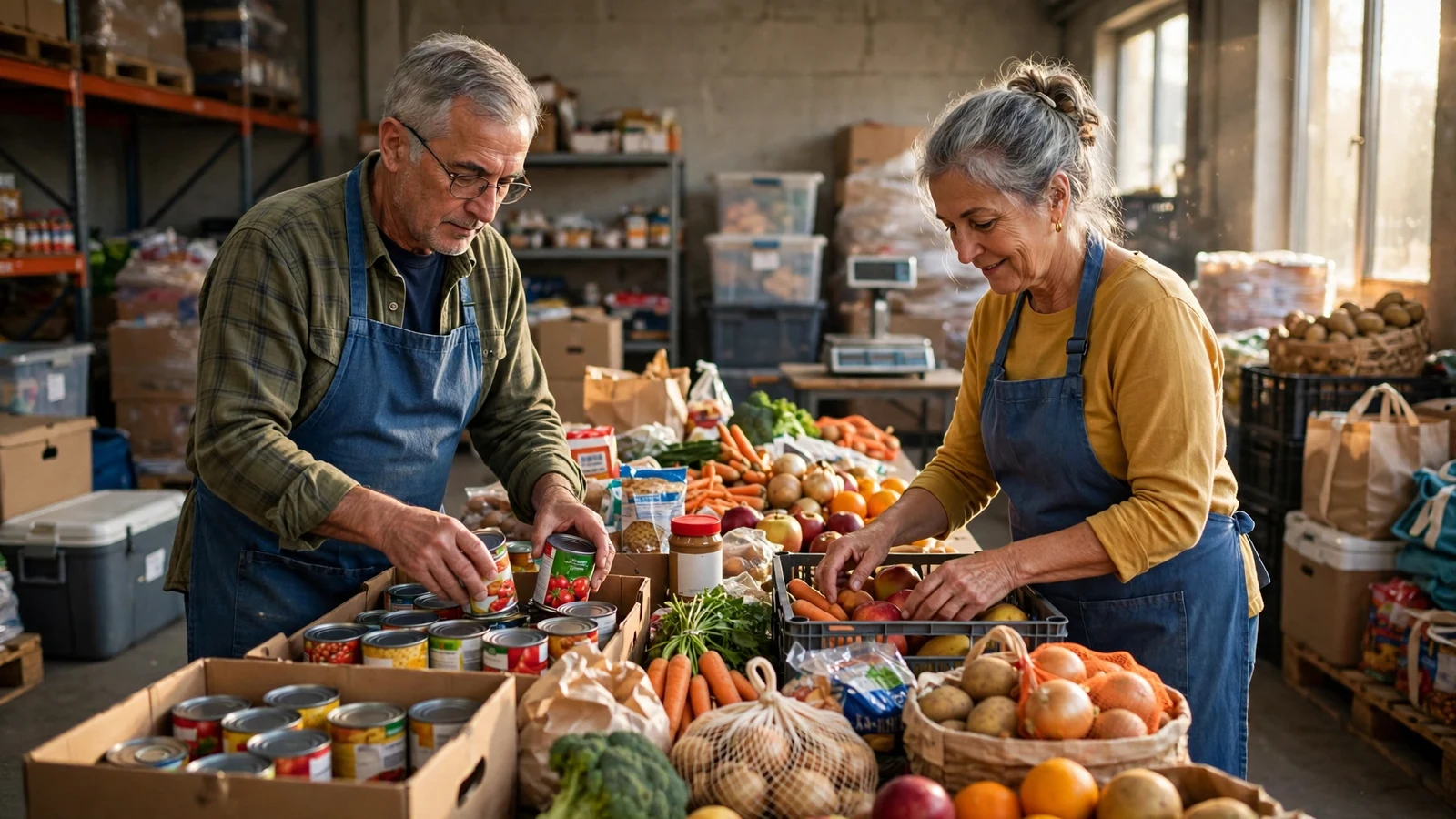
Tuesday is our food bank day. We get there at nine, put on the blue aprons, and take our places at the long table in the back room, him on the cans, me on the boxes. The radio plays low. The door opens and closes all morning, and by noon our hands smell like cardboard and our feet ache in the good way, the way they used to ache after a Saturday of yard work when the kids were small. We drive home in the same car we drove there in, and we talk about the morning. The woman who brought her grandson to help. The man who asked for the recipe on the back of the soup can. The box that would not close no matter how we taped it. It is a small day, and it is ours, and it is the best part of our week.
We did not set out to become volunteers. We set out to find something to do on a Tuesday. The kids had left, the house was quiet, and the calendar had gone blank in a way that felt less like freedom and more like a room with the furniture taken out. We tried a morning walk, and we liked it, but a walk ends. What we wanted was a place to go, a job to do, and people to do it with. The food bank gave us all three, and it gave us something we did not expect: a reason to get dressed and leave the house together, on purpose, every single week.
Picking the cause, one try each
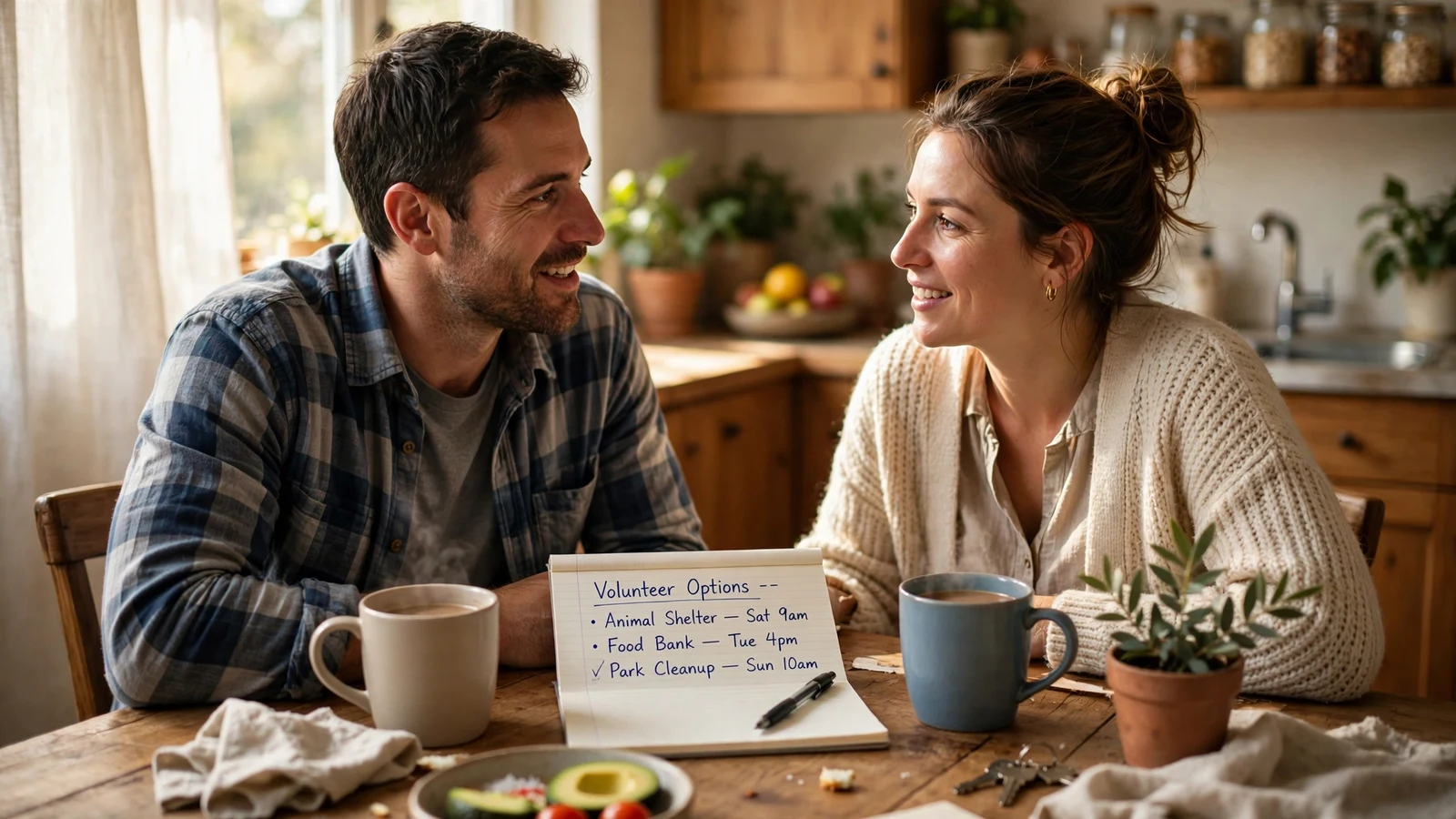
The rule we made for ourselves was simple. Each of us got to pick one cause to try, and the other one had to come along and give it a fair shot. No veto on the first try. No eye rolls in the car. One try each, and then we would talk about it honestly over dinner.
He picked first. He picked the trail crew at the county park, because he had always liked working outside. I went. I spent a Saturday morning in mud up to my ankles, holding a branch while a man named Ray sawed through it, and I was cold, and I was bored, and I did not want to go back. I said so at dinner. He nodded and said, “Fair enough. Your turn.”
I picked the library reading program, because I had spent twenty years reading to my own kids and I missed the sound of a small voice sounding out a hard word. He came. He sat on a tiny chair in the children’s corner and read a picture book about a bear to a six-year-old who corrected his voices, and on the drive home he said, “That was better than the trail.” We went back the next week. And the next. The reading program was mine, and he came because he liked watching me do it, and then one Tuesday the food bank needed hands and the librarian mentioned it, and we tried that together, and that was the one that stuck.
That is how it works for most couples we know. One person picks something, the other person tries it, and the cause you end up with is often the third thing you try, the one neither of you picked first. The trying is the point. A cause sounds good on a website and feels different in the room, and the only way to know is to show up once and see how the morning sits with you. If it does not sit well, you cross it off and try the next one.
Pick something close to home. Pick something with a set shift, a real job, and a start time. A food bank, a library, a school lunchroom, a shelter kitchen, a park cleanup, a thrift shop, a hospital front desk. A hobby you pick up together can point you toward the right cause, because the things you enjoy doing often tell you where you are needed. The cause matters less than the shape of it: a place, a time, a job, and people who expect you. The couples who quit are usually the ones who picked something vague, a cause with no shift and no job, where you show up and stand around and wonder what you are supposed to do. A set shift fixes that. You show up, somebody hands you an apron, and the morning runs itself.
The shift: same day, same job, side by side


The shift is the heart of it. Same day, same job, side by side. That is what makes volunteering different from two people who happen to care about the same thing. You are a couple with a Tuesday. You have a place to be and a job to do and a person standing next to you who knows how you like your coffee on the drive over.
Our shift runs nine to noon. We arrive together, we work the table together, and we leave together. He stacks the cans in rows of six because that is how his mind works, and I pack the boxes because I like the puzzle of fitting the most food into the smallest space. We have our corners, the way we have our corners at home, and the corners touch. The first week in the quiet house is when most couples start looking for a shift like this one, because the quiet makes the need for a shared day hard to miss. When a box is full, he tapes it and I slide it down the line. When the cans run low, I call it out and he brings another case from the back. We do not need to talk much. We have done it enough times that our hands know the job, and the quiet between us is the comfortable kind, the kind that comes from years of working next to each other.
The drive home is part of the shift, and we treat it that way. We do not turn on a podcast. We do not check our phones. We talk about the morning, the small things, the woman with the grandson, the box that would not close. A shared job gives you something to talk about that is not the house, not the bills, not the kids. It gives the conversation a place to start, and once it starts, it wanders where it wants to go.
Give the shift a name in your house. Call it Tuesday, call it food bank day, call it our morning. A name makes it real, and real things survive the weeks when you do not feel like going. There will be a Tuesday when it rains and the car is cold and the bed is warm, and one of you will say, “Do we have to go today?” The answer is yes, because it is Tuesday, and because somebody at the food bank is counting on the two of you, and because the morning after is always better than the morning you stayed home.
The people you meet there

The people are the part nobody tells you about, and they are the part that keeps you coming back after the newness wears off. A cause gives you a job. The people give you a reason to stay.
The other volunteers become your people fast, because you see them every week and you work next to them and you learn their stories in pieces. Marge, seventy-four, has run the front desk for eleven years and knows every regular by name. Ray runs the warehouse, pretends to be gruff, and brings donuts every Friday. Marge told us about her husband, who died three years ago, and how the food bank is what gets her out of the house. Ray told us about his daughter, who lives two states away and calls every Sunday. We told them about our kids, and about the quiet house, and about how Tuesday fixed something we did not know how to name. Nobody at the food bank calls it therapy. It is just a table, and a shift, and people who show up. But the showing up does something to a marriage. It gives you a shared circle that is not family, not old friends, not the neighbors. It is yours, and it is new, and new things are good for a marriage that has been running on old stories for a long time.
Bring the people home with you, in the small ways. Invite Marge to dinner. Remember Ray’s birthday. Ask the young couple how their kids are doing in school. The shift ends at noon, but the friendships do not have to end at the door. A marriage in its second act needs new people in it, and a volunteer shift is one of the easiest places to find them, because the people there already share the one thing that matters: they showed up.
Start this month. Pick one cause each, try them both, and see which morning feels like yours. The house will still be quiet when you get home. The difference is that you will have somewhere you were, and someone you helped, and a person sitting next to you in the car who was there too. That is what a second act is made of. Not big plans. Just a Tuesday, a table, and the two of you, showing up together.
Frequently asked questions
What if my spouse and I like different causes?
Try one each, with no veto on the first try. Most couples end up with the third thing they try, the one neither of them picked first. The trying is how you learn what fits, and a cause that sounds good on a website can feel very different in the room.
How much time does volunteering together take?
One shift a week is enough. Three hours, same day, same time. A set shift with a real job works better than a vague promise to help sometime, because a named day is harder to skip and the people there start to count on you.
What if one of us wants to quit after a few weeks?
Talk about it at dinner, not in the car on the way home. Ask what part is not working, the cause, the job, or the time of day. Often the fix is a different job at the same place, not a different place. If the cause is truly wrong, cross it off together and try the next one.
Would you and your spouse volunteer together, and what cause would you pick first? Tell us in the comments, if you are willing. Your answer might be the cause another couple has been looking for.
Going through something similar?
Share your experience anonymously with the Ever After Daily community. Every story is read by a human editor before anything is published.
Share Your Story