When Your Spouse Becomes Your Caregiver
When helping turns into full-time caring, the marriage changes too. An honest look at the shift, the caregiver’s own needs, and the couple underneath it all.

When Your Spouse Becomes Your Caregiver
Ruth is sixty-eight, and for forty-one years she has been married to Dan. For most of those years, their mornings ran on a simple shape: coffee, the paper, a walk to the corner and back before the day got hot. Then Dan fell in the garden one April morning, and the shape of their days changed in small steps that were easy to miss.
First it was driving him to appointments and keeping the list of pills straight. Then it was helping him out of the shower and standing close by while he went down the stairs. Then it was cutting his food when his hand shook, and checking the locks twice before bed, because Dan woke up confused at night and tried to find the bathroom in the dark. Nobody in their house ever said the word caregiver. Ruth just did the next thing, and then the next.
The change came quietly, the way weather changes in a house with the windows shut. One Tuesday in October, Ruth looked at the calendar on the fridge and saw she had not left the house alone in nine days. Not once. She had gone to the store with Dan in the car, and to church with Dan holding her arm, but she had not gone anywhere by herself. She stood at the sink with the water running and thought, “When did this become my whole day?” That was the first time she said it, even to herself.
The shift nobody named out loud
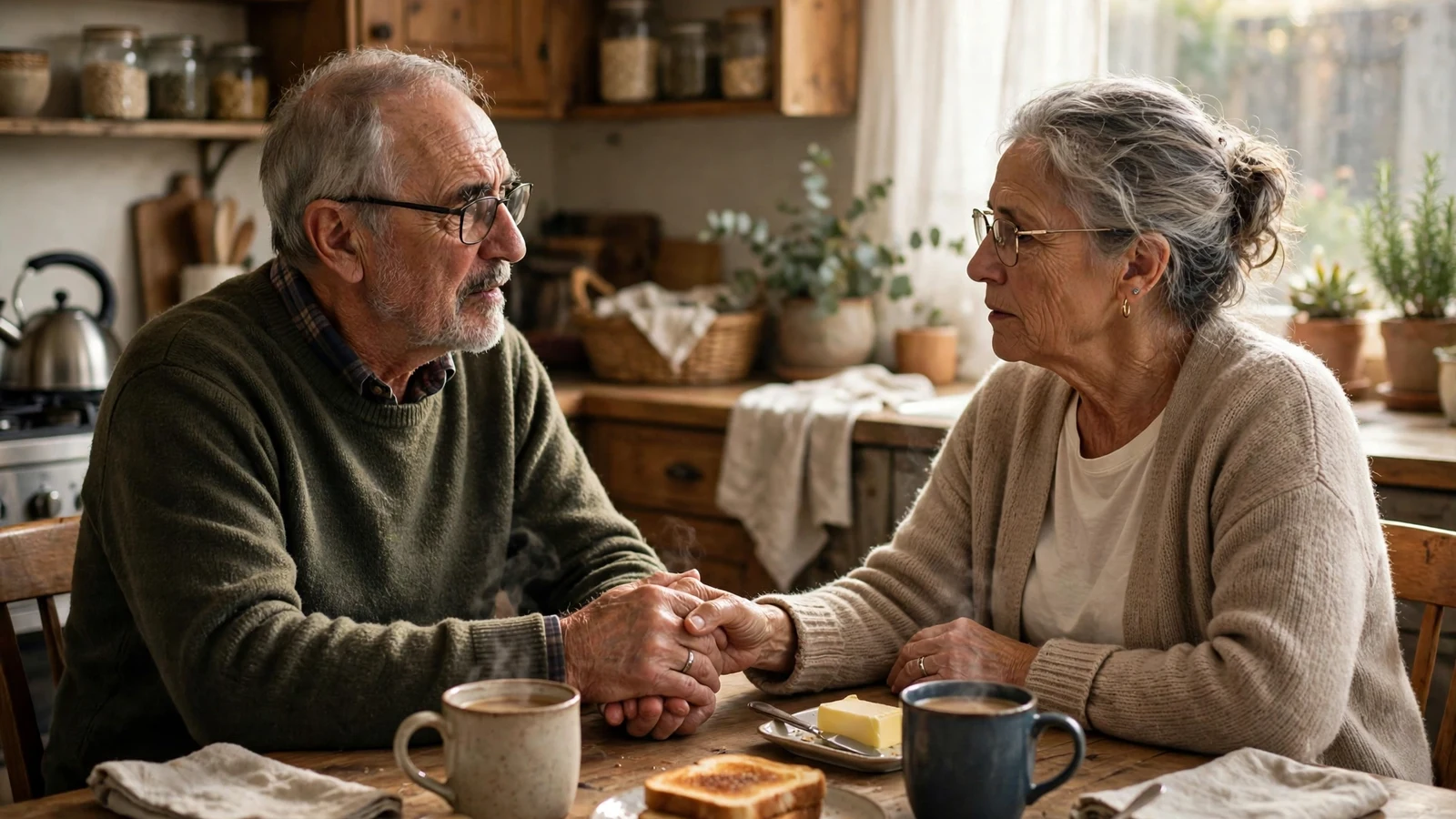
The word hung in the kitchen for weeks before either of them said it. Ruth did not want to sound ungrateful. Dan did not want to sound like a burden. So they talked around it. Ruth said she was tired. Dan said he was sorry. They both meant more than the words they used, and neither of them got what they needed from the exchange.
It broke open on a Sunday, over toast. Dan asked Ruth why she had stopped going to her book club, and Ruth heard herself answer before she could soften it: “Because I am here, Dan. I am always here.” She saw his face close up, and she saw him start to apologize again, and she put her hand over his and said the truer thing. “I love taking care of you, and I need an hour a day that is mine. Both of those are true at the same time.”
Dan was quiet for a long minute. Then he said, “Then take it. I will be here when you get back, and the house will still be standing.” It was not a fix. Nothing about their days got easier in that minute. But the shift finally had a name, and a name meant they could talk about it like a real thing instead of a mood that passed through the kitchen and left them both guessing.
Naming it also changed how Ruth asked for help. Before, she waited until she was worn down and then asked from a tired place, and the ask came out sharp. After, she asked early, while she still had a calm voice to ask with. A marriage under this kind of strain needs that kind of plain talk, and so does any couple learning to support a spouse through illness while the roles at home keep changing under their feet.
The caregiver’s own needs
Ruth’s needs are plain, and that is why they were so easy to skip. She needs sleep that is not broken by listening for footsteps in the hall. She needs food she did not cook standing up at the stove while watching the clock. She needs a phone call with a friend who asks how she is doing, before asking how Dan is doing. None of that is fancy. All of it had quietly stopped happening.
The house itself had changed too. The shower chair, the pill box on the counter, the extra lock on the door, the chair by Dan’s side of the bed so he can sit before he stands. A home that changes this fast puts a strain on a marriage, the way any big change to the house does, and Ruth found that reading about moving house and marriage stress helped her name what she felt: the rooms were the same, but the life inside them had been rearranged, and nobody had asked her if she was ready.
What Ruth learned, slowly, is that her needs are not the opposite of Dan’s needs. They sit next to each other. When she sleeps, she is patient with Dan in the morning. When she eats a real lunch, she does not snap at him over the pills. When she talks to her sister for twenty minutes, she comes home kinder. The care she gives Dan holds up better when she has had something for herself first. That sounds obvious written down. It took Ruth a year to believe it.
The walk, the friend, the hour off

The plan they built is small on purpose. Every morning at seven, before Dan wakes, Ruth walks twenty minutes around the block. She does not bring her phone. She counts the houses with the gardens she likes, and she comes home with her head clearer than when she left. If it rains, she walks the hallway with the radio on, which makes Dan laugh from the bedroom and call her a mall walker.
Thursday mornings belong to her sister, Carol. Carol comes at nine and sits with Dan until noon. The first time Ruth asked, she used the exact words she had practiced in the kitchen: “Carol, I need Thursday morning. Can you sit with Dan from nine to noon? He will be fine with the book and the remote, and I will leave my phone on.” Carol said yes before Ruth finished the sentence, and then she said something Ruth still keeps: “You should have asked me a year ago.”
The hour off is not for errands. Ruth tried that once, and she came home with groceries and the same tired feeling she left with. Now the hour is hers alone. Sometimes she sits in the library. Sometimes she gets coffee and reads a magazine cover to cover. Sometimes she does nothing at all, which turned out to be a thing worth doing. When a question about Dan’s pills or his night confusion came up, she wrote it on the notepad by the phone and asked his doctor at the next visit, instead of guessing. If a health question comes up in your house, ask your doctor, too. Guessing is a heavy thing to carry on top of everything else.
The date that still happens

They still go out on Saturdays. It is lunch, not dinner, because Dan is steadier in the middle of the day. Ruth drives, Dan picks the booth by the window, and they order the same thing every week: soup for him, a sandwich for her, one piece of pie with two forks. The waitress knows them now, and she brings the pie without asking.
The date is short, and the date counts. For that hour, Ruth is not the woman who keeps the pill list, and Dan is not the man who needs help down the stairs. They are Ruth and Dan, married forty-one years, having lunch. Dan tells her about the bird at the feeder that keeps coming back. Ruth tells him about the neighbor who planted tomatoes in the wrong month. They keep a jar on the kitchen shelf with a few dollars in it for a weekend away someday, a small habit they borrowed from couples who save for a trip together, and the jar reminds them that there is still a future they are planning for, along with a week they are getting through.
The talk that still matters

The talk that matters most happens at night, ten minutes before bed, with the lights low. The rule is simple: no talk about pills, appointments, or the lock on the door. Ten minutes for anything else. Dan asks, “Tell me something that happened today that had nothing to do with me,” and Ruth laughs, and she tells him about the woman at the library who shelved the same book twice, or the dog down the street that learned to open the gate.
It sounds like a small thing, and it is the thing that holds them together. The caregiving is real, and it fills most of the day, and it will fill more of it as time goes on. But the marriage is more than the caregiving. The marriage is two people who still make each other laugh over soup, who still have a date on Saturday, who still talk at night about birds and books and dogs that open gates. The roles changed. The couple is still in there.
Frequently asked questions
How do you know when helping has become caregiving?
When the help stops being a task you do and starts being a schedule you live by. If you cannot leave the house alone, if your days run on someone else’s pills and appointments, if you have stopped doing the things that kept you steady, the role has already changed, even if nobody has said so out loud. Naming it is the first step toward getting help with it.
What if the caregiver feels guilty taking time off?
Guilt shows up for almost every caregiver, and it does not mean the time off is wrong. It means you love the person you care for. An hour off makes the rest of the day’s care steadier, not weaker. Ask a family member or a friend to sit in for a set hour, say the exact words for what you need, and come back. The guilt fades a little each time you return and find everything fine.
How do we keep the marriage from becoming only caregiving?
Guard one small piece of the day that belongs to the couple, not to the care. A Saturday lunch, ten minutes of talk before bed, a walk together when the day allows. Keep the jar, the joke, the plan for someday. The care will take up most of the hours. The marriage lives in the hours you protect.
If your spouse became your caregiver, or you became theirs, what is the one hour you would protect first, and who would you ask to sit in while you take it? Tell us in the comments, if you are willing. Your answer might be the nudge another couple needs to ask for their hour.
Going through something similar?
Share your experience anonymously with the Ever After Daily community. Every story is read by a human editor before anything is published.
Share Your Story