The Checkup Reminder That Changed Their Year
One sticky note, one booked appointment, and a year that went differently. A warm story about the nudge that got a couple to the doctor together every year.

The Checkup Reminder That Changed Their Year
The sticky note had been on the fridge for three weeks. Maya had written it in blue ink, in her neatest handwriting, and stuck it at eye level where Sam could not miss it: “Book your checkup. Love, M.” Sam saw it every morning while he waited for the coffee. He nodded at it. He meant to call. The week went by, and the note stayed where it was, curling a little at the corner.
Maya had tried the other ways first. She had mentioned it at dinner, and Sam had said, “Soon.” She had left the clinic number on the counter, and Sam had moved it to make room for the mail. She had asked him after a headache one Sunday, and he had said he was fine, and he probably was fine. The note was her last try before she gave up on the subject for the year, and Sam knew it. He could tell by the way she stopped saying anything about it at all.
Then one Tuesday, Maya did something different. She booked her own checkup for the next week, and she sent Sam a text at noon: “I booked mine for Tuesday at nine. Book yours for the same morning and I will drive.” Sam read the text twice. He called the clinic before he could talk himself out of it. The woman on the phone gave him nine forty-five, and Maya drove them both, and they sat in the waiting room with the old magazines and the fish tank, holding hands like people on a date.
The sticky note on the fridge
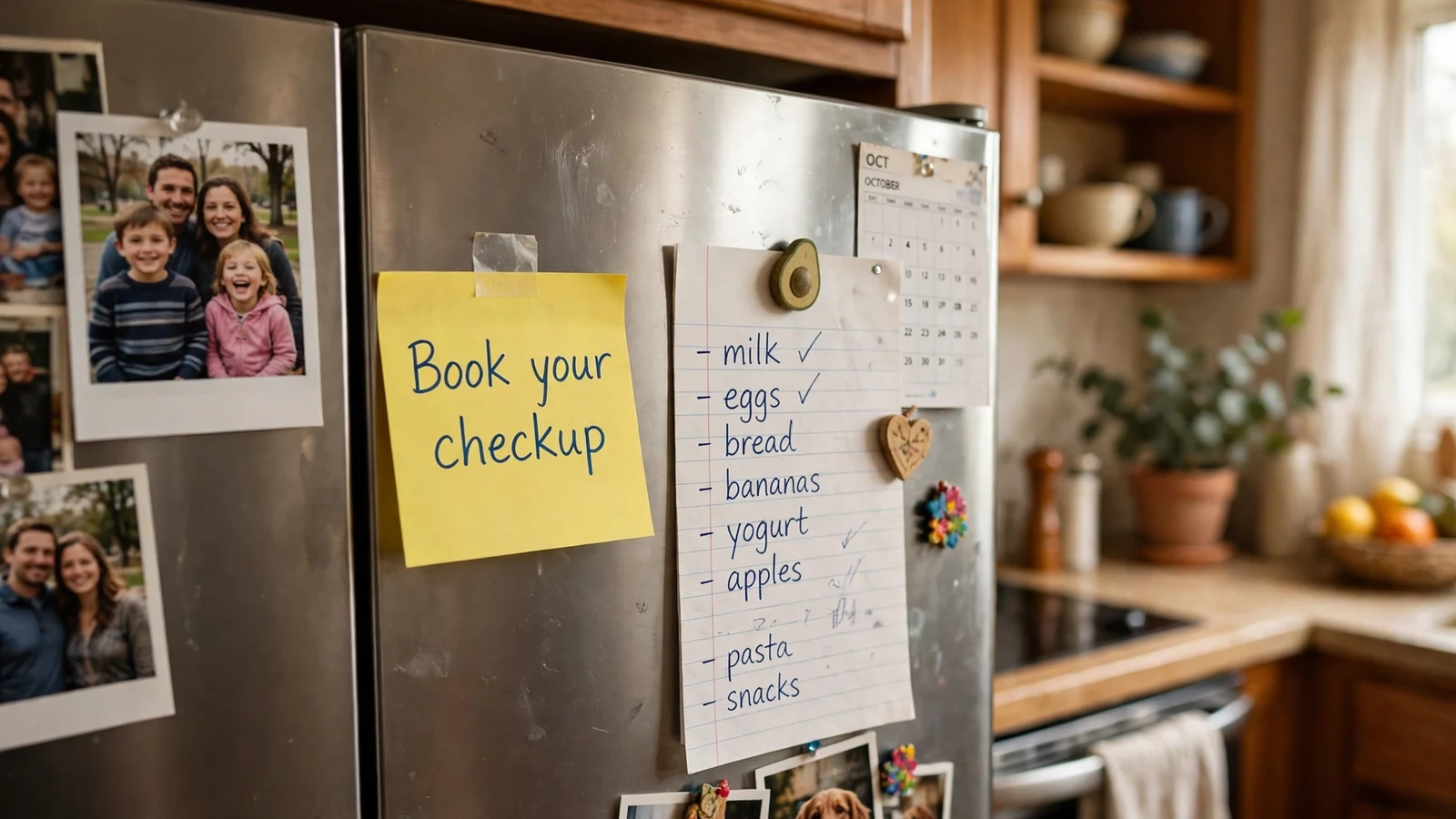
The note worked where the mentions had not, and Maya knows why. A mention floats away. A note stays. Sam saw it every morning with his coffee, and every morning it said the same thing in the same blue ink, and after three weeks it had done something no dinner-table talk could do: it had made the checkup a fact of the house, not a favor Maya was asking for.
Maya has since learned that a reminder lands better when it is not a complaint in disguise. “You never go to the doctor” starts a fight. “Book your checkup. Love, M.” starts a plan. She wrote the note, stuck it where he would see it, and then she left it alone. She did not bring it up again. The note did the bringing up, quietly, every morning, until Sam was ready to hear it.
If your reminders keep turning into arguments, there is a softer way to say the same thing. Couples who trade health habits without nagging have figured out the same trick Maya found: say it once, say it warmly, and let the note on the fridge do the repeating.
The text that finally worked

The text worked because it asked Sam for one small thing, not a whole new habit. It did not ask him to care more about his health, or to change his ways, or to admit he had been putting it off for three years. It asked him to make one call and show up on one Tuesday morning. That was all. Maya had already booked her own appointment, so the plan was real, and she had offered the ride, so the morning was easy.
Sam still remembers the exact words, because they were so short. “I booked mine for Tuesday at nine. Book yours for the same morning and I will drive.” No lecture. No list of reasons. Just a time, a ride, and a wife who was going too. He called the clinic on his lunch break, and when the woman said nine forty-five, he wrote it on the same fridge, under Maya’s note, in his own handwriting. That was the moment the year started to turn.
The trick, Maya says now, is to pair the ask with something you are already doing yourself. Go together. Book together. Sit in the waiting room together. A reminder that comes with company is much easier to say yes to than a reminder that comes with a finger pointed at you.
The appointment they faced together

The news was not all good, and Maya is glad she was in the room for it. Sam’s blood pressure was up, higher than the doctor liked, and the doctor asked him to come back in three months. Maya sat beside him and held his hand, and Sam asked the questions he would never have asked alone. What should he watch for. What should he change first. What would the next visit look like.
They walked out of the clinic into a bright morning, and Sam said, “I am glad you made me come,” and Maya said, “I am glad you let me.” They went for breakfast, the kind with too much butter, and they talked about what the doctor had said, and what they would do next, and neither of them felt alone with it. Facing health news together changes the news. It does not make it good, but it makes it shared, and shared is easier to carry than alone. Any couple learning to support a spouse through illness knows this feeling: the hard part gets lighter when two people are holding it.
On the drive home, Sam said something Maya still quotes back to him: “Next time, do not wait three weeks for the note to work. Just book it and tell me where to be.” Maya laughed, and then she wrote that down, too.
The year after

The year after the appointment went differently than the year before it, in ways that were small and easy to miss unless you lived them. Sam went back in three months, and his numbers had moved in the right direction, and the doctor smiled, and Maya cried a little in the car, and Sam pretended not to notice. They started walking after dinner, just around the block, just the two of them, and the walk became the best part of the day.
They also started a habit they still keep. On the first Sunday of every month, they sit at the kitchen table with coffee and look at the month ahead: the bills, the birthdays, the appointments, the one thing each of them has been putting off. It takes twenty minutes. It is their own small version of a couples monthly review, and it means nothing important slips for a whole year anymore, because the table catches it first.
The habit that stuck
The habit that stuck is not the checkup itself. It is the booking. Every March now, Maya puts a new note on the fridge, in the same blue ink: “Checkup month. Book together.” Sam books his on the same morning as hers, and Maya drives, and they go for breakfast after. The clinic knows them now. The woman at the desk waves them in.
It costs them one morning a year, and it gives them back something hard to name: the feeling that they are looking after each other on purpose, not by accident. The note is still there, on the fridge, curling a little at the corner. Maya leaves it up all year, because it reminds them both of the Tuesday that started it.
The nudge that works for your house
Every house has its own version of the note. For some couples it is a text. For some it is a calendar alert that goes off while you are both in the kitchen. For some it is a standing date, the first Tuesday in March, that never moves. The form does not matter. What matters is that the nudge is warm, it is specific, and it comes with company.
Pick one sentence, one date, and one ride. Write the sentence down where your spouse will see it every morning. Book your own appointment first, so the plan is real. Offer the ride, so the morning is easy. Then leave the note alone, and let it do its quiet work. One reminder, one appointment, and the year that follows might surprise you both.
Frequently asked questions
What if my spouse keeps putting off the checkup?
Stop arguing about the checkup and shrink the ask. Book your own appointment first, then offer a specific morning and a ride: “I booked mine for Tuesday at nine. Book yours for the same morning and I will drive.” One small step, with company, is easier to say yes to than a lecture about health.
What if the appointment brings bad news?
Go in together, sit in the room together, and ask the questions together. Bad news is easier to carry when two people are holding it. Ask the doctor what to watch for, what to change first, and when to come back, and write the answers down before you leave. Then go for breakfast and talk it through, the same morning.
How do we make the yearly checkup a habit?
Tie it to a date that never moves, like the first Tuesday in March, and book both appointments for the same morning every year. Put the note on the fridge, drive together, and go for breakfast after. A habit sticks when it has a date, a ride, and something good waiting at the end of it.
What is the one reminder that finally worked in your house, the note, the text, or the nudge that got your spouse to the doctor? Tell us in the comments, if you are willing. Your answer might be the note another couple needs on their fridge.
Going through something similar?
Share your experience anonymously with the Ever After Daily community. Every story is read by a human editor before anything is published.
Share Your Story