Couples Who Cook for Health Together
We never announced a diet or gave a lecture. We just changed one pan, added more vegetables, and found the meals that stuck. Here is how our kitchen changed.

Couples Who Cook for Health Together
Nobody announced it. There was no speech at the dinner table, no new rule taped to the fridge, no promise made on a Monday morning that would be broken by Wednesday. One week, the big frying pan got replaced by a smaller one. The salt shaker moved to the back of the shelf. A bag of carrots showed up in the crisper, and then a bunch of kale, and then a lemon, and nobody said a word about any of it.
That is how our kitchen changed. Not with a plan, but with a series of small swaps that nobody defended and nobody fought about, because nobody called them a change at all.
The change nobody announced

It started with my husband, though he would deny it if you asked him. He came home from the store with a bag of sweet potatoes instead of the usual white ones, and when I raised an eyebrow he said, “They were on sale,” which they were not. The next week he bought salmon instead of the sausage he always buys, and he said, “I felt like fish,” which was true, in the way that a half-truth is true. I did not argue. I cooked the salmon with lemon and garlic, and we ate it, and it was good, and that was the whole conversation.
I made my own quiet swap the week after. I started putting a pile of greens on the plate first, before anything else, so the plate looked full before the main dish even arrived. I cut the butter in half in the mashed potatoes and added a splash of milk instead, and he did not notice, or noticed and said nothing. We were both doing it, separately, without a meeting about it. That is the secret nobody tells you about cooking healthier together: it works best when it feels like dinner, not like a project.
The rule we landed on, without ever saying it out loud, was simple. No lectures. No comments about what the other person put on their plate. No sighing over a second helping. If one of us wanted the bread, we had the bread. The kitchen stayed a friendly place, and the food got better, and the two things turned out to be connected.
A weekly check-in works the same way at our house: a short, honest talk at the kitchen table, no blame, no scorekeeping, just two people deciding what the week should look like. The kitchen changed because we talked, in small ways, and then we cooked.
One pan, less salt, more vegetables
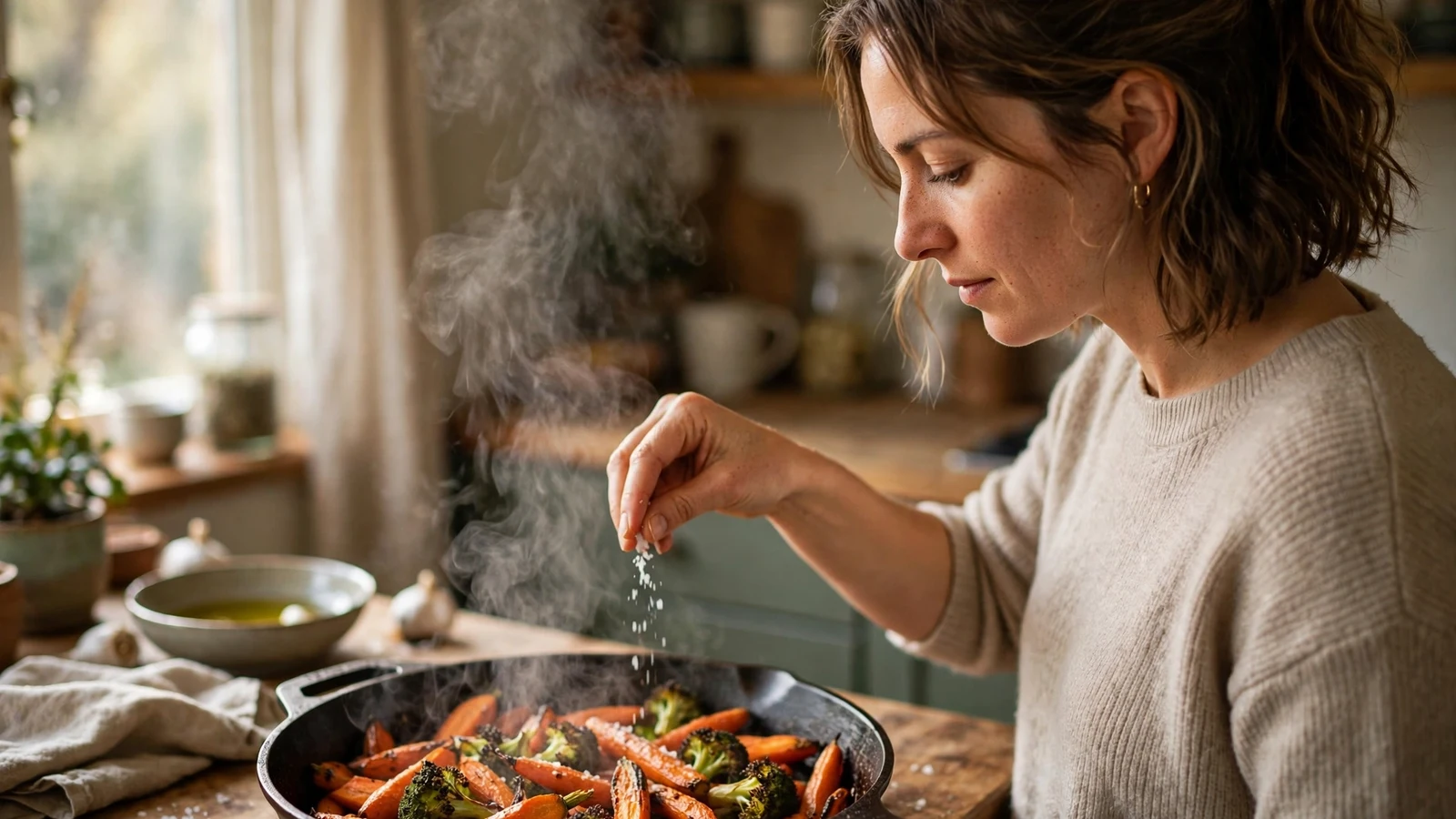
The pan matters more than you would think. Our old frying pan was big enough to cook for six people, and we cooked for six people even though there are two of us. The smaller pan changed the portions without anyone having to say the word “portion.” It just made less food, and less food meant we ate what we cooked and stopped, instead of eating what we cooked and then eating the rest of it because it was sitting there.
The salt went the same way. I started salting the food while it cooked, a little at a time, instead of handing over the shaker at the table. A pinch in the soup, a pinch on the fish, and the food tasted seasoned instead of salty. My husband started tasting before he reached for anything, which is a small habit with a big effect. He still keeps a shaker on the table for the eggs, because some things are not negotiable, and I have learned not to fight about the eggs.
The vegetables were the easiest part, once we stopped treating them like a duty. Roasted carrots with a little honey. Broccoli with garlic and a squeeze of lemon. A big salad with cucumber, tomato, and the good olive oil, the one we save for company, except now the company is us. The trick was cooking them like they mattered, in a hot pan with enough oil to make them crisp, instead of steaming them into sadness and calling it healthy. A vegetable cooked well needs no speech about why you should eat it.
The soup that stuck

Every kitchen that changes has one meal that proves the change is real, and ours is the soup. It started as a way to use up the vegetables at the end of the week: an onion, three carrots, a stalk of celery, a can of beans, a handful of greens, and whatever herbs were left in the drawer. My husband chopped while I stirred, and we talked while the pot simmered, and by the time it was done the kitchen smelled like a house where people actually live.
The soup stuck because it is forgiving. Too much garlic? Add more beans. Not enough salt? A squeeze of lemon fixes it. My husband has his own version now, with sausage in it on cold nights, and I have mine, with lentils and a spoonful of yogurt on top. We take turns making it on Sundays, and the pot lasts three days, and by Wednesday we are both a little tired of it, and by Friday we miss it. That is how you know a meal has earned its place.
The soup also gave us a rhythm. Sunday afternoon, one of us chops, the other stirs, and the week starts with a full pot in the fridge. It is a small thing, but it means we never come home to an empty kitchen on a Monday, and an empty kitchen on a Monday is where the takeout menus live. If you want one habit to copy from this whole story, copy the Sunday soup. Everything else can wait.
The fish, and the salad that is actually good
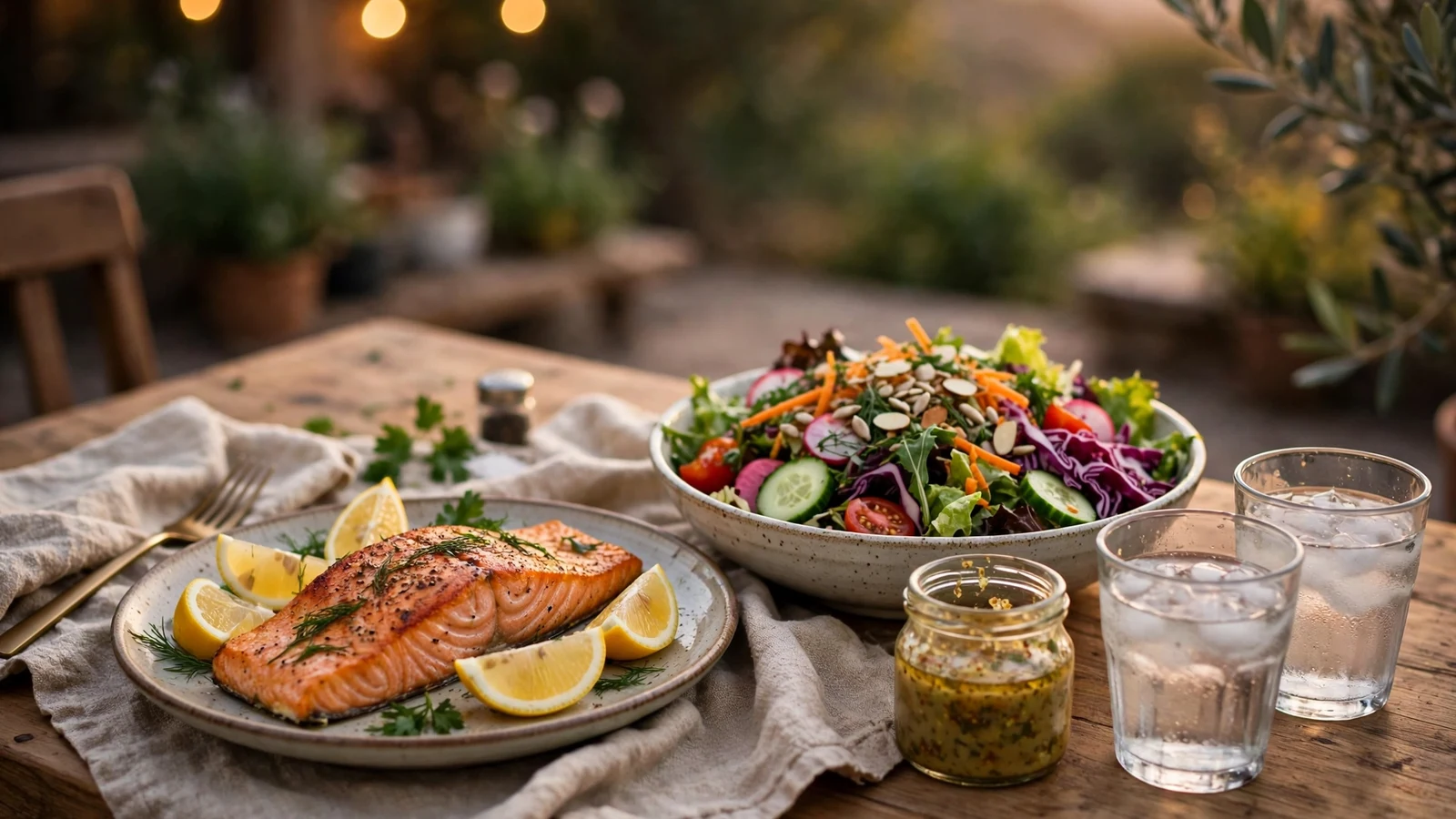
The fish came next, and I will be honest: the first few tries were not great. Dry salmon, a pan too hot, a kitchen full of smoke and a husband opening the back door and waving a dish towel at the smoke alarm. We laughed about it, ate the dry salmon anyway, and tried again the next week with a lower heat and a little patience. By the third try it was good. By the fifth it was the meal we both asked for. Fish is like that: it punishes rushing and rewards waiting, and waiting is easier when two people are doing it together.
The salad took longer to earn its keep, because for years a salad at our house was a bowl of lettuce with a tomato cut into it, served out of duty and eaten out of politeness. The salad that is actually good has crunch, and salt, and something sweet, and a dressing you make yourself in two minutes: olive oil, lemon, a spoonful of mustard, a pinch of salt, shaken in a jar. Add cucumber for crunch, a handful of nuts for weight, and a few slices of orange if you have one. It is not a side dish anymore. It is the thing we both reach for first, and the fish sits next to it like a guest who knows he is welcome.
Nobody at our table calls this a diet. Nobody counts anything, and nobody should take this story as diet advice, because it is not that. It is just two people who got tired of feeling sluggish after dinner and decided to cook like they meant it. If you have a question about food and your health, ask your doctor, not a blog post about soup.
The rule: never a lecture, always a plate
Here is the rule, the only one, and it has held for two years now. Never a lecture, always a plate. If I want my husband to try something, I cook it and put it in front of him. I do not explain it first. I do not tell him why it is good for him. I hand him a fork and let the food do the talking, because food is better at talking than I am.
He does the same for me. When he found a recipe for roasted chickpeas that he liked, he made a batch on a Saturday and left the bowl on the counter without a word. I ate half the bowl standing up, and he said, “Told you,” and I said, “You told me nothing, you just left a bowl,” and we both laughed, because that is exactly how it is supposed to work. A plate is an invitation. A lecture is a wall.
The rule works outside the kitchen, too. A short after-dinner walk after we eat does more than any talk about getting more steps ever did, because it is something we do together instead of something one of us tells the other to do. And a quiet evening ritual for couples at the end of the day keeps the kitchen a calm place to come back to, instead of a room where the day’s arguments get reheated along with the leftovers.
If your kitchen could use a change, start with one pan and one meal, and do not announce it. Cook the soup on Sunday. Put the salad on the table before anything else. Hand your spouse a plate and say nothing at all. The food will say it for you, and the kitchen will stay the friendly place it is supposed to be.
Frequently asked questions
How do you start cooking healthier together without nagging?
Do not announce a change. Change one thing quietly, cook it well, and let the meal speak. A plate in front of someone is an invitation; a lecture about their plate is a wall. Start with one meal you both like and build from there.
What if one partner does not want to change how they eat?
Then do not change how they eat. Change what you cook, cook it well, and let them choose. Keep the foods they love on the table alongside the new ones. Nobody ever switched to a new meal because someone told them their old one was wrong.
What are the easiest first swaps for couples?
A smaller pan, so portions shrink without a word about it. Salt added while cooking, a little at a time, instead of a shaker at the table. One pot of soup on Sunday that covers three days. And a salad with crunch, salt, and a homemade dressing, cooked and seasoned like it matters. If you have questions about food and your health, ask your doctor.
What is the one meal that stuck in your kitchen, the one you both ask for without thinking about it? Tell us in the comments, if you are willing. Your answer might be the Sunday soup another couple needs.
Going through something similar?
Share your experience anonymously with the Ever After Daily community. Every story is read by a human editor before anything is published.
Share Your Story