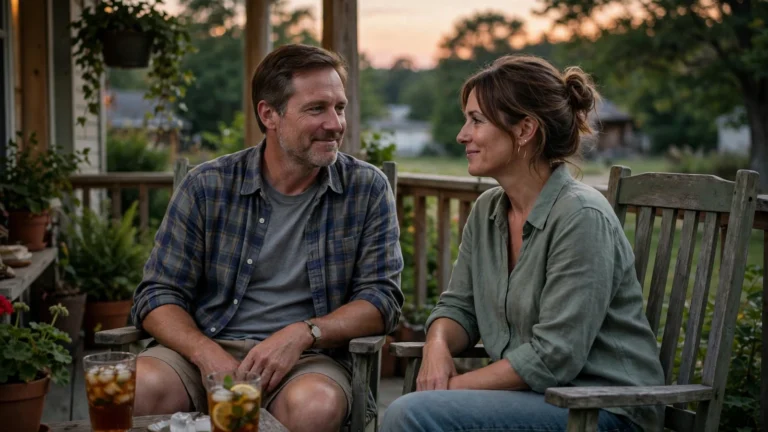
11 Small Things Happily Married Couples Do Without Thinking
Discover 11 small things happily married couples do every day, from warm morning hellos to quiet daily thanks, that keep love strong and steady for years.

Nobody in a happy marriage sits down and plans to be happy. It’s not a decision they make once — it’s eleven tiny things they do on a Tuesday without even noticing.
That’s the part nobody tells you early on. You think there’s going to be a moment when it all clicks. But the couples who are still laughing in the kitchen fifteen years in? They didn’t crack a code. They just kept doing the small stuff. The coffee mug handed over without asking. The dumb text at lunch. The way they look up when the other one walks in the room.
If your marriage feels a little flat right now, that doesn’t mean it’s broken. It might just mean the tiny things got buried under the busy things. The good news is you don’t need a retreat or a big romantic rescue plan. You just need to notice what happily married couples are already doing on autopilot — and borrow one or two for yourself.

11 Small Things Happily Married Couples Do Without Thinking

1. They say good morning like they mean it. Not a grunt into a phone screen, not a mumbled “morning” while the shower’s already running. An actual hello. It might be a kiss on the forehead while one of you is still half asleep, a hand on a shoulder in the kitchen, or a sleepy “hey you” that says you’re glad this person is here. It takes about four seconds, and it sets the whole tone for the day. You’d be surprised how many couples skip it and then wonder why the house feels a little chilly by dinner.
2. They text during the day about nothing important. A photo of a weird dog at the park. A meme that only the two of you would find funny. A screenshot that says “remember this?” about a restaurant you tried two summers ago. None of it matters — and that’s exactly why it matters. These little pings in the middle of a workday say, “I thought of you when I didn’t have to.” They keep you tethered to each other in a way that a big anniversary dinner never could. Happy couples don’t save their attention for special occasions. They scatter it all over an ordinary Tuesday.
3. They turn toward each other instead of away. When one of you says “look at this” — the sunset, the kid’s drawing, the funny license plate — the other one actually looks. It’s the smallest unit of being chosen, and it’s easy to miss how much it counts. Turning away looks like scrolling through the moment, answering with a flat “uh-huh,” letting the comment float off. Turning toward looks like eye contact. It says you’re still curious about what your favorite person finds interesting, even when it’s objectively not that interesting.
4. They have a private language. Every long marriage develops its own shorthand. The dumb nickname that stopped making sense in 2016. The phrase you both say in the same silly voice when the dog does that thing. The inside joke that would take twenty minutes to explain to anyone else and still wouldn’t be funny. That private world is a kind of glue. It’s proof you have a history together that nobody else gets to live inside. If you want a glimpse of the habits couples who stay in love never drop, watch for that language — couples who still have it are couples who still feel like partners, not roommates.
5. They touch casually and constantly. A hand on the lower back while you’re passing each other at the stove. Fingers brushing while you watch TV. A quick shoulder squeeze on the way to grab the laundry. It’s not about seduction. It’s about contact. Happy couples stay in physical orbit with each other in a way that doesn’t need a reason. Over time, that easy touch does something words can’t — it keeps you feeling like a couple instead of two very efficient co-managers of a household. When the touch disappears, people notice. When it stays, they relax.
6. They say thank you for unglamorous things. “Thanks for taking the trash out.” “Thanks for dealing with school pickup when traffic was a mess.” It’s not flowery. It’s better than flowery, because it’s specific. Gratitude for invisible work is rocket fuel in a marriage. Most resentment doesn’t start with a big betrayal. It starts with one person quietly thinking, “Does anyone even see what I do around here?” A two-second thank-you answers that question before it has time to grow teeth.
7. They laugh at the same dumb stuff. The same episode of a show you’ve seen three times. The same stupid joke that has no business being funny anymore. The same impression of your neighbor that gets worse and funnier every time you do it. Shared humor is shared relief. It reminds you that life with this person is not just bills and schedules and who’s picking up milk. It’s also fun. Couples who can still make each other laugh on a bad Wednesday have a release valve that stressed couples would pay good money for — if you could buy it, which you can’t.
8. They give each other the benefit of the doubt. This one takes years to build and about four seconds to break. When your spouse comes home with a sharp tone, the happy-couple reflex is “they’re tired” or “work must have been rough,” not “they’re attacking me and here we go again.” That doesn’t mean they ignore real hurt. It means their first story about each other is generous. They assume stress before they assume cruelty. It’s a quiet kind of trust, and it’s also one of the clearest signs your partner genuinely feels safe with you — safe enough to have an off moment without it turning into a trial.
9. They share the mental load without being asked. It’s not just taking out the trash when you’re told. It’s noticing the fridge is almost empty, or that the kid’s shoes are suddenly too tight, or that the electric bill is due Friday. The seeing is the loving. One of the fastest ways a marriage gets lopsided is when one person becomes the household’s brain while the other waits for assignments. Happy couples try to split the noticing, not just the doing. Nobody gets it perfect. The fridge still ends up empty sometimes. But both people are looking, and that changes everything about how heavy the load feels.
10. They fight fair, even when they’re furious. Fair fighting isn’t calm fighting — sometimes voices still get loud. Fair means no name-calling, no hauling 2019 into a 2026 argument, no walking out mid-sentence. They argue about the thing in front of them, not about each other’s character. That discipline protects the marriage during the moments when it’s easiest to damage it. You can be mad and still be kind. You can be right and still not be cruel.
11. They choose each other in public. They back their spouse up at the family dinner instead of going quiet when Mom makes a comment. They praise each other in front of friends without making it weird. They use “we” a lot, and they mean it. Loyalty you can hear is different from loyalty you just assume. When your partner feels you choosing them in a room full of other people, it lands deep. It’s also why so many long-term couples will tell you that big romance is overrated and small public kindness is underrated. They’ve learned why simple habits beat expensive date nights by watching what actually sticks around after the expensive night is over.
What These Habits Actually Have in Common

Look at that list again and you’ll notice something kind of comforting. None of the eleven are hard. Nobody is training for anything. There’s no personality transplant required.
What these things have in common is attention. Happy couples aren’t trying harder in some heroic way. They’re just noticing each other more in the middle of a normal day. The greeting, the text, the look up from the phone, the thank-you — they’re all different ways of saying the same sentence: “You’re still important to me, even on a regular day.”
And here’s a little secret that should take some pressure off. You don’t have to do all eleven perfectly. Nobody does. Some weeks you’ll be great at the morning hello and terrible at the benefit of the doubt. Other weeks the touching will be easy and the mental load will be a mess. That’s fine. A happy marriage isn’t a report card. It’s a bunch of small moments where you keep turning back toward each other, even imperfectly. If you want another reminder that you’re probably doing better than you think, this piece on the signs your marriage is stronger than you think might feel good to read on a tired night.
How to Start Doing These Without It Feeling Forced
If this list made you a little tired instead of inspired, I get it. Eleven new habits sounds like another project on top of work and kids and the laundry that never ends. So don’t do eleven.
Pick one. Just the one that felt easiest, or the one where you read it and thought, “Okay, we used to do that and I miss it.” Maybe it’s the morning hello. Maybe it’s the silly text at lunch that takes twelve seconds and makes both of you grin at your desks. Do that one thing this week and don’t worry about the rest.
The trick is to keep it so small it doesn’t feel like a performance. You’re not announcing a new system at the dinner table. You’re not scoring each other. You’re just quietly adding back a tiny thing you already know how to do. Real change in a marriage rarely starts with a big talk. It starts with someone handing over a coffee mug and saying “hey you” like they mean it on a Tuesday morning.
Give it a week. See if the house feels a little warmer. Then, if you want, pick one more. That’s how the couples on this list built their list — one ordinary choice at a time, repeated until it didn’t feel like a choice anymore. It just felt like us.
So I’m curious — which one of these eleven made you think, “Oh, we already do that,” and which one made you think, “We need that one back”?
The weekly pause that keeps the small habits alive
Small habits are easy to start and easy to lose. You do the morning hello for a week, then a busy Monday eats it, then a tired Thursday eats it, and by the next month you cannot remember when you stopped. The habits in this article do not fail because they are hard. They fail because nobody watches over them, and a habit with no keeper quietly disappears.
That is what a weekly pause is for: once a week, twenty minutes, same time, same two chairs, phones in another room. Not a meeting. Not a talk about problems. Just a pause to look at the week together and ask two questions: what worked, and what felt off. The pause is the keeper. It catches the small habit that slipped before it is gone for good.
Try it on a Sunday evening, while last week is still fresh and the next one has not started. Sit down with something warm and take turns. One of you starts with what worked: “I liked it when you waited for me at the door on Wednesday. It made coming home feel different.” Then the other one says what felt off, without blame and without a speech: “Thursday felt rushed, and I missed our coffee together.” That is the whole exercise. Two honest sentences each, then you decide one small thing to protect next week. Maybe it is the coffee. Maybe it is the doorway hello. One thing, not five. A list of five is a plan for a perfect week, and perfect weeks do not exist.
The pause works because it is short and regular, and it happens before the week starts, not after it falls apart. Couples who wait until something is wrong to sit down together are always doing repairs. Couples who pause every week are doing maintenance, and maintenance is cheaper and far less painful than repair. The pause is also where the small practical choices get made without turning into arguments. The grocery run, the weekend plan, the bill that needs paying; when those get decided in a calm twenty minutes, they stop ambushing you on a Tuesday night. Couples who share one grocery budget use the same idea, one plan made together before the week begins, so money stops being a surprise and starts being a routine you both agreed to.
Put the phones away for the pause, all the way away, in another room. A phone on the table is a phone in the conversation, even when nobody touches it. Couples who unplug for the first hour found the same thing at home: the first hour without a screen belongs to the people in the room, and the talk that happens in that hour is different from the talk that happens with a phone nearby. Twenty minutes without a screen is enough to hear each other properly.
If twenty minutes feels like a lot, start with ten. If Sunday does not work, pick any night that repeats. The night matters less than the sameness, and sameness is what turns a good idea into a habit that keeps the others alive. A marriage is held together by small habits, watched over by a small pause, week after week.
Frequently Asked Questions

What do the happiest couples have in common?
They pay attention in small, repeatable ways. They greet each other warmly, they keep in touch during the day about nothing in particular, they touch casually, and they thank each other for unglamorous work. It’s not that they never fight or never get stressed. It’s that their default setting is generous — they assume the best first, they repair quickly, and they keep choosing each other in little public and private moments.
Can small habits really save a struggling marriage?
Small habits can help a lot, especially if the core love and respect are still there and things have just gotten flat or distant. A daily greeting, a real thank-you, and a habit of turning toward each other can warm things up faster than most people expect. That said, if there’s ongoing cruelty, fear, or a complete refusal to talk, small habits alone won’t fix it — that’s a sign to get support from a counselor or trusted professional.
How long does it take to build new marriage habits?
For most couples, a new habit starts to feel less forced after a couple of weeks of doing it on purpose. The morning hello might feel a bit staged on day two and totally normal by day fourteen. The key is starting tiny and being consistent. You’re not trying to become different people. You’re just practicing one kind choice until it stops needing a reminder.
What if my spouse doesn’t do any of these things?
Start with yourself, without keeping score for at least a little while. Say the warm good morning. Send the silly lunch text. Offer the specific thank-you. A lot of spouses soften and start matching that energy once they feel it, even if they don’t comment on it out loud. If weeks go by and nothing shifts, that’s worth a gentle conversation — not “you never do anything on this list,” but “I miss how we used to be with each other during the day. Can we try a couple of small things together?”
Are happy couples just better matched, or do they work at it?
Both things can be true. Some couples click easily from the start, and that helps. But every happy long-term couple I’ve ever listened to will tell you the click wasn’t enough. They worked at the ordinary parts — the greeting, the gratitude, the repair after a dumb fight. Matching might get you to the wedding. The small daily choices are what get you to year twenty still liking each other on a Tuesday.
What’s the number one habit of happy couples?
If I had to pick one, it’s turning toward each other. The greeting, the text, the laugh, the “look at this” — they all grow out of that one reflex. When your partner bids for your attention in a tiny way and you meet it, you’re saying, “You still matter more than whatever I’m looking at.” Do that enough times, and a marriage starts to feel held together by a thousand tiny yeses instead of one big promise.
Keep Reading
If this hit home, these might too:
- the habits couples who stay in love never drop
- signs your partner genuinely feels safe with you
- why simple habits beat expensive date nights
- signs your marriage is stronger than you think
Going through something similar?
Share your experience anonymously with the Ever After Daily community. Every story is read by a human editor before anything is published.
Share Your Story