Long Summer Evenings, Spent Together
Summer gives couples long evenings and short attention spans. Easy, cheap plans for the hours after dinner: a walk, a porch hour, and one night a week.
Long Summer Evenings, Spent Together
At eight o’clock on a July evening, it is still light outside. The sun has not set, the air is warm, and the whole evening stretches ahead of you like an empty afternoon. And then, somehow, it is ten thirty, and the two of you are in different rooms, one of you on the phone and the other one in the yard, and the long evening is gone without either of you noticing it go.
That is the strange thing about summer evenings. They are the longest evenings of the year, and the easiest ones to waste. The light lasts so long that everyone thinks there is plenty of time. There is plenty of time, and that is the problem: when there is plenty of time, nothing feels urgent, so nothing happens. The dishes wait. The walk waits. The conversation waits. And by the time the sky finally goes dark, the evening has dissolved into screens and small chores, and the two of you have spent another long summer night apart in the same house.
Summer evenings do not need big plans. They need small ones, decided ahead of time, cheap enough to do every night and easy enough to keep.
Why summer evenings drift apart

The drift starts with the light. In winter, dark comes at five, and the evening has a shape: dinner, couch, bed. Everyone is inside, in the same room, at the same time, because there is nowhere else to be. In summer, the light lasts until nine, and the house spreads out. One of you is in the yard, pulling weeds that could wait until the weekend. The other is inside, answering one more email, or scrolling through a feed that never ends. Neither of you is doing anything wrong. You are just in different places, doing different things, in the longest light of the year.
The second reason is the phone. Summer evenings are made for sitting outside, and sitting outside is made for scrolling. The phone comes out for one quick check, and twenty minutes later you are still holding it, reading things you will not remember tomorrow. The yard looks the same. The evening looks the same. The only thing that changed is that the two of you stopped talking.
The third reason is the chores. Summer makes a long list: the lawn, the garden, the grill, the gutters, the fence. Every one of them feels easier to do in the evening, when it is cooler, and every one of them stretches to fill the hours that used to belong to the two of you. A chore that takes twenty minutes takes an hour when nobody is keeping track, and the evening is gone before anyone notices.
None of this is a crisis. It is just a slow leak, and the fix is just as slow and just as simple: give the evening a small shape, the same shape, every night.
The after-dinner walk
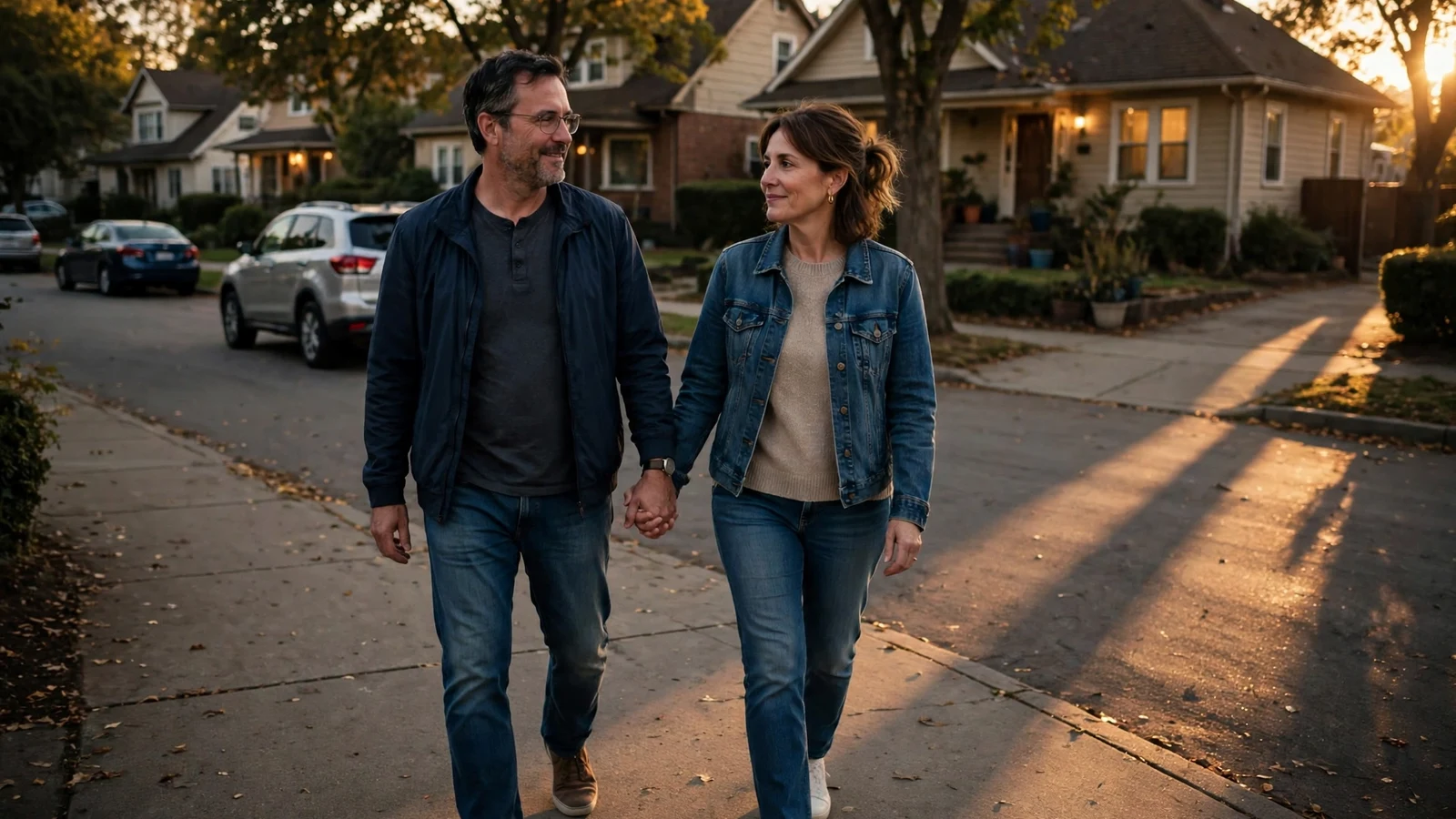
The after-dinner walk is the easiest plan on this list, and it is the one that does the most. Twenty minutes, the same loop, right after the plates are in the sink. No agenda, no destination, no errands on the way. Just the two of you, walking around the block while the light fades.
Say it the same way every night, so it becomes a habit instead of a negotiation: “Shoes on. Around the block.” The first week, it will feel forced. The second week, it will feel normal. By the third week, the walk will be the part of the evening you both look forward to, because it is the only part of the day when nobody needs anything from either of you. No phone calls, no dishes, no decisions. Just walking, side by side, talking about the day or saying nothing at all.
The walk works because it gives the evening a start time. Without a start time, the evening never really starts. One of you is still at the table, the other is already on the couch, and the hours in between belong to nobody. With the walk, the evening starts the moment you step out the door, and everything after it, the porch, the tea, the quiet hour, falls into place behind it.
If the heat is still up at dinner time, wait until eight, when the sun drops and the air cools. If one of you is tired, make the loop short. A ten-minute walk beats a walk that never happens, and a short walk you take every night is worth more than a long one you take once a week. Couples who unplug for the first hour use the same idea: the first hour after dinner belongs to the people in the room, and the phone waits.
The porch hour

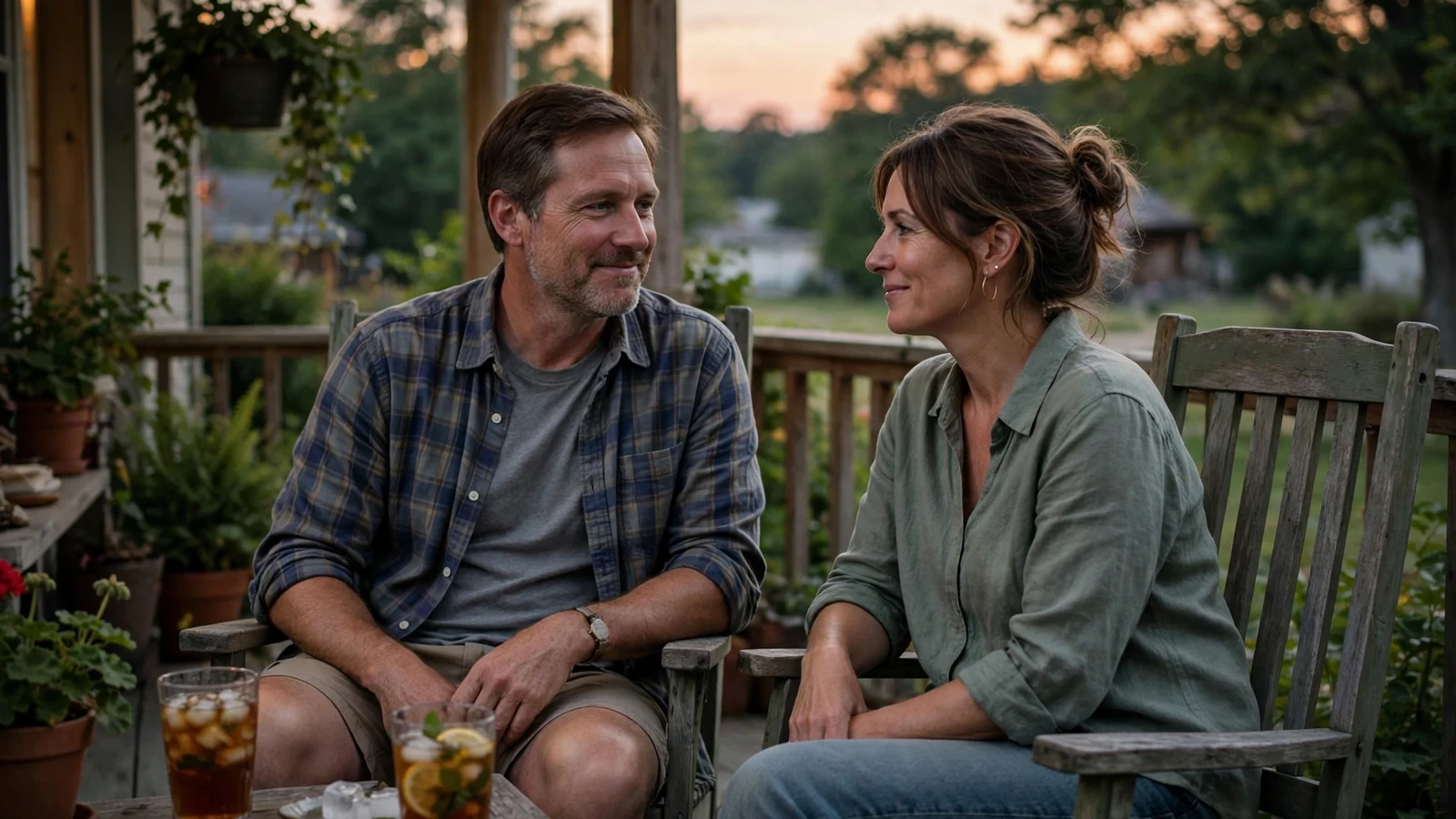
The porch hour runs from eight to nine, and it has one rule: the phones stay inside. Two chairs, one table, something cold to drink. That is the whole setup, and it is enough.
The porch hour is different from the walk, because the walk is for talking and the porch hour is for being quiet together. You do not need to fill it. Sit with your feet up. Watch the street. Listen to the neighbors. Read a book, if you like, as long as it is a real book and not a screen. The point is that you are in the same place, at the same time, doing nothing much, and that nothing-much is the whole point.
If you do not have a porch, use whatever you have: a balcony, two chairs in the yard, a blanket on the grass, the front steps. The furniture does not matter. The hour matters. And if the mosquitoes are out, light a candle and call it part of the plan. A summer evening with a candle on the table and nowhere to be is a small luxury, and it costs nothing.
This is the heart of an evening ritual for couples: a small, repeated shape that tells both of you the day is done and the night belongs to you. The porch hour is not a date. It is better than a date, because it happens every night, and it asks nothing of you except that you show up.
One night a week that is not errands

The walk and the porch hour cover the ordinary nights. One night a week needs something more, and that something needs a name: the night that is not errands.
Pick a night. Thursday, Friday, whatever fits. On that night, the two of you do one thing together that is not useful. Not the grocery store. Not the hardware store. Not the pile of laundry that has been waiting since Tuesday. One thing that exists only because the two of you enjoy it: a movie on the porch with a laptop, a drive to the ice cream place, a card game at the kitchen table, a late walk that goes two blocks further than usual.
The rule is simple to say and hard to keep: the errands wait. Every week, something will try to take that night. A package needs returning. A prescription needs picking up. A friend needs a favor. Say no, or move it to the next day. The night only works if it is protected, and it is only protected if both of you agree, out loud, that it counts.
Cheap date nights at home are a good place to start when the week is tight, because they prove the point this whole article is making: a good summer evening does not need money, a reservation, or a plan that took a week to arrange. It needs two people, one hour, and a decision to spend it together.
Frequently asked questions
What if it is too hot to sit outside?
Wait until after eight, when the sun drops and the air moves again. Sit in the shade, bring cold drinks, and keep the porch hour short if you need to. A twenty-minute sit in the warm dark still counts, and on the nights when the heat will not break, bring the porch hour inside: two chairs by the open window, the fan on, the phones in the other room.
What if one of us works evenings?
Find the shared hour, even if it is not the same hour every night. If one of you gets home at nine, the porch hour starts at nine. If your schedules only overlap on weekends, make the weekend evenings the ones you protect, and keep the after-dinner walk for the nights you are both home. The plan bends to your life. The point is that the two of you share an hour, not that the hour is always the same.
What if we have kids at home?
Bring them on the walk. A slow loop around the block with kids is still a walk together, and the porch hour can start after bedtime, when the house goes quiet and the two of you finally have the evening to yourselves. The summer evenings belong to the whole family during the day. The last hour belongs to you.
So, which part of the evening is yours: the walk, the porch hour, or the one night a week? Tell us in the comments, if you are willing. Your answer might be the nudge another couple needs to claim their own summer night.
Going through something similar?
Share your experience anonymously with the Ever After Daily community. Every story is read by a human editor before anything is published.
Share Your Story