Why Couples Fight About Money Even When They Have Enough
You have enough money and still fight about it. Here is why couples fight about money, the 7 hidden drivers underneath, and exact words to say instead.

It starts over nothing. That’s what makes it so confusing.
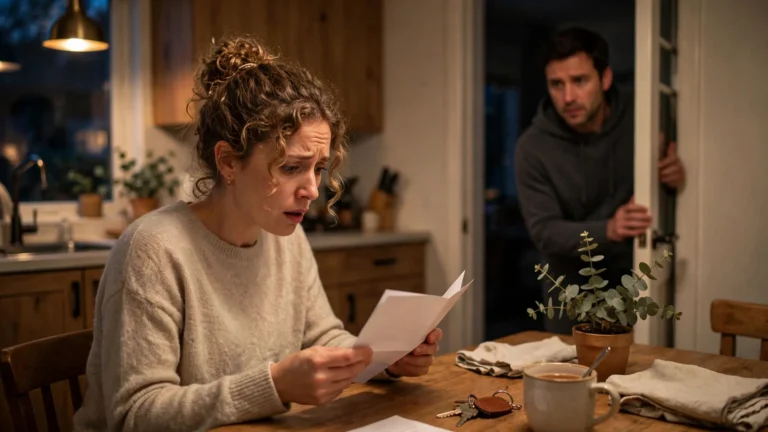
He comes home with new earbuds. Eighty-nine dollars. Not rent money. Not grocery money. The old ones were held together with tape and hope. She looks at the bag: “Must be nice.”
He hears an accusation. She hears herself panic. Ten minutes later you’re arguing about respect, about who works harder, about his mother, somehow — while the earbuds sit untouched on the counter, radiating guilt.
If you have enough and still fight like this, your math isn’t broken. The bills get paid, yet a receipt can wreck an evening. Money fights are rarely about money. They’re about what the money means — and you two almost never mean the same thing. Underneath nearly every spending argument are seven quiet drivers. Spot yours, and the fight gets shorter. Not perfect. Shorter, and less lonely.
The Receipt Is Never Just the Receipt

Watch closely: the amount shrinks while the feelings grow. A $40 garden hose becomes a speech about “always.” Nobody cries over a hose. They cry because it seemed to prove something: You don’t see me. You don’t protect us.
Every dollar carries an invisible label — safety for one spouse, freedom for the other. You’re arguing about two labels stuck to the same receipt. That’s why this feels like the same fight over and over with different props. The fix isn’t a stricter budget. It’s naming the real fight while you’re still in it.
The 7 Hidden Drivers Behind Almost Every Money Fight
You don’t have all seven. Most couples have two loud ones and a quiet one that shows up at 11 p.m. Notice which scenes sting. That sting is information.
### 1. Safety vs. Freedom
One of you hears spending as danger. The other hears saving as a cage. She moves every leftover dollar to savings — a full account is how her shoulders come down. He watches it go, then buys concert tickets without asking, just to breathe. She sees the charge and feels the floor tilt. He sees her face and feels twelve years old.
Name the real fight: “I’m arguing for safety right now, not against you. I’m scared, and the spending is just where the fear landed.”
### 2. Control
Money is decision power in disguise. Who decides what’s “too much”? Who has to ask? He sets up automatic transfers and a smart spreadsheet and shows it like a gift. She goes quiet: her paycheck just became line items in somebody else’s system, unasked. Flip it, and she manages every bill while he “hates that stuff” — then lies awake, the only adult who knows the mortgage cost.
Name the real fight: “I need an actual say in this, not a summary after it’s already decided.”
### 3. Fairness
This driver keeps receipts of a different kind: effort. She skips shoes she wants because the kids need coats. He comes home with fishing gear that was “on sale.” The price isn’t the wound. The wound is her invisible math all month — dentist appointments, his sister’s gift, the plumber — none of it counted in his story of who carries this family. Here’s the calmer way in when spouse spends too much feels true at your house.
Name the real fight: “I’m not mad about the amount. I feel like I’m carrying more of this than you can see, and I need you to see it.”
### 4. Childhood Scripts

You didn’t just marry a person. You married their childhood kitchen too. His dad hid packages in the truck. His mom did quiet math after everyone left. Bills were whispered; asking changed the weather. Now he’s 38, the mortgage is fine, and a porch delivery still spikes his dread. She grew up where money got spent fast and loud, so his caution feels like criticism of her people.
Name the real fight: “That rule lived in my house growing up, and it’s running me right now. Give me a second with it.”
### 5. Status
Nobody wants to claim this one, which is why it stays powerful. Sometimes a purchase is about what it says. His old truck runs fine — until his reunion is scheduled. Suddenly it’s humiliating. She says yes to the fancy dinner, then does silent math through appetizers, smiling with her jaw clenched. Vacation photos make your good backyard weekend feel like losing. Shame dresses up as practicality, convincingly.
Name the real fight: “I care how this looks, and I’m embarrassed to admit that out loud. That’s what’s actually happening.”
### 6. Avoidance
The quietest driver, and often the heaviest. One spouse avoids the mail, the app, the talk. The other becomes the full-time worrier — which sounds like nagging, which makes the avoider hide harder. A stack of unopened envelopes lives by the microwave. Probably nothing scary. He just can’t open them. She thinks he’s careless. He’s ashamed, and shame with no exit looks exactly like not caring.
Name the real fight: “I’ve been avoiding this because I feel ashamed, not because I don’t care. I need help opening it, literally.”
### 7. Different Timelines
You can share every value and still fight, because one of you lives in now, the other in ten years. A bonus lands. She sees the beach trip the kids will remember. He sees the roof, the braces, the two of you at 60. She hears “later” as life deferred. He hears “now” as nobody protecting the future. Both are love, in villain costumes.
Name the real fight: “You’re protecting future us. I’m trying not to miss present us. We need a plan that honors both.”
Here’s the part nobody says out loud: a couple that can spot even one of these drivers mid-fight is usually stronger than they think. The fight isn’t the verdict. What you do inside it is.
How to Name the Real Fight Mid-Argument

You’ll realize it mid-sentence, heart pounding, holding a receipt like evidence. Late still beats never.
Call the pause out loud. “Wait. I don’t think we’re fighting about the hose anymore.” Keep sentences short and your list of things never to say in an argument shorter. One cruel line can cost you the whole repair.
Finish this sentence about yourself: “I think I’m protecting ___ right now.” Safety. A say. Fairness. Our future. First-person honesty invites help. “You’re irresponsible” only invites defense.
Ask for the need under the number. “What would make this feel okay — a limit, a heads-up first, splitting it across two paychecks?” Concrete answers end fights. Verdicts extend them.
Too heated? Try: “I love you. I’m too heated to do this well. Twenty minutes, and I’ll be back.” Then come back. A pause with a return time is a bridge. Without one, it’s a door closing.
Say This First: A Calm Opening That Actually Works

Mid-fight naming is the emergency skill. This is the everyday one — a money talk when nobody’s mad yet. Not in bed. Not in the car to his parents’. A boring Saturday morning with coffee wins.
Try it nearly word for word: “Can we talk about money for fifteen minutes? Not to win. We keep fighting about little purchases, and I don’t think they’re the real issue. I think I’m mostly scared about feeling like I’m doing this alone. Can you tell me what spending feels like from your side? I’ll just listen first.”
Then stop talking. Fifteen honest minutes, twice a month, teaches you more than years of receipt arguments. Ready for the wider map? The full list of money conversations couples should have puts debt, savings, and family loans in a sane order. You don’t need a spouse who wins money fights. You need two people who can say the fear underneath the earbuds out loud. Tell me in the comments: which driver runs your house?
Frequently Asked Questions
Why do we fight about money when we’re actually doing fine?
Because “fine” describes the account, not the meaning attached to it. The same balance reads as safety to one spouse and unused freedom to the other, so a small purchase wakes a big driver underneath the receipt.
How do I bring up money without it turning into a fight?
Pick a calm moment, keep it short, lead with yourself: “I get anxious about this and I want to hear your side.” Agree on the end time first, and stop when you reach it.
What should I say in the moment when a money fight starts?
Name the driver in one sentence about yourself: “I think I’m arguing for safety right now, not against you.” That turns a verdict into honest information, which is far easier to answer kindly. Too heated? “Twenty minutes. I love you, and I’ll be back.”
When should couples get outside help for money fights?
When the same argument keeps ending in secrets, hidden debt, or days of silence — or when one of you fears honesty about spending at all. A financial counselor can help with numbers; a couples counselor with what’s underneath.
Keep Reading
If this hit home, these might too:
- money conversations couples should have
- spouse spends too much
- things never to say in an argument
- same fight over and over
Going through something similar?
Share your experience anonymously with the Ever After Daily community. Every story is read by a human editor before anything is published.
Share Your Story