The Couple Who Saved Every Ticket Stub
One shoebox of ticket stubs holds twenty years of first dates, bad movies, and great concerts. This is the story of a couple’s accidental history, stub by stub.
The Couple Who Saved Every Ticket Stub
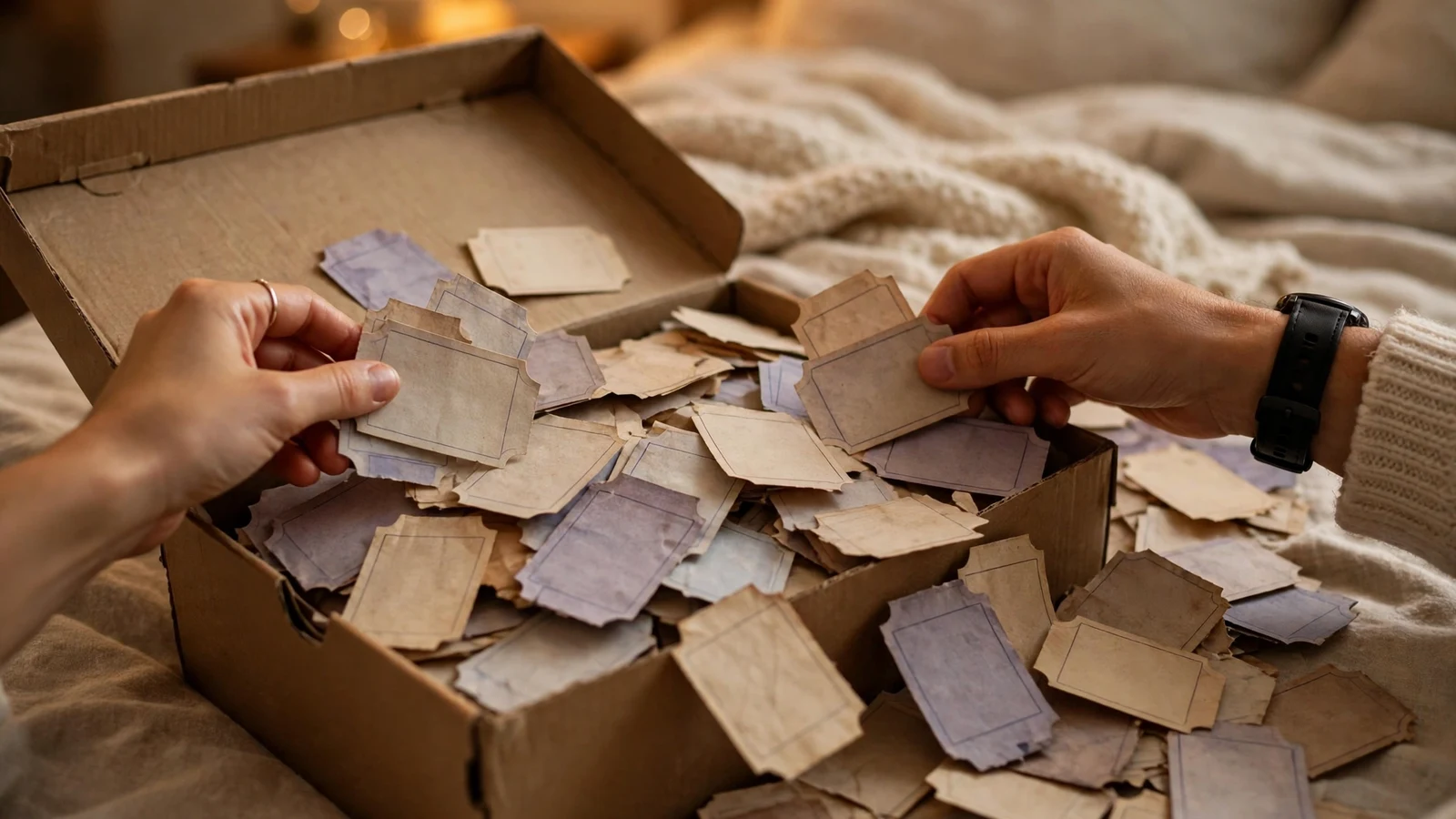
The shoebox lives on the top shelf of the hall closet, under a stack of old scarves, and it has no label. Inside it, under a rubber band that gave up years ago, are two hundred ticket stubs, give or take. Movie stubs, concert stubs, a play, a baseball game, a train ticket to Chicago that cost less than lunch does now. None of them are worth anything. All of them are worth everything.
Mark started it by accident. On their third date, in the spring of 2004, they saw a movie so bad they laughed all the way home, and Mark folded the stub into his wallet because he wanted to remember the laugh. A week later, he found it again while paying for coffee, and instead of throwing it away, he put it on the kitchen counter. Lena picked it up, turned it over, and wrote the date on the back in pencil. Then she put it in the shoebox, because the shoebox was empty and nearby. That was the whole plan. There was no plan.
Twenty years later, the shoebox is a history book nobody meant to write. Open it on a quiet night, and the stubs fall out in no order at all, and each one opens a door.
The shoebox

The first stub in the box is not the first date. The first date was coffee, and coffee leaves no paper. The first stub is the bad movie, a spy thriller with a plot neither of them can now recall, and the pencil on the back says “May 8, 2004, laughed the whole way home.” That is the whole entry. No review, no rating, no careful handwriting. Just the date and the laugh, which turns out to be the only part that mattered.
The box grew the way real collections grow, one stub at a time, without a system. Concert stubs went in with the corners folded. Movie stubs went in flat. The train ticket to Chicago went in with a coffee stain on one edge, because Lena had it in her coat pocket during a rainstorm. Nobody sorted them. Nobody counted them. Once a year, usually in January, one of them would tip the box onto the bed and they would sort through it together, and every stub would start a story, and the stories would take longer than the sorting.
The box also holds the stubs that almost got thrown away. The stub from the play Lena hated and Mark loved, which they argued about for a week. The stub from a concert where it rained and they stood under a tree that did not help. The stub from a baseball game where they left in the seventh inning because Lena was cold and Mark pretended he was cold too. A collection with only the good nights in it would be a highlight reel. The shoebox has the whole season in it, and the whole season is the point.
Lena says the box works because it never tried to be important. A photo album asks you to pose. A journal asks you to write. A ticket stub asks for nothing. It just sits there until a quiet night, and then it hands you a memory you forgot you had. Couples who quit fancy date nights often find the same thing: the nights that stay with you are rarely the expensive ones.
The stubs that matter


Ask Mark which stub matters most, and he will not pick the concert. He will pick a movie stub from a Tuesday in November, a film neither of them liked, because it was the first night Lena fell asleep on his shoulder in a theater. The stub says nothing about that. The pencil on the back says “she fell asleep, stayed anyway.” That is the whole story, and it is one of the best stories they own.
Ask Lena, and she picks the concert stub, but not for the music. The band was good. The music is not what she remembers. She remembers that Mark sang along to every word of a song he claimed to hate, and she remembers laughing so hard she missed the next verse. The stub is creased where she folded it into her pocket, and the crease is still there twenty years later, which feels right, because the laugh is still there too.
The first-date stub does not exist, and that absence is its own story. Some couples keep everything. Mark and Lena kept almost everything, and the almost is what makes it human. The coffee receipt from the first date is long gone. The memory of it is not. A couples bucket list works the same way: the list matters less than the nights you check off it together, and the checked boxes are the stubs of the future.
The stub from the train to Chicago matters for a different reason. It was the first trip they took together, three days in a city neither of them knew, with a hotel that had a broken elevator and a restaurant that served the best soup either of them had ever tasted. The ticket cost less than lunch does now, and the trip is still the one they measure every other trip against. Not because it was perfect. Because it was theirs, and it was first.
If you start your own box, start it the way they did: with whatever stub is in your pocket right now. Write the date on the back. Write one line about the night, just one, in pencil. Put it in the box and forget about it. The box does the rest, slowly, one stub at a time, and in ten years you will open it and wonder how so much life fit into so little paper.
What the collection says after twenty years

Twenty years of stubs says something no anniversary card can say. It says: we kept going out. Through the new jobs and the lost jobs, through the apartment with the loud pipes and the house with the broken fence, through the years when money was tight and the years when time was tighter, they kept buying two tickets and going somewhere together. The stubs are the receipts for a marriage that kept choosing the outside world, two seats at a time.
It also says: we kept the bad nights too. The box does not hide the movie they hated or the concert in the rain. A marriage that only keeps the good nights is a marriage that is afraid of its own history. Mark and Lena kept all of it, and the box is heavier for it, and better for it, and funnier for it. The bad nights are the ones that make the good nights believable.
Most of all, the collection says the small things were the big things all along. Nobody frames a ticket stub. Nobody writes a song about a Tuesday movie. And yet the Tuesday movie is the stub Mark reaches for first, because it holds the night Lena fell asleep on his shoulder and stayed. The signs of a strong marriage are rarely dramatic. They are quiet, and they fit in a shoebox, and they last twenty years if you let them.
So check your pockets tonight. Check your wallet, your coat, the cup holder in the car. There is a stub in there from the last thing you did together, and it is waiting to be the first stub in your box. Write the date on the back. Write one line about the night. Put it on the top shelf of the closet, under the scarves, where you will forget about it until the night you need it most.
And when you open it again, years from now, which stub will you reach for first? Tell us in the comments. We want to hear the story behind it, crease and all.
Frequently asked questions
What if we never kept any stubs?
Start tonight. The box does not need a past to be worth starting. The first stub goes in with today’s date, and the collection grows forward from there. Ten years from now, that first stub will feel just as precious as a twenty-year-old one does today.
What counts as a ticket stub?
Anything with a date and a place on it. Movie stubs, concert stubs, train tickets, museum passes, a playbill from a show, even a receipt from a dinner you still talk about. The paper matters less than the memory attached to it, and the pencil line on the back matters most of all.
Should we organize the stubs or just toss them in?
Toss them in. The mess is part of the charm, and sorting through a messy box on a quiet night is half the pleasure. If you want one small habit, write the date and one line on the back of each stub before it goes in. That is all the organizing a shoebox needs.
Keep Reading
If this hit home, these might too:
Going through something similar?
Share your experience anonymously with the Ever After Daily community. Every story is read by a human editor before anything is published.
Share Your Story