How Couples Spend a Rainy Weekend Without Screens
Rain traps a couple inside and screens fill the gap by default. A simple no-screen afternoon with cooking, a puzzle, and one movie together changes the weekend.

How Couples Spend a Rainy Weekend Without Screens
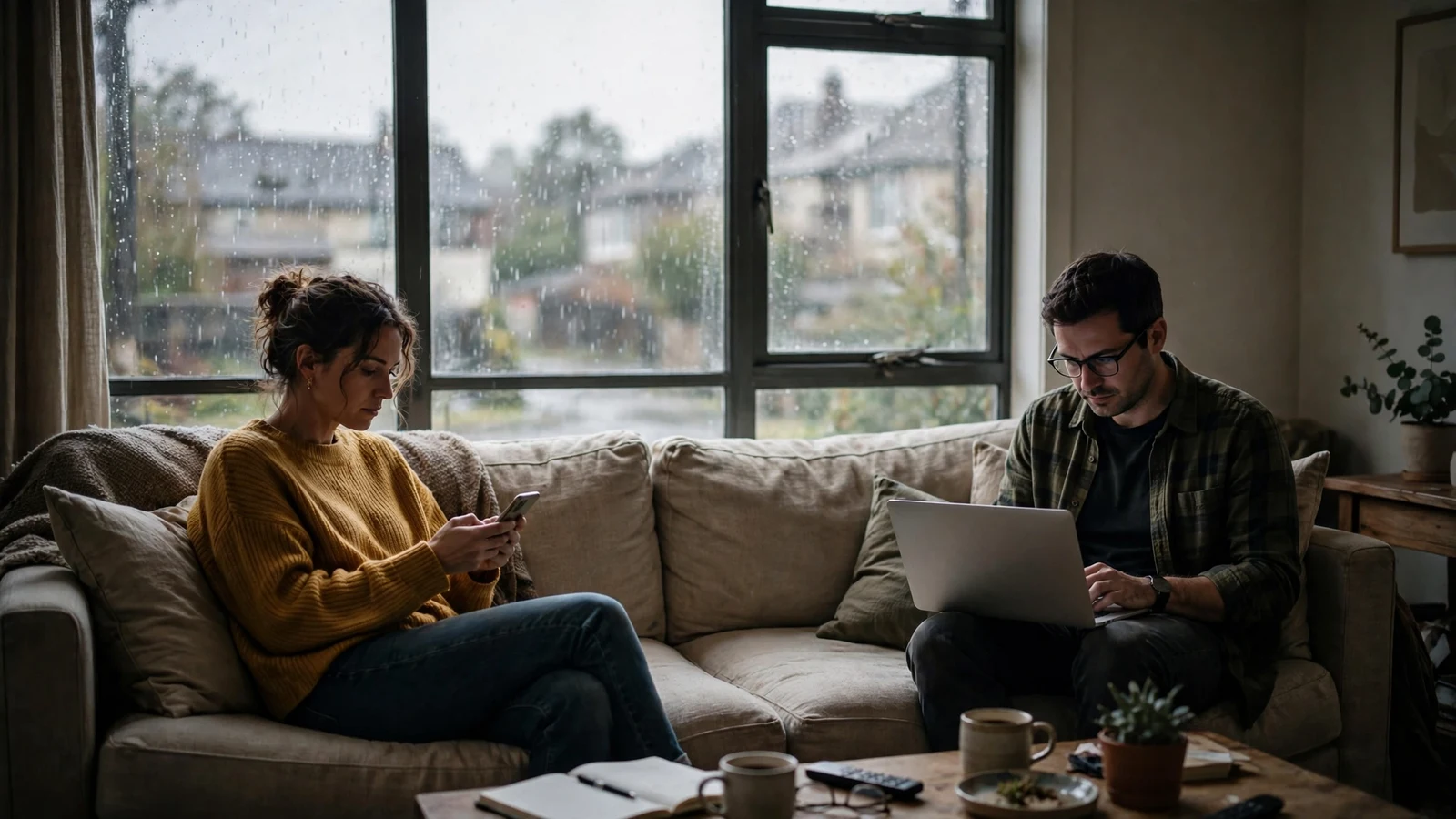
Saturday, 9:40 a.m. Rain taps the kitchen window, and the sky has that flat gray look that says the day is staying inside. Dan is on the couch with his phone. Priya is at the table with her laptop, half watching a show she has already seen. Neither of them planned this. The rain planned it for them, and the screens filled the empty hours before either of them noticed the weekend slipping away.
By 4 p.m., they have been in the same room for six hours and have barely spoken. Dan can recap three episodes. Priya can describe a thread she read about a stranger’s kitchen remodel. Neither of them can say what the other one was thinking about all day, because neither of them asked. The weekend is not ruined. It is just gone, spent side by side and somehow alone.
This is the part nobody says out loud about rainy weekends. The screens are not the enemy. The drift is. A couple that drifts through a rainy Saturday on separate screens wakes up Sunday feeling a little hollow, and they blame the weather, when the weather only set the scene.
Why rainy weekends drift to screens
Boredom is the real culprit, and boredom is not laziness. A rainy Saturday takes away the easy plans, the walk, the yard work, the drive somewhere, and leaves a blank day with no shape. Screens are the fastest way to give a blank day a shape. One episode becomes three because three episodes feel like a plan, even when nobody chose it.
Tiredness plays a part too. After a long week, your brain wants the easiest thing in the room, and the easiest thing in the room is a glowing rectangle that asks nothing of you. Cooking a meal together asks for effort. Starting a puzzle asks for attention. A screen asks for nothing, and on a tired Saturday, nothing sounds like rest.
The drift also feeds on itself. Dan picks up his phone because Priya is on her laptop. Priya stays on her laptop because Dan is on his phone. Each of them reads the other’s screen as a signal that togetherness is off the table for now, so neither of them suggests anything else. The screens do not push the couple apart. The couple lets the screens set the terms, one quiet hour at a time.
None of this makes either person a bad partner. It makes them two tired people in a house on a gray day, doing what tired people do. The fix is not a rule about screens. Rules turn a weekend into a test, and tests make people defensive. The fix is a plan that sounds better than the screen, and a plan you both pick together before the drift starts.
The no-screen afternoon


The afternoon starts at lunch, and lunch is the first move. A real meal you cook together, even a simple one, eaten at the table with real plates. Pasta with a sauce from scratch. Soup from the vegetables in the back of the fridge. Pancakes at 2 p.m. because nobody said pancakes were only for breakfast. One of you chops, the other stirs, and the kitchen fills with the smell of something you made together. Cooking gives your hands a job and your mouth a reason to talk, and by the time the food is ready, the afternoon already feels different from the morning.
After lunch comes the puzzle, or the board game, or the project that has been waiting on a shelf. Priya and Dan keep a thousand-piece puzzle on the dining table from October to March, and a rainy Saturday is its season. The puzzle does a quiet job that screens cannot do. It puts the two of you on the same side of a small problem, sorting edge pieces and trading the ones that fit, and the talk that comes out over a puzzle is the unhurried kind. The dog naps under the table. The rain keeps time on the window. Nobody is performing. Nobody is scrolling.
A walk in rain gear belongs in the afternoon too, even a short one. Ten minutes around the block in jackets and old shoes, with the rain on your faces and the street empty and silver. It sounds miserable until you try it, and then it feels like a small adventure you chose together. The air smells different in the rain. The neighborhood looks different without cars and crowds. You come home wet and a little cold, and the house feels warmer for it, and the couch feels earned.
If you need a plan that holds the whole afternoon, write it on a scrap of paper and stick it to the fridge. Cook lunch together. Puzzle until three. Rain walk at three-thirty. Tea and a book after. A plan on paper beats a plan in your head, because a plan in your head dissolves the moment a phone lights up. A couples bucket list is a good place to keep rainy-day ideas, so the next gray Saturday starts with options instead of a blank stare.
When screens come back

Screens come back in the evening, and they should. A no-screen weekend is a trade, and the trade works because the screen time at the end of the day feels chosen instead of drifted into. One movie together, picked together, watched together, is a completely different thing from six hours of separate scrolling.
Picking it together is half the pleasure. Dan and Priya keep a short list on the fridge of movies they both want to see, and Saturday night is when the list gets used. One of them proposes two titles, the other picks one, and the choosing takes five minutes instead of forty-five. The rule is simple: if one of you falls asleep, the movie pauses. If both of you hate it by the halfway mark, you turn it off and pick another. A movie you chose together, even a bad one, gives you something to talk about after the credits.
The couch matters here too. Sit on the same couch, under the same blanket, with the popcorn bowl between you. Phones go in the kitchen, on silent, because the movie is the plan now, front and center. This is the part of the weekend where a screen earns its place, and it earns it by bringing you together instead of pulling you apart. A weekly marriage check-in is a good place to agree on the movie list, so Saturday night never starts with a negotiation.
After the movie, stay on the couch for ten more minutes. Talk about the best scene. Argue gently about the ending. Plan tomorrow’s breakfast. Those ten minutes are the real end of the day, and they are the reason the whole weekend worked. A cheap date night at home can stretch the same idea into a full evening, and a fall date night gives you a seasonal version when the rain turns cold.
Try it next Saturday, rain or not. Cook lunch together. Do one slow thing with your hands. Take one short walk, even if the sky is only threatening rain. Pick one movie together and watch it like it matters. Then talk at breakfast on Sunday about how the weekend felt, and let that talk shape the next gray Saturday.
Frequently asked questions
What if my partner hates the idea of a no-screen plan?
Do not present it as a rule. Present it as one afternoon, one meal, one puzzle, and let the afternoon make the case. Most people resist a ban and enjoy a good afternoon, so skip the speech and cook the lunch. The experience persuades better than the argument.
What if we have kids at home on a rainy weekend?
Fold them into the plan instead of planning around them. Kids chop vegetables, sort puzzle pieces, and love a rain walk more than any adult does. The no-screen afternoon works even better with kids, because the whole house gets the same reset, and the movie at the end becomes a family event.
What if the rain lasts all weekend?
Stretch the plan across both days. Saturday is cooking and the puzzle. Sunday is a slow breakfast, a second walk, and the movie you saved. Two gray days with a shape beat one gray day with a shape and one gray day of drift, and Monday morning feels different when the weekend actually happened.
Keep Reading
If this hit home, these might too:
- Couples Bucket List Ideas
- Weekly Marriage Check-In
- Cheap Date Night Ideas at Home
- Fall Date Night Ideas
Going through something similar?
Share your experience anonymously with the Ever After Daily community. Every story is read by a human editor before anything is published.
Share Your Story