Dating After Being Widowed: Guilt, Readiness, and Going at Your Own Pace
Dating after being widowed can bring guilt and hope at once. Gentle readiness signs, honoring your spouse, and going at your own pace, without pressure.

Dating After Being Widowed: Guilt, Readiness, and Going at Your Own Pace
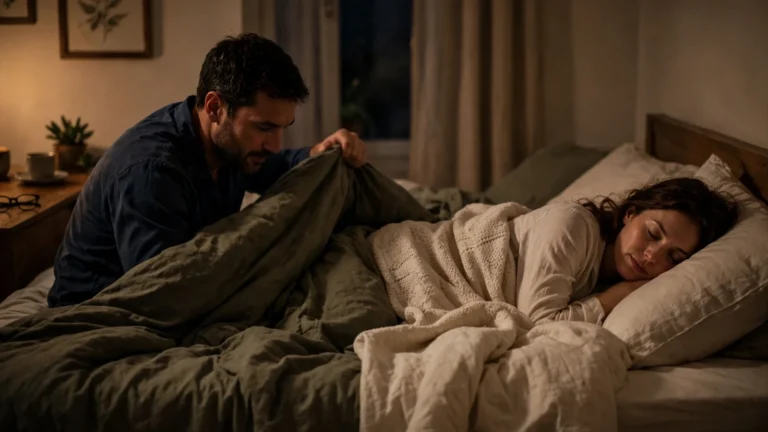
The first flutter of attraction after your spouse dies can feel less like hope and more like a siren going off in a quiet house.
Maybe it happened somewhere harmless. A neighbor lingered after fixing the mailbox and made you laugh — really laugh — and then the laugh scared you. A coworker mentioned a concert and for one unguarded second you pictured going, pictured being looked at again, and then the guilt arrived with its hand already raised. My wife has been gone eleven months. My husband’s shoes are still by the door. What kind of person feels this?
A person whose heart is still working, that’s what kind. This page is here to say the thing gently and then back it up with steadier ground: the arrival of interest in somebody new is not evidence that you loved your spouse less. It is not a grade on your marriage, your grief, or your character. It is one feeling, in a season that will hold many feelings at once, sometimes in the same hour.
A reader note: this article is general information, not personal counsel. If grief feels heavy or stuck, a licensed therapist or grief counselor can offer support a webpage can’t. Two organizations readers find useful are the American Association for Marriage and Family Therapy (aamft.org, with a therapist locator) and the Hospice Foundation of America (hospicefoundation.org), which publishes free education about grief and its uneven timelines. Reaching for either is not failing at this. It is a way of not carrying it alone.
When Grief and Attraction Show Up at the Same Time

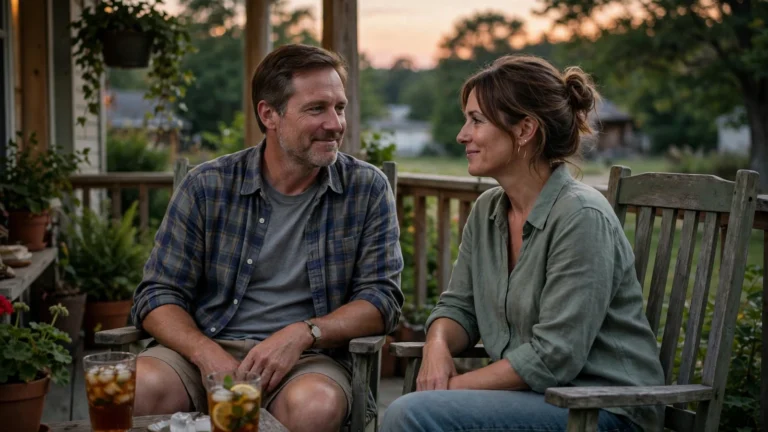
Most people expect grief to be a room you live in until a door appears at the far end, and only then does the rest of life resume. It almost never works that way. Grief behaves more like weather that moves through a house you still inhabit. You can be standing at the sink with tears running down your face at 9 a.m. and noticing, at 4 p.m., that the man who teaches your Saturday pottery class has kind eyes and a gentle way of correcting a lopsided bowl. Neither moment cancels the other one out.
The Hospice Foundation of America’s grief resources describe this unevenness plainly: grief does not follow a tidy sequence, its intensity tends to fade and become more manageable over time without ever fully disappearing, and a song or a scent years later can bring a wave of it back in full. Experts there refer to the back-and-forth quality of grieving — moving between facing the loss and re-engaging with ordinary life — as part of how people adjust. Dating, when it comes, usually begins inside that back-and-forth, not after it ends. You do not graduate from grief into a dinner date. More often, one Tuesday simply has both things in it.
So the question is rarely “am I done grieving?” The better question is whether you can hold the grief and the aliveness at the same time without either one shaming you out of the room. Some very normal experiences along that road:
You can enjoy a date and then cry in the car on the way home, and the crying is not proof the date was wrong. You catch yourself comparing — his laugh, her way of telling a story — and then feel disloyal for comparing and disloyal for not. A widowed reader once described it as having “two radio stations and no dial.” If that’s where you are, you are not broken. You are in the actual middle of this, which is the only place it can be lived.
Readiness Signals That Are Quieter Than You Expect

There is no correct month, and anyone who hands you a timetable is selling you their comfort, not your readiness. The signals that matter are mostly small and practical:
Your grief has some rhythm you recognize. It still arrives — anniversaries, songs, an empty chair — but it no longer levels the whole week when it does. You know what a hard day needs from you, and you more or less give it that.
Your daily life is standing on its own legs. Sleep, meals, work, the bills, friendships that existed before anyone new appeared. Dating goes best when it is an addition to a life, not the scaffolding holding one up.
You are interested in a person, not only in relief. In the picture in your head there is an actual human — someone’s dry humor at breakfast, someone who knows things you don’t. If what you picture is mostly not being alone at night, that is loneliness asking for company and support first, which is honorable work and a different errand.
You can imagine talking about your spouse without apologizing. Not testing a date with the full archive on a first coffee. Just knowing you could say “my late husband loved this place” as a fact of your life, at whatever point it naturally comes up, without either hiding or bracing.
You can picture a date ending without a second one and survive the thought. Disappointed, fine. Undone, not yet. A first coffee should only ever have to carry coffee weight.
And one signal people forget: you want to, even a little, even nervously. Readiness is not the absence of fear. It is a small, persistent curiosity living right next to the love that is still there — and it is allowed to be exactly that size. The inventory here is a cousin of the one in dating again after divorce, written for a different kind of ending; the self-honesty underneath is the same.
Honoring Your Spouse Without Performing Grief for an Audience

Here is a quiet fear underneath a lot of early dating: if I stop visibly grieving, people will think I have stopped loving. So widowed people sometimes catch themselves performing sorrow — mentioning their loss at the right moments, keeping every ritual at full size even when it has started to feel heavy rather than chosen, declining joy a little theatrically, in case somebody was auditing.
The people who loved your spouse do not need you to do this, and the ones who do demand it are asking for something that is not theirs to collect. Honoring a marriage is not a public shift you work. It looks, eventually, like a set of private, chosen practices that fit the life you actually have now.
Keeping what is yours to keep. A wedding ring worn, moved to the other hand, kept in a drawer, worn on a chain — every one of those choices is legitimate, including changing your mind later. Photographs stay as long as they comfort and come down when you choose, not when a nervous date decides the timeline looks better.
Many people find their way to something like this: I had a real marriage. It ended because he died, not because it failed. What I build next is a different room in the same house, and one room does not evict the other. You do not owe that sentence to a first date. But believing it helps you sit across from somebody new without feeling like you’ve smuggled contraband past your own heart.
Here is a line readers borrow for when a kind date asks, “Is it okay that we talk about her?” — “Yes. Thank you for not being weird about it. She was a huge part of my life. She’d have liked that you’re kind.” And its companion: “I want to be here tonight. If I get quiet for a minute, it’s a wave, not a verdict on you. It passes.”
Both lines let the past be a fact with manners — neither recruiting a near-stranger into your grief nor banishing your spouse from the table. People who once weighed a different fork in the road, as in when to stop trying to save a marriage, will recognize the deeper question: honesty with yourself, over time.
Telling People: Family, Friends, and the Ones Who Go Quiet

The date itself may prove easier than the announcement.
Adult children often react in ways that surprise them both. What sounds like disapproval — “It’s too soon,” the stiff silence — is frequently grief wearing a messenger’s uniform. Your dating can land, to a grown son, as evidence that the family story is truly over, the same week you felt brave for the first time in a year. Both things can be true. His mother is not being replaced, and his feelings still deserve a slow conversation, not a surprise introduction at a holiday table.
A few approaches that tend to hold up:
Tell your closest people before a relationship is serious enough to introduce, not after. “I wanted you to hear it from me, and early. I’m having coffee with someone I met at the library. I’m nervous and a little happy and still me.”
Answer the fear underneath. Kids of every age are usually asking: is this person going to change what I can count on from you? Answer that directly — weekends, holidays, availability — and the smaller questions shrink.
And accept the mismatch. One of you gets to be ready while the other is still at the cemetery every Sunday. Sad, normal, survivable — for both of you.
Friends mostly take their cues from you. Tell them plainly if you need cheerleading, or protection from it. “Please don’t ask me about it every time we talk yet” is a complete sentence. And some distance isn’t about your choices at all — people go strange when your news touches their own marriages or losses, the kind readers of the year we lived apart are quietly renegotiating at home.
When a new partner eventually meets family, the slow rollout in introducing new partner to kids applies to adult children in spirit: nothing sprung, nothing staged, everybody allowed to be a person rather than an occasion.
Going at Your Own Pace on Actual Dates
Pace is not a personality trait. It’s a set of decisions you get to make in advance, and revise.
Keep first meetings small and public — coffee, a walk, a farmers-market lap. Small is not timid. Small is how a nervous system gathers evidence.
Name your widowed status plainly and early, without unpacking it. A profile line or a first-meeting sentence — “I was married for a long time; my wife died two years ago. I’m new at this and taking it slow” — treats your life as biography rather than secret. People who respond to that plain fact with awkward interrogation or visible recoil have told you something useful, early, for free.
Expect the comparison reflex and refuse to grade anybody by it, including yourself. Your date is not competing with a memory, and a memory is not diminished by a pleasant evening. If a wave hits mid-date, “Sorry, that song. Give me a sec” is almost always received better than the white-knuckled performance of being fine.
Let physical closeness run on your clock. Attraction can feel wonderful, rusty, disloyal, and welcome in the same week. None of those is a diagnosis or a duty. Clear, kind, and actually your choice covers it.
And decide in advance what happens if a promising thing ends. Most early dating ends; that is ordinary arithmetic, not a ruling on your remaining story. A kind exit, given or received, draws on the same repair-minded honesty traced in how to apologize after a fight.
You are also allowed to try this and decide it’s not time. Putting the apps away is not retreat. It is pace, and it belongs to you.
Frequently Asked Questions
How long should I wait after my spouse dies before dating?
There is no universal waiting period with real authority behind it, and grief educators are openly skeptical of fixed timelines — the Hospice Foundation of America notes directly that no calendar can predict a person’s adjustment to loss. Some widowed people feel a genuine flicker of interest within the first year; others feel nothing of the kind for several years. Both are within the wide country of normal. Judge by the readiness signals above rather than by months, and be suspicious of anyone, loving or otherwise, who tries to set your clock from the outside.
I feel guilty every time I enjoy a date. Does that mean I’m not ready?
Not by itself. Guilt here usually signals the strength of the bond you had, not the wrongness of the evening. A common pattern: enjoy yourself, cry a little in the car, then notice the guilt taking a smaller share of the next day. If it is constant or escalating, take it to a grief counselor — the American Association for Marriage and Family Therapy’s locator (aamft.org) lists therapists who work with bereavement and new relationships.
How do I talk about my late spouse with someone new?
Factually, warmly, and at the size the moment is. Early on, a sentence or two of biography. Later, with someone earning your trust, more of the actual person. Avoid both ends: hiding your spouse’s existence, and handing a new person the job of full-time witness to your grief. A good partner can receive both your love story and your present tense.
My adult children are upset that I’m dating. What should I do?
Slow down the introductions, not necessarily the dating. Make sure they hear it from you, early and privately, and answer the fear underneath — that access to you, family rituals, and their parent’s memory are about to be reorganized by a stranger. Expect the conversation to take more than one sitting; their grief runs on its own calendar. If it turns genuinely stuck, a few sessions with a family therapist can give everybody a room where no one has to be the villain — the same third-chair logic couples use in marriage counseling vs couples therapy.
What if I start dating and realize it’s too soon?
Then you’ve learned something at the cost of a few coffees. Thank the person plainly — “I’ve enjoyed this, and I’ve learned I’m not as ready as I hoped. That’s mine, not yours” — and step back without shame. Too soon is a measurement, not a character flaw.
If you’re somewhere in the middle of all this — curious and guilty, hopeful and tired of being sad at the grocery store — I’d love to hear how you’re pacing it, and what has actually helped. What surprised you most the first time you laughed on a date again? The comments are open, and tender stories are treated gently here.
Keep Reading
If this hit home, these might too:
- dating again after divorce
- when to stop trying to save a marriage
- the year we lived apart
- introducing new partner to kids
- how to apologize after a fight
- marriage counseling vs couples therapy
Going through something similar?
Share your experience anonymously with the Ever After Daily community. Every story is read by a human editor before anything is published.
Share Your Story