I Married Again at 47 — Here’s What Love Looks Like the Second Time
A second marriage story: remarrying at 47 with kids, real history, and a quieter kind of hope. What steadier love actually looks like on an ordinary Tuesday.

I Married Again at 47 — Here’s What Love Looks Like the Second Time
I need to tell you first what this essay is not. It is not a reader’s letter I’m passing along, and I’m not going to pretend some tidy ending arrived on schedule. I’m Claire, I write this site, and this is my editorial take on the second-time story I kept hearing — and, honestly, kept needing — in pieces: from friends, from the sidelines of other people’s weddings, from the quiet arithmetic you do standing in your own kitchen at 47, divorced six years, wondering whether wanting this again makes you brave or just stubborn.
So here it is, first person, because that’s how the hope actually sounds when you say it out loud. I married again at 47. And the second time, love looked almost nothing like I expected — which turned out to be the best news of my entire adult life.
The Meeting Was Embarrassingly Ordinary
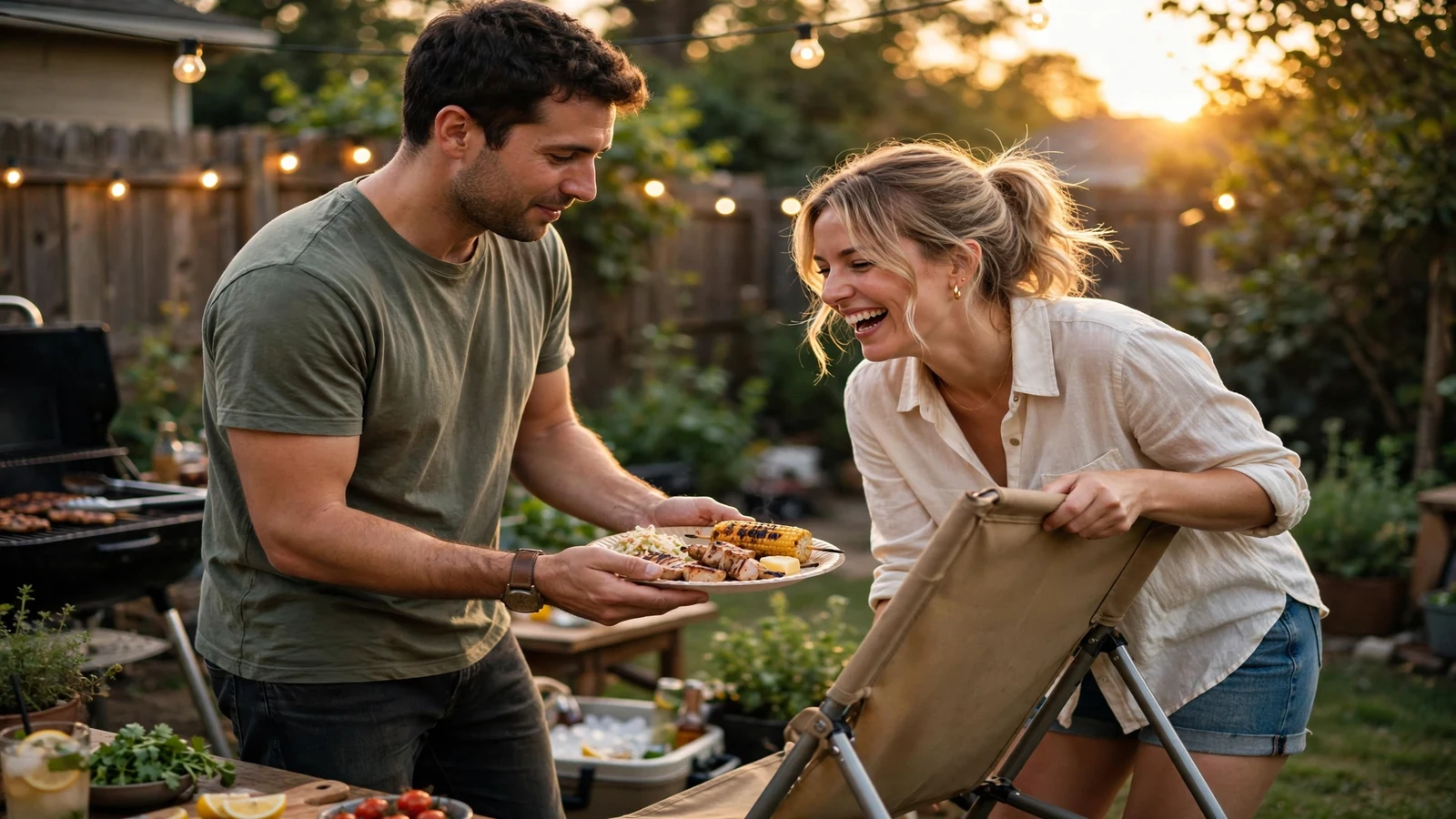
There’s no meet-cute worth filming. There was a friend’s backyard cookout, a folding chair with one short leg, and a man named Daniel who held my paper plate while I fixed the chair instead of offering to fix it for me. That detail — he held the plate — stayed with me longer than any speech could have.
We talked about tomatoes, mostly. His weren’t doing well. Mine, on a fire escape in ceramic pots, were doing embarrassingly fine. By the end of the afternoon he knew I was divorced. I knew his wife had died four years earlier and that his son, fifteen, had strong opinions about everything. Nobody performed a highlight reel. At 47, the highlight reel is a historical document anyway. You lead with who actually shows up on a Saturday.
On the drive home, my hands were shaking a little on the steering wheel. Not because of him, exactly. Because of a sentence I hadn’t let myself think in years and couldn’t unthink now: Oh. I still want this.
The Scared Middle Nobody Photographs

If the first courtship of my life was a sprint toward a future, this one was two careful people walking a neighborhood we both liked, checking the footing.
We were scared in different dialects. Daniel’s fear was grief-shaped: loving someone new felt, to his nervous system, like a betrayal scheduled on a calendar. Mine was failure-shaped: I had already done the big white attempt at forever, and it had ended in lawyers’ offices and a spreadsheet of who kept the good skillet. I did not want a second ending. Some nights, not starting felt safer than that.
We handled it badly before we handled it well. I once cried in a grocery store parking lot because he took two days to answer a question about Thanksgiving — his son’s schedule, as it turned out, not a vanishing act. He once went quiet for an entire evening after I said “we” about a vacation eleven months away, because “we” landed on him like a contract.
What saved us wasn’t a grand talk. It was sentences small enough to survive saying out loud. Exact words, because I promised myself I’d keep a record of the ones that worked:
“Mine isn’t a comparison. You’re not being graded against a marriage. I’m just scared, and scared people narrate.”
And his, better than mine: “Slow is fine. Disappearing is not. If I go quiet, I’m in it, I’m just thinking — and I’ll tell you when.”
That exchange could have belonged in any honest conversation about talk to spouse about feelings — saying the feeling plainly, without making the other person carry it. The scared middle doesn’t need eliminating. It needs translating.
We also did the unglamorous homework earlier than romance prefers: money, debts, exes, kids, the works — the full list second-time couples lay out in second marriage advice, except ours happened across a kitchen table with actual bank statements and one extremely honest evening about what we each owed. It wasn’t romantic. It was better. It was load-bearing.
A Wedding That Looked Different on Purpose

We married on a Saturday morning in October, in a county park pavilion, with twenty-three people and a Costco cake my sister decorated with supermarket flowers because I asked her to, specifically, because I wanted the whole day to feel like our actual life and not a production mounted to disprove the past.
No processional ranking people by importance. My daughter, who was twenty and warming to Daniel at her own pace — kids and their own pace is the whole subject of what stepkids need — read a short poem she’d chosen herself, which remains the only moment of the day I fully lost it. Daniel’s son manned the playlist. There were folding chairs. One of them was still short a leg. We kept it. It felt honest.
At 25, my first wedding had been, in part, an argument: See? This is real. This will hold. At 47, nobody was arguing anything. We were too old and too loved-by-then to need the day to testify. It just had to feed people and say, plainly, in front of witnesses: we choose this, knowing exactly what choosing costs, having already paid some of it.
My vows were four sentences. One of them was: “I am not going to promise you easy. I am going to promise you honest, and early, and out loud.” I have kept it imperfectly and repaired it promptly, which is apparently what keeping a vow actually looks like from inside a marriage.
What Steadier Love Does on an Ordinary Tuesday

People ask what second love feels like, expecting poetry. Mostly, it feels like systems of tenderness so small you’d miss them if nobody pointed.
It looks like Daniel learning how I go silent when I’m overwhelmed — not mad, overwhelmed — and answering with a hand on my shoulder and no questions until dinner, because he asked once, early, and believed my answer. It looks like me fighting fairer than I ever did at 30: saying “I need twenty minutes and then I’m coming back to finish this” instead of slamming a door I once would have toured the whole apartment with. How to apologize after a fight is practically our operating manual; our repairs are shorter now, and duller, and I mean duller as the highest praise I own.
It looks like his son texting me — me, specifically — a photo of a badly parked truck with no caption. In teenager, that’s a sonnet. It looks like my daughter asking Daniel, not me, how to jump a dead battery, and me standing in the kitchen doorway feeling not replaced but relieved: more hands holding up the people I love.
There are hard days. His wife’s birthday arrives every year and it should; I bring tea and leave rooms un-hovered. My ex’s name still comes up in paperwork and occasionally in my chest. None of that is the marriage failing. That’s the marriage having a history in it, like a house with an old, good foundation you can see in the basement.
Steadier love, I’ve learned, isn’t quieter because there’s less of it. It’s quieter because it doesn’t have to keep proving it’s in the room.
Frequently Asked Questions
Is it normal to feel grief and fear even in a happy second marriage?
Yes. A second marriage holds two true things at once: genuine happiness now and real history behind you. Grief for what ended — or for a person who died — and fear of repeating old pain commonly visit without meaning anything is wrong. Name them out loud early, the way you’d want a partner to, and let steadiness prove itself over ordinary time.
How is love different the second time around?
For many people, it runs less on proof and more on practice: shorter repairs, earlier honesty, tenderness in logistics — calendars, tea, rides to the airport at terrible hours. The intensity isn’t smaller. It’s just less interested in performing itself, which frees up a surprising amount of joy for a Tuesday.
What if my kids or his kids aren’t there yet?
Then the wedding goes on and their pace goes on, both at the same time. Kids don’t owe a stepparent instant warmth, and weddings don’t pause while relationships catch up. Keep pressure at zero, keep showing up predictably, and let small side-by-side moments do the slow work. Slow isn’t behind. Slow is often exactly on schedule.
Keep Reading
If this hit home, these might too:
- talk to spouse about feelings
- second marriage advice
- what stepkids need
- how to apologize after a fight
- dating again after divorce
Going through something similar?
Share your experience anonymously with the Ever After Daily community. Every story is read by a human editor before anything is published.
Share Your Story