
The Sunday Walk That Holds a Couple Together
One weekly walk, same route, no phones, no agenda. See how a simple Sunday walk gives couples room to talk honestly and stay close through busy weeks.
The Sunday Walk That Holds a Couple Together
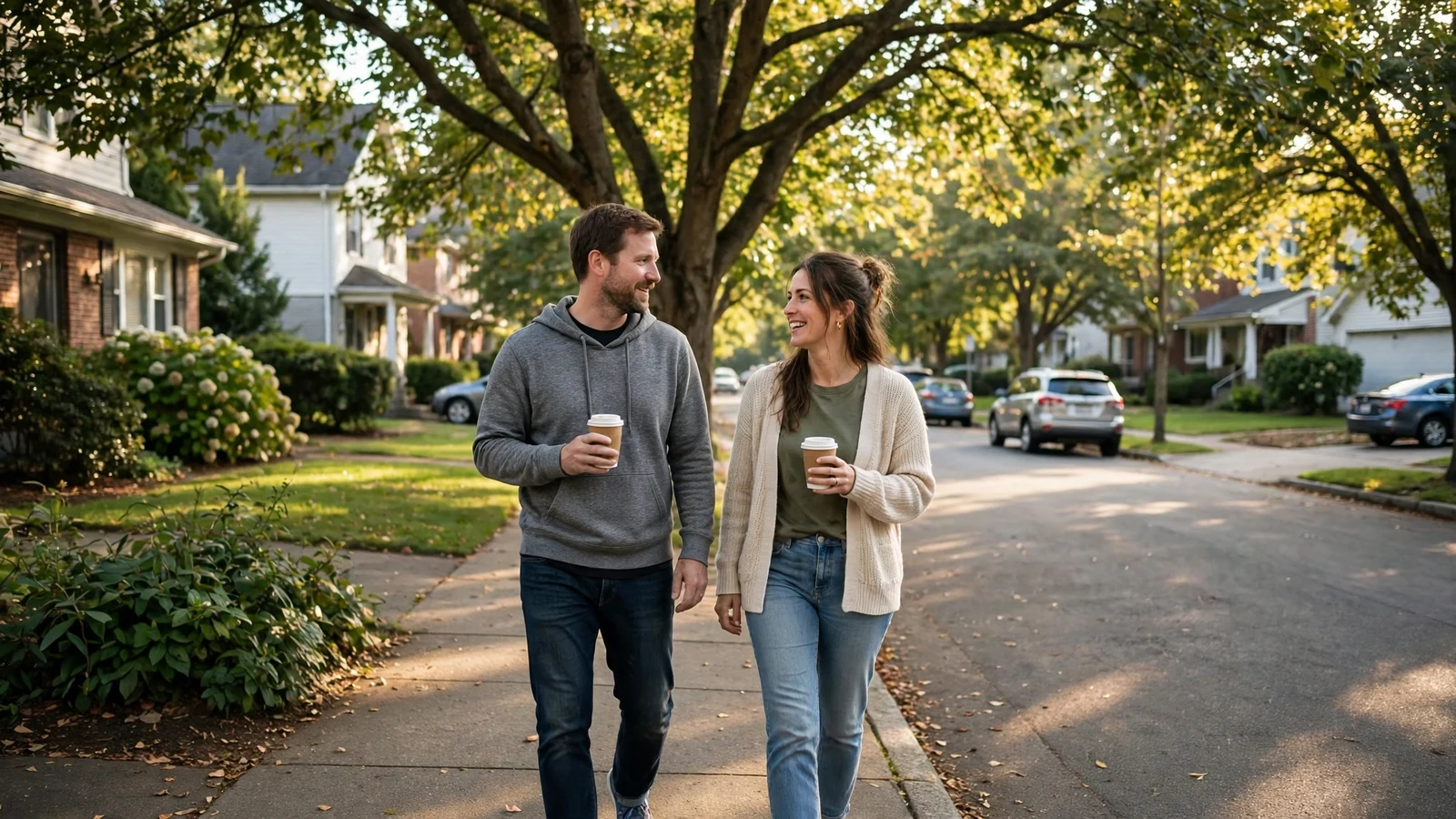
Most couples do not lose touch in one big fight. They lose touch in small weeks, the kind where the laundry gets done, the bills get paid, the kids get fed, and nobody asks a real question. A Sunday walk will not fix a marriage on its own. It can give two people one hour a week when they are side by side, moving at the same pace, with nothing to fix and nowhere else to be.
The couples who keep this habit tend to keep it simple. Same day, same route, same loose start time. No podcast in one ear. No phone in one hand. No list of topics to cover. The walk is the plan, and the talk is whatever shows up while you walk.
The walk itself

Pick a route you can do in your sleep. A loop around the neighborhood works. A path through a park works. A quiet street with wide sidewalks works. The point is not scenery. The point is that neither of you has to think about where to turn next, so both of you can think about each other instead.
Leave the phones at home, or leave them in your pockets on silent. This part matters more than it sounds. A phone turns a walk into a series of small interruptions, and a walk full of interruptions feels like every other hour of the week. Without phones, you notice small things again: the way your spouse slows down at the same corner every time, the dog that always barks at the same fence, the house with the porch light that stays on all day.
Walk side by side, not face to face. That sounds like a small detail, and it changes the talk. At a table, eye contact can feel like pressure, especially when the subject is tender. On a walk, you can look ahead, pause, and let a sentence finish without anyone staring at you while you find the words. Many couples say hard things more easily while they are moving. The body is busy, so the guard comes down a little.
Keep the pace easy enough to talk. This is not exercise, even if it counts as movement. If one of you is out of breath, the talk stops, and the walk turns into a workout with company. Slow down. Stop at a bench if you want. Get coffee halfway if that is your stop. The habit lasts when it feels good, and it feels good when nobody is trying to win it.
A weekly marriage check-in pairs well with this walk, because the walk gives you the hour and the check-in gives you a shape for the talk when you want one. You do not need both every week. You need one regular time when talking is the main job, not the leftover job.
What gets said on a walk

At the table, talk turns to logistics fast. Who picks up the dry cleaning. What time is the dentist. Did the plumber call back. On a walk, those questions still come up, but they do not fill the whole hour. There is room left over, and that room is where the other talk lives.
Picture this kind of moment on a third Sunday walk: a wife tells her husband she misses her old job, not the paycheck, but the feeling of being good at something outside the house. She had not said it at dinner because dinner always had a child asking for more milk in the middle of the sentence. On the walk, nobody interrupts, so she finishes the thought. Her husband does not try to solve it. He says, “I did not know you still carried that.” That sentence stays with her all week, more than any advice would have.
If you want a line to open that kind of talk, try this: “Tell me the part of your week you have not said out loud yet.” Then wait. Do not fill the silence with a second question. The first answer might be small, like a sore back or a dull meeting. Let it be small. Small answers often lead to bigger ones once a person trusts that you will listen past the first sentence.
Try a second line when the walk feels quiet in a good way: “What felt heavy this week, and what felt light?” That pair gives your spouse a choice. They can start with the easy part if the heavy part needs a few more steps. Some weeks, the whole walk is about a funny neighbor and a good sandwich. That counts. A walk that only allows heavy talk will start to feel like homework, and homework is the fastest way to kill a good habit.
An evening ritual for couples works the same way on weeknights, in a shorter form. The walk is the long version, with fresh air and no dishes in the sink to pull your eyes away.
When the walk gets interrupted

Weather will interrupt. So will sick kids, late work, a sprained ankle, and a Sunday that fills up before you notice. A ritual that only works on perfect Sundays will die by February. Build the backup now, while the habit is new.
If rain cancels the walk, take the same hour indoors. Walk the mall, walk around the block with umbrellas if the rain is light, or sit on the porch with coffee and keep the phones away for the same hour. The route matters less than the protected time. If one of you is sick, shorten it to twenty minutes around the block, or postpone it to Monday evening and call it the same walk. The point is to protect the hour, not to protect the calendar square.
If life interrupts for three Sundays in a row, do not start over with a big speech about commitment. Start over with a small text on Saturday night: “Walk tomorrow, same time?” That is enough. Couples who restart quietly tend to restart more often than couples who turn a missed week into a talk about the whole marriage.
When a walk does turn tense, slow down instead of speeding up. Say, “I want to hear this right, and I am getting tense. Can we walk a little slower while you finish?” That line does two jobs at once. It tells your spouse you are still listening, and it gives your own body time to settle. If the talk needs a table and a longer sit-down, say so plainly: “This one needs more than a walk. Can we sit down after dinner and finish it?” A walk can start hard talks. It does not have to finish all of them.
How to start this Sunday

Do not announce a new ritual with a speech. Just ask, “Want to walk after lunch on Sunday, just us, no phones?” If your spouse says yes, pick the route together and keep the first walk short, about thirty minutes. Short and pleasant beats long and dutiful, because you want a second walk, not a story about a first walk that felt endless.
Bring water if it is warm. Wear shoes you can actually walk in. Leave the errands for another trip. If you pass a store and one of you says, “While we are out, we should grab milk,” smile and say, “Milk can wait. This hour is just us.” That small refusal is the whole habit in one sentence.
After a few weeks, you will notice the walk doing quiet work. You will bring up small worries before they grow. You will hear about your spouse’s week in their own words, not in a rushed recap while dinner burns. A morning coffee ritual for couples can carry the same spirit on weekdays, in ten minutes instead of an hour. The walk stays special because it is longer, slower, and outside the house where the chores live.
Frequently asked questions
How long should a Sunday walk be?
Thirty to sixty minutes suits most couples. Start at thirty, and let it grow on its own if the talk is good. A walk that ends while you still enjoy each other beats a walk that drags until you both want to be home.
What if my spouse does not like walking?
Try a slow version first, on flat ground, with a coffee stop built in. If walking truly does not work, keep the same idea and change the shape: a drive with no radio, a bench in the park, or a lap around the mall. The shared, phone-free hour is the habit. The feet are optional.
What do we talk about if we run out of things to say?
Let the quiet sit for a bit. Quiet on a walk feels different from quiet at a table, and it often ends on its own when one of you notices something worth mentioning. If silence still feels awkward, ask about the week ahead, a memory from when you first met, or one small thing each of you is looking forward to. Those prompts open doors without turning the walk into an interview.
So, what would your Sunday walk look like, same route or a new path each week, coffee stop or no stop? Tell us in the comments, and tell us the one thing you said on a walk that you never would have said at the table. Your answer might give another couple the push to try their first walk this Sunday.
Keep Reading
If this hit home, these might too:
Going through something similar?
Share your experience anonymously with the Ever After Daily community. Every story is read by a human editor before anything is published.
Share Your Story


