The Year We Fixed the House Together
One painted room turned into a year of budget fights, tired weekends, and small repairs. What we kept was not a perfect house, but a steadier marriage.

The Year We Fixed the House Together
We did not set out to fix the house. We set out to paint one room, the spare bedroom, before my sister came to stay. The walls were a tired beige, the carpet had a stain shaped like a small lake, and the room had become the place where boxes went to wait. One Saturday morning, with coffee still warm in our mugs, we stood in the doorway and agreed on the easy part: the room needed color, and we had a free weekend. That was the whole plan. It took us a year.
I still remember how simple it felt at the start. We picked a soft green from three paint chips taped to the wall, argued for about ten minutes about whether it read more sage or more mint, and settled it the way we settle most small things now. I said, “You live with it more, since your desk faces that wall, so you pick.” He said, “Fine, but you pick the trim, because you notice that stuff and I do not.” We bought two gallons, a roller, and a drop cloth, and by Sunday night the room looked like a different place. We sat on the floor with pizza, admiring our work, and he said, “We should do the hallway next.” I laughed, because the hallway had a crack near the ceiling and a light switch that only worked when it felt like it. I said, “Sure, next weekend.” Neither of us knew what we had just started.
The first project
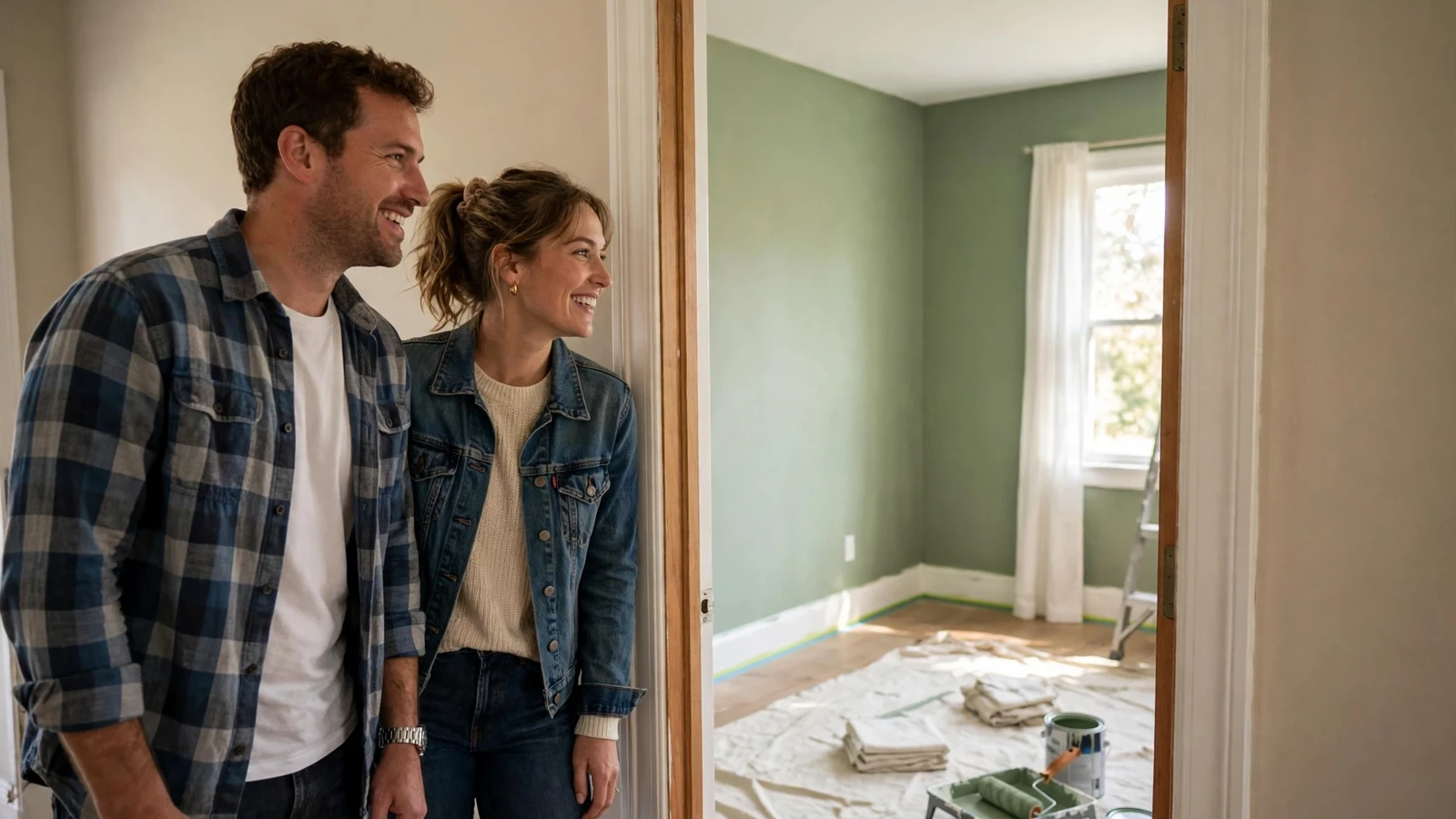
The spare room taught us something we had not expected. Working side by side was easier than talking about working side by side. In ordinary weeks, we could spend days circling a chore, each of us waiting for the other one to start. With paint on the walls, there was no circling. One of us cut in along the ceiling while the other rolled, and we talked while we worked, about his week at the office, about my sister’s visit, about nothing much at all. The room gave our conversation somewhere to go.
It also gave us our first honest disagreement about the house. He wanted to replace the carpet right away. I wanted to live with the painted walls for a month and see if the stain still bothered us once the room looked cared for. We were not really arguing about carpet. We were arguing about pace, and about money, and about who got to decide when a job was done. We ended up keeping the carpet, covering the worst of the stain with a rug we already owned, and writing “carpet: decide in spring” on a scrap of paper stuck to the fridge. That scrap stayed there for months, and every time I saw it, I felt a little proud. We had disagreed, and nobody had won, and the room was still better than it had been.
If you and your partner are standing in front of a first project, try words like these: “Can we pick one room, one weekend, and one job we can actually finish?” A finish matters. A half-painted room just adds to the list of things that feel undone. A finished room, even a small one, gives you proof that the two of you can start something together and see it through, and that proof carries into the next argument about money or paint or carpet.
The middle months
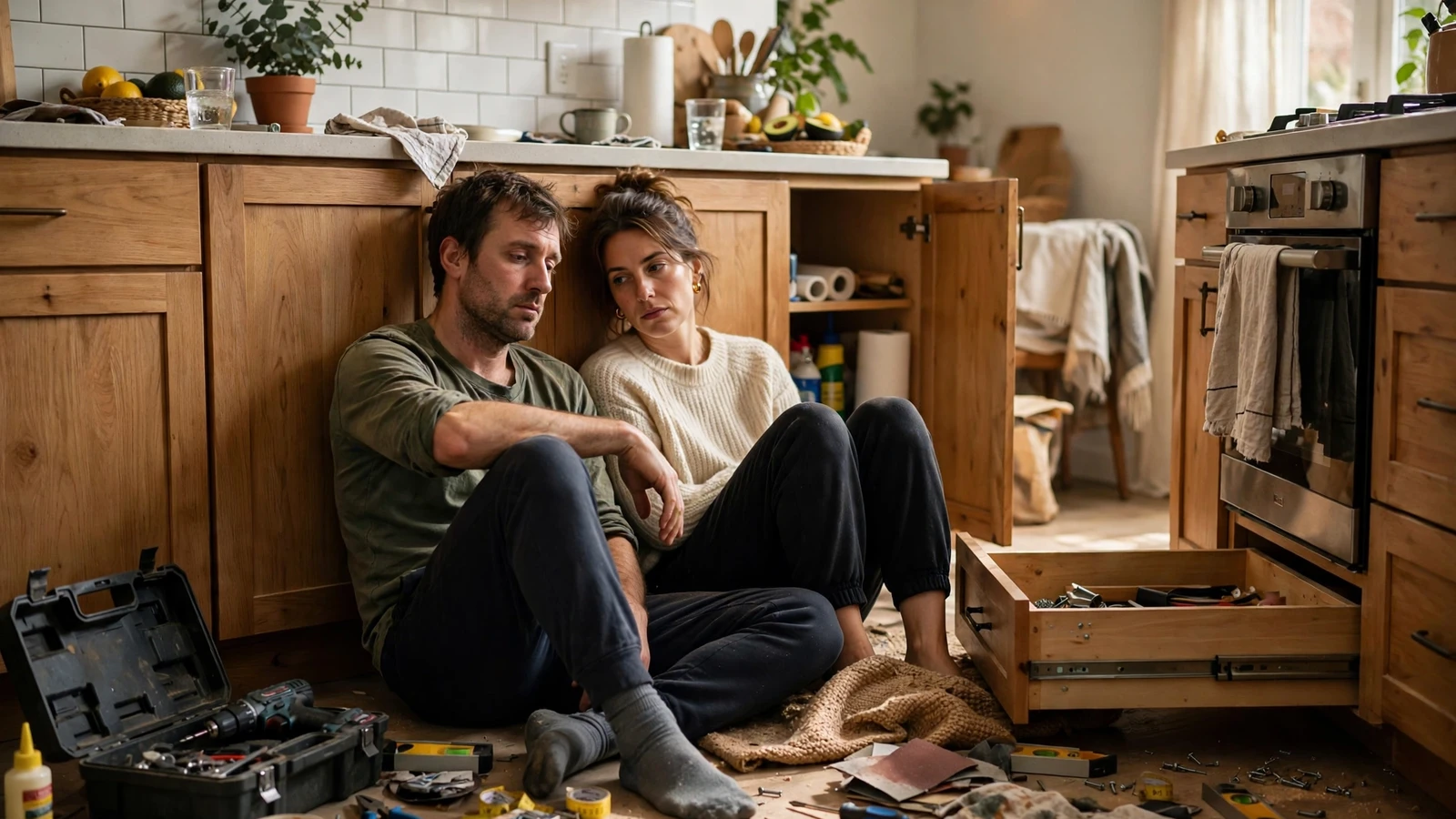
The middle months were less charming. The hallway led to the bathroom, where a faucet dripped all night and a tile had come loose near the tub. The bathroom led to the kitchen, where a drawer stuck every time it rained and the pantry door hung a little crooked. Each job was small on its own. Together, they filled our Saturdays for months, and Saturdays started to feel like a second job we had given ourselves without asking.
Money was the harder part. We had agreed on a monthly house budget, a number we both felt good about in January, and by April we had blown past it twice. He wanted to buy the better faucet, the one that would last. I wanted the cheaper one, because the roof would need attention sooner than either of us wanted to admit. One Saturday, standing in the plumbing aisle with a cart full of parts we only half understood, I said something sharp about how he always picked the expensive option. He went quiet, which is what he does when he feels unfairly judged, and we drove home without speaking. That night, after the kids were asleep, I said, “I am sorry I made it about you instead of about the budget. Can we look at the numbers together and pick a line we both trust?” He said, “Yes, and can we also agree that tired is not the same as angry?” We wrote the new number on the fridge, next to the carpet note, and we kept it for the rest of the year.
Tired weekends taught us to set limits we had never needed before. We stopped working after four in the afternoon, even if a job was half done. We kept Sunday mornings free, for pancakes and the paper and nothing that required a toolbox. We learned to say, “This is enough for today,” and mean it. A weekly marriage check-in helped more than any tool we bought, because it gave us a regular time to say what was working and what was wearing us down, before the wear turned into a fight. The house got better more slowly that way. The marriage got better faster.
There were good Saturdays too, and I do not want to leave them out. The day we fixed the pantry door, he held it steady while I drove the screws, and when it swung shut clean for the first time in a year, we both cheered like we had won something. The day we repainted the hallway, our daughter painted a small purple flower near the baseboard where she thought nobody would notice, and we left it there. It is still there, under two coats of hallway paint, and only our family knows where to look.
The last project
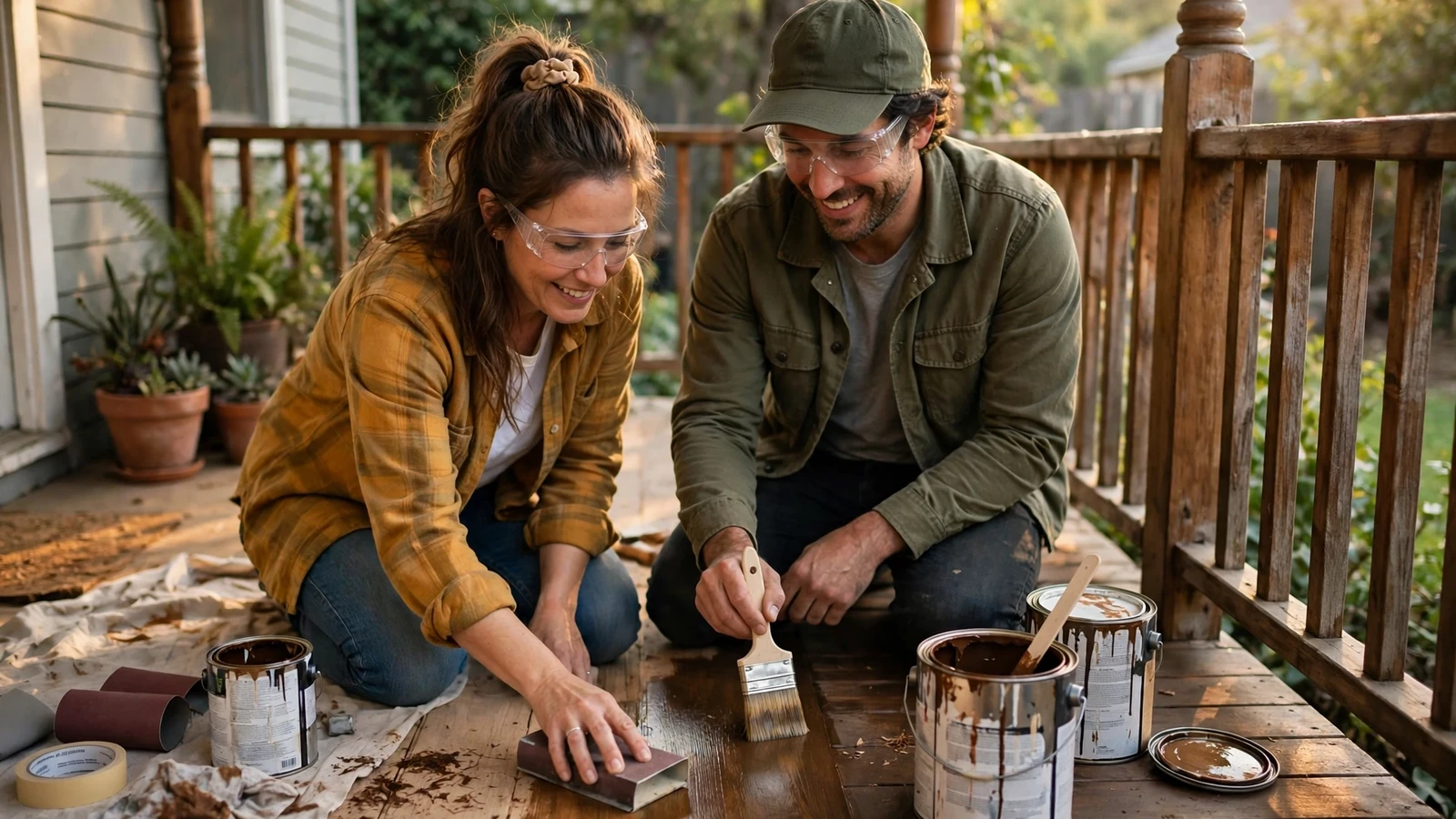
By autumn, only the back porch was left. The boards were soft in one corner, the railing wobbled, and the steps down to the yard had settled unevenly. It was the biggest job of the year, and by then we were both a little tired of house projects in general. We hired a carpenter for the soft boards, because some jobs belong to a person with the right saw and the right insurance, and we did the rest ourselves: sanding, staining, tightening every bolt on the railing, painting the steps a deep gray that matched the house trim.
The last afternoon, we worked until the light went thin, then sat on the top step with two glasses of lemonade and looked at what we had done. The porch was not perfect. One board sat a fraction higher than its neighbors, and the stain was darker on the side that got less sun. He pointed at the uneven board and said, “That one is going to bother me forever.” I said, “Good, then you will remember who fixed it with you.” We laughed, and it felt like the right ending, not because everything was flawless, but because we had done it together, imperfectly, and we could sit on it.
That night, I took the scrap of paper off the fridge, the one that said “carpet: decide in spring.” We had decided, in the end, to keep the carpet one more year and spend the money on the porch instead. I folded the paper and put it in the drawer where we keep old birthday cards and ticket stubs. It felt like closing a chapter, not of a renovation, but of a year in which we learned how to disagree, how to rest, and how to finish things together.
What the house holds now

People who visit now say the house looks nice, and it does. The spare room is green, the hallway is straight, the pantry door closes, the porch holds steady under two chairs and a small table. But when I walk through the rooms, I do not mostly see paint and boards. I see the Saturday we argued in the plumbing aisle and made it right the same night. I see the purple flower under the hallway paint. I see the rug that covered a stain while we learned to wait. The house holds our year the way a photo album holds a trip, not as a record of perfection, but as proof of where we have been together.
If your house feels like a long list of jobs, you do not need to fix all of it. Pick one room, one weekend, and one job you can finish. Agree on the money before you agree on the paint. Stop at four in the afternoon. Keep Sunday morning for pancakes. And when you disagree, and you will, try saying, “Can we solve the budget first, and pick the faucet second?” The house will still be there next weekend. The way you treat each other while you fix it is what stays.
Our evening walk after dinner became the other habit that year, the one that had nothing to do with tools. After a day of sanding or painting, we walked around the block, and the walk gave us back the part of Saturday that belonged just to us.
Frequently asked questions
How do couples start a house project without fighting about money?
Agree on a number before you buy anything, and write it down where you can both see it. Pick a monthly amount you can both live with, and decide together what happens when a job runs past it: pause, save, or shift money from another project. The fight usually starts when one partner feels surprised by the cost, so remove the surprise and most of the heat goes with it.
What if one partner wants everything perfect and the other just wants it done?
Name the difference out loud, kindly, before the project starts. Try, “I know a clean finish matters a lot to you, and finishing matters a lot to me. Can we pick which jobs get the careful treatment and which ones just need to work?” Giving the careful jobs their due, and the quick jobs their speed, keeps both partners from feeling overruled on every single task.
Is it worth doing house projects together if you argue during them?
It can be, if the arguments stay about the work and get repaired the same day. A project will surface real differences about money, pace, and taste, and those differences exist whether you pick up a paintbrush or not. Working through them on a small job, with a clear finish line, can teach a couple how to disagree well on bigger things later.
What is the one room in your house that would feel different if you finished it together? Tell us in the comments. Your first project might be exactly the nudge another couple needs this weekend.
Keep Reading
If this hit home, these might too:
- A weekly check-in that keeps small gripes from growing
- An evening walk that gives couples their Saturday back
- A morning coffee habit that starts the day on the same side
Going through something similar?
Share your experience anonymously with the Ever After Daily community. Every story is read by a human editor before anything is published.
Share Your Story