The Couple Who Bought a Camper and Drove Off
They bought a used camper, packed two mugs and a paper map, and drove off with no plan except together. Here is what the first trip taught them about the road.
The Couple Who Bought a Camper and Drove Off
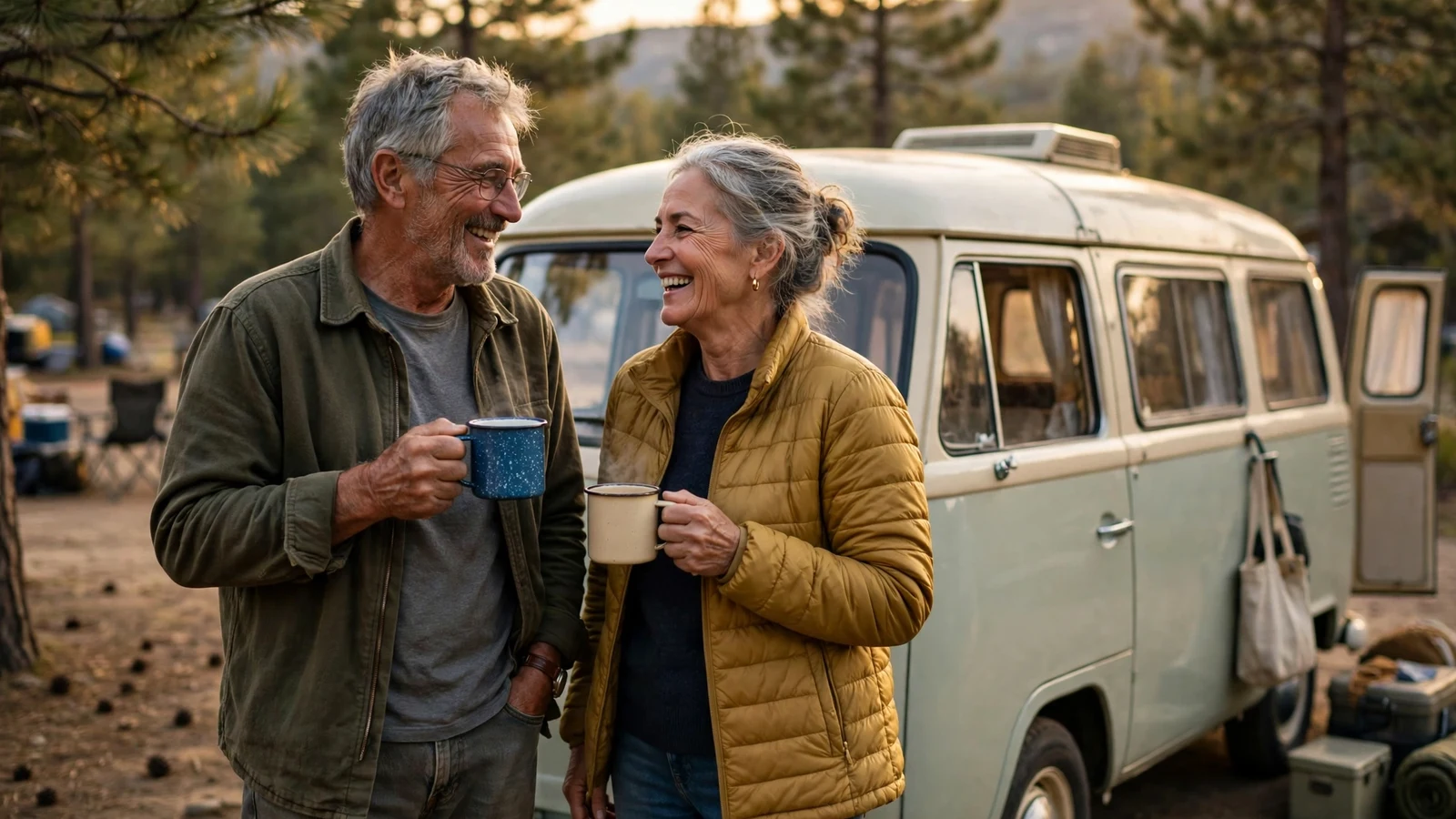
The camper was twenty years old, the color of weak coffee, and it smelled like the last family that had owned it. The man selling it stood in his driveway with his arms crossed and said, “She runs fine. She leaks a little when it rains.” My husband nodded like that was a fair trade. I looked at the dent in the side where somebody had backed into a mailbox, and I thought about the house we had just emptied of kids, and I said, “We will take it.”
We had talked about a trip for years, the way couples talk about things they might do someday. Someday stayed someday until the last kid moved out and the house went quiet and the weekends opened up like empty rooms. We were not looking for a new life. We were looking for one road trip with no plan except together, and a camper seemed like the cheapest way to buy one.
The map went on the dashboard the day we brought the camper home. It was a paper map, the kind that folds wrong and never folds back right, and my husband spread it across the kitchen table and drew a circle around our town with a red pen. “Anywhere past this,” he said, “counts as gone.” We had two weeks, two mugs, a cooler that hummed too loud, and a list of campgrounds torn out of a library book. That was the whole plan.
The camper
We picked the camper the way you pick a dog at the shelter. We looked at six of them, and the first five were wrong in ways we could name: too big, too new, too much money, a smell we could not live with, a roof that sagged in the middle like a tired back. The sixth one was the coffee-colored one, and it was wrong in ways we could live with. The leak was small. The dent was honest. The price was the money we had saved for a new couch, and the couch could wait.
The man who sold it to us gave us a tour that lasted ten minutes and a warning that lasted one sentence. “Check the tires before you go far,” he said. “And do not trust the gauge on the water tank.” My husband wrote both things on the back of the receipt, and we drove it home at forty miles an hour with the hazard lights on, because neither of us trusted it yet.
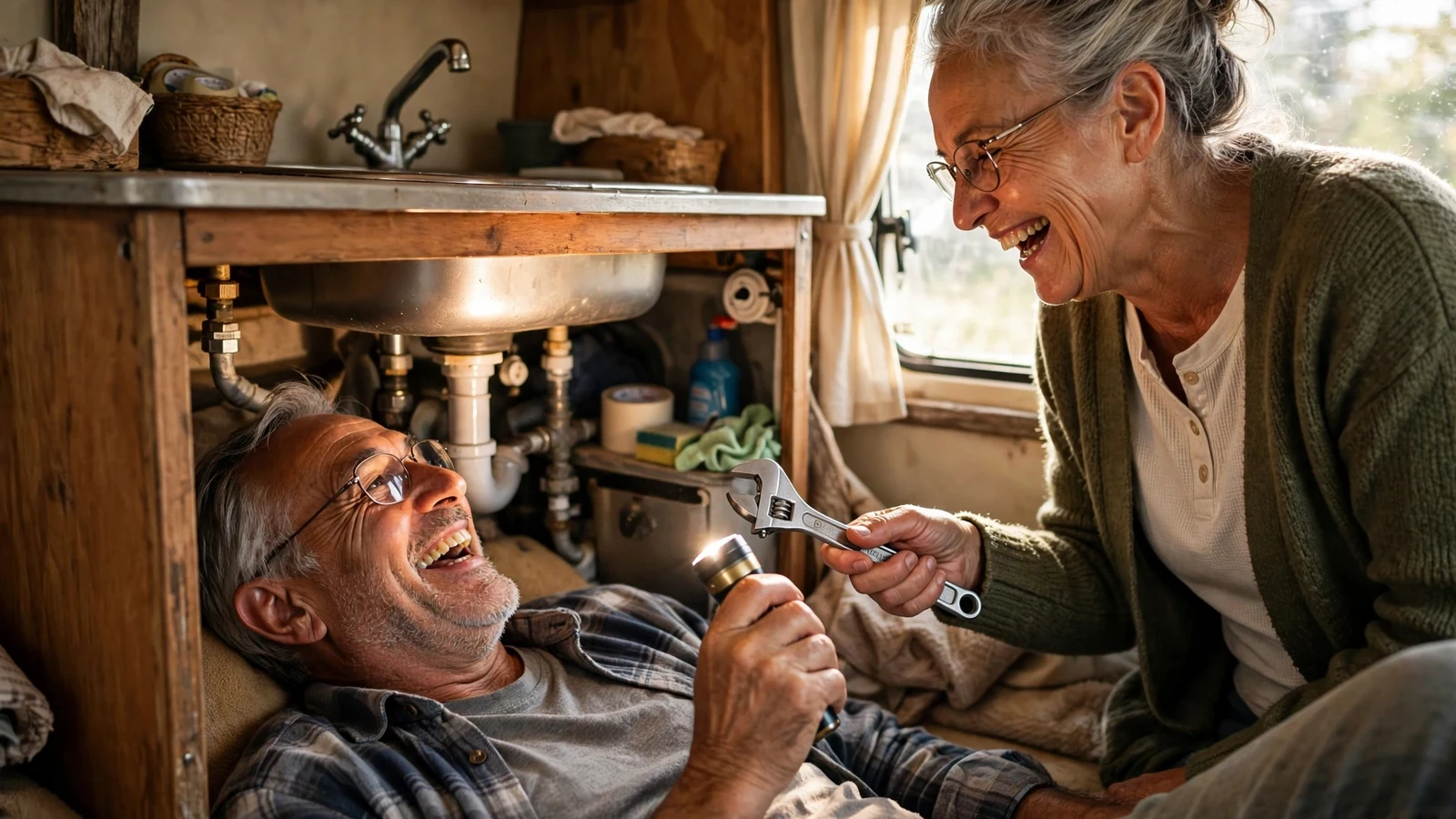
What broke first was the water pump. It broke on the second day of the trip, at a campground in the hills, and it broke the way small things break when you need them most: with a cough, a sputter, and then nothing. My husband lay on his back under the little sink with a flashlight between his teeth and said words I will not print here. I held the flashlight. I handed him the wrench. I went to the campground office and asked where the water spigot was, and the woman at the desk pointed down the hill and said, “You will want the blue jug. Everybody wants the blue jug.”
We fixed it the next morning with a part from a hardware store forty minutes away and a video on my husband’s phone. The man in the video talked too fast and skipped a step, and we watched it three times before we got it right. When the water ran again, my husband stood up, wiped his hands on his shirt, and said, “We fixed it.” He said it like we had built the camper ourselves. In a way, we had. The camper stopped being a thing we bought that morning and started being a thing we owned.
The second thing that broke was the screen door, which slid off its track every time we opened it too fast. The third was a cabinet latch, which we fixed with a rubber band and never fixed again. The rubber band is still there. Every camper has a rubber band somewhere, holding the whole trip together, and ours holds a cabinet shut.
The first night
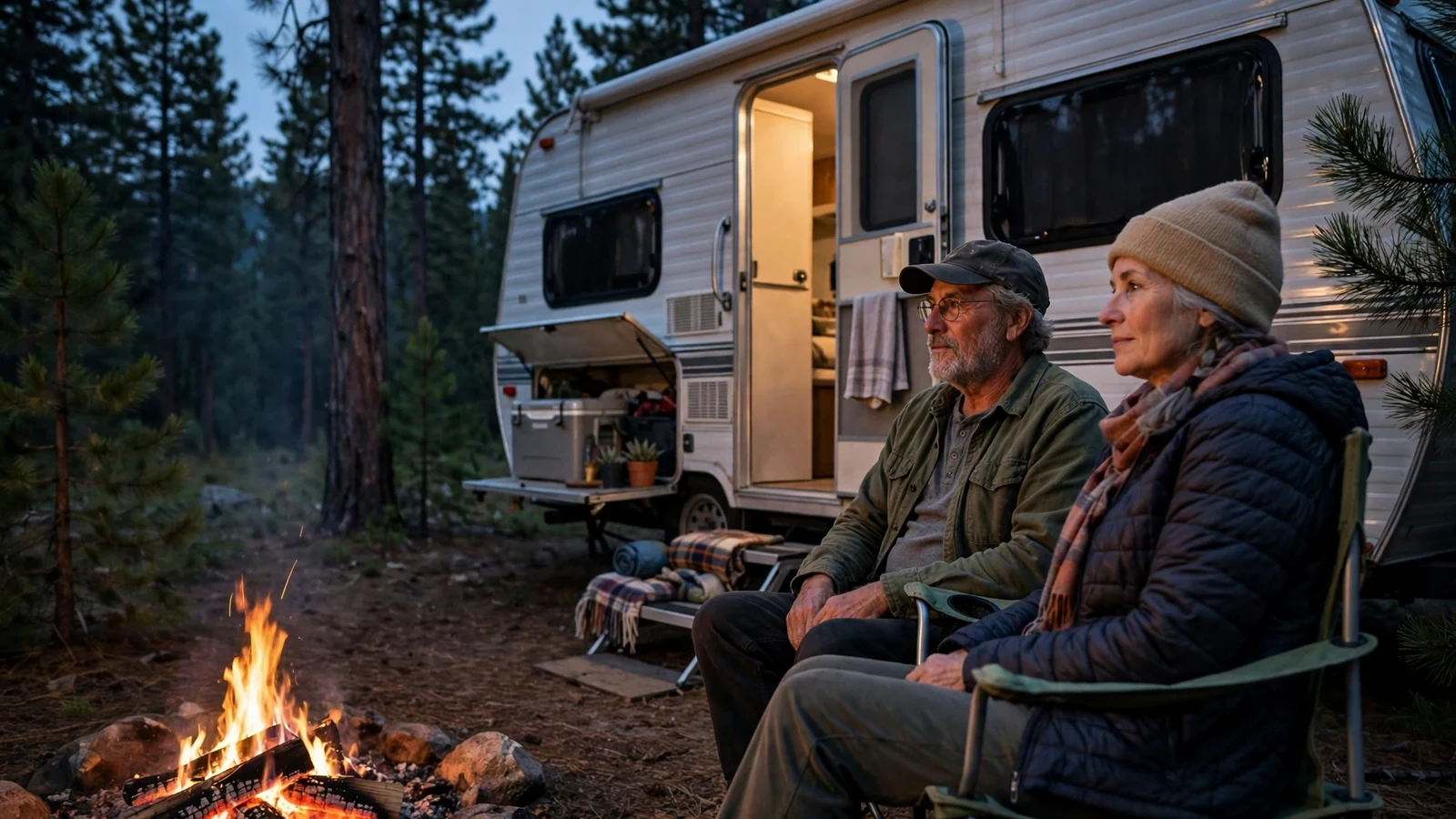
The first night we parked at a campground with pine trees so tall they blocked the sky, and a man in the site next to us waved and said, “First time out?” We said yes, and he nodded like he had seen a hundred first-timers and liked us anyway. “You will hear the owls,” he said. “They sound closer than they are.”
We ate dinner at the little table inside the camper, because the wind had come up and the campfire smoke blew straight into our eyes. The meal was soup from a can and bread we had bought that morning, and it tasted better than any dinner we had cooked in our own kitchen that year. The camper was small enough that we could reach everything without standing up, and close enough that our knees touched under the table. The kids were not there to ask for seconds. The phone did not ring. The only sound was the wind in the pines and the cooler humming too loud in the corner.
After dinner we sat outside in two folding chairs and watched the fire in the pit across the way. Our neighbors had a fire going, and their grandkids were roasting marshmallows on sticks, and the smell of woodsmoke drifted over to our chairs. My husband said, “We should have done this ten years ago.” I said, “Ten years ago we had three kids and a mortgage and a dog. We did the right trip at the right time.” He reached over and took my hand, and we sat there until the fire burned down and the owls started, closer than they sounded.
The quiet that night was different from the quiet at home. The quiet at home had felt empty, like a room with the furniture taken out. The quiet at the campground felt full, like a room with the windows open. I slept better that night than I had slept in months, with the pine smell coming through the little window and my husband breathing beside me in a bed too narrow for both of us and just right anyway.
In the morning, the neighbor knocked on our door with two cups of coffee and said, “You two looked like you needed this.” He was right. We had needed it for years and had not known how to say so. The coffee was strong and hot, and we drank it standing outside in our socks, looking at a road that went somewhere we had never been.
The rule for the road
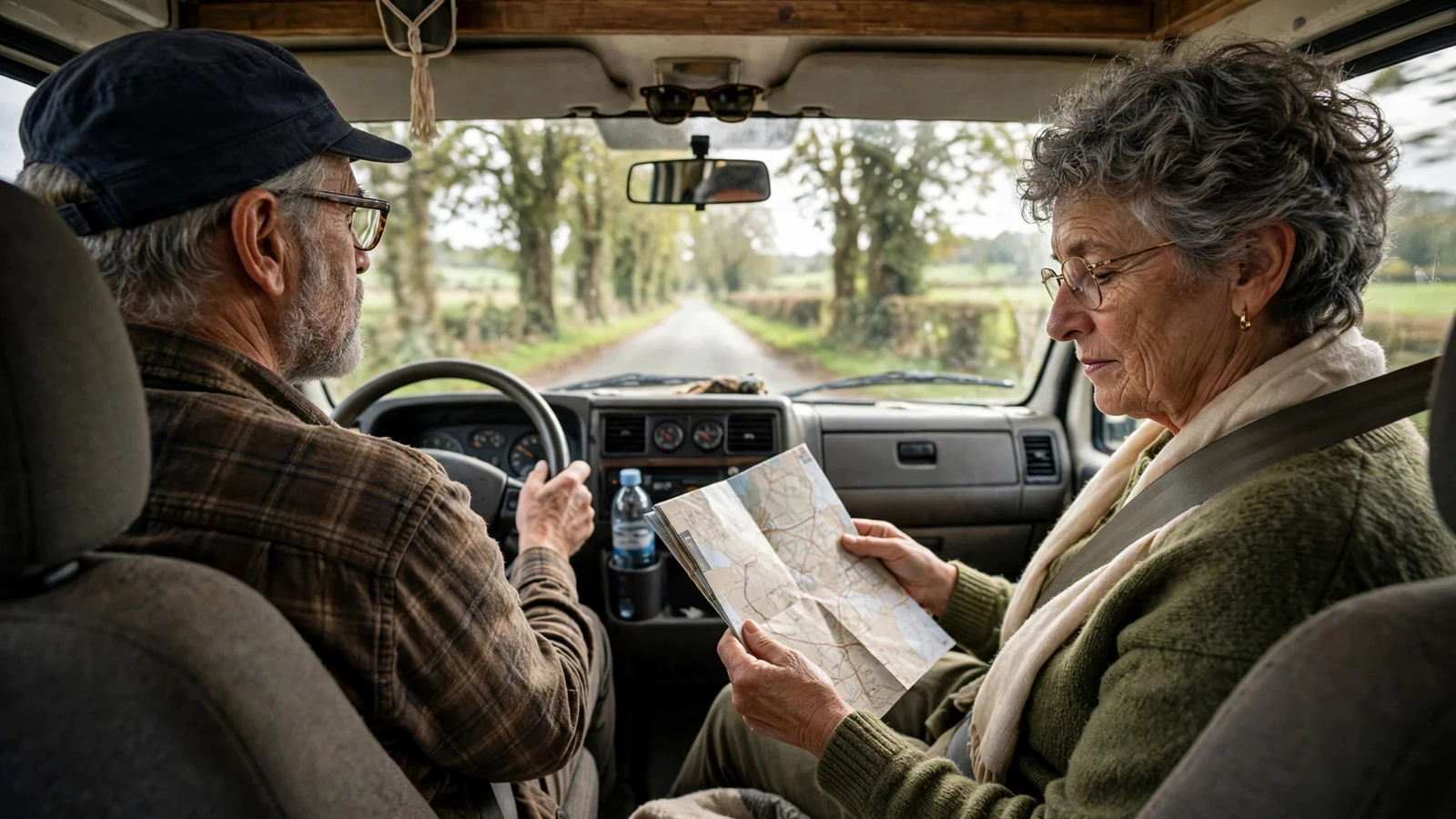
Every couple that travels together needs one rule, and ours came on the third day, in a gas station parking lot in the rain. We had argued about the route. He wanted the highway. I wanted the back road. The argument went around in circles the way arguments do when neither person is really arguing about the route, and then my husband stopped, looked at the rain on the windshield, and said, “One argument per state. Then we let it go.”
That became the rule. One argument per state, then let it go. It worked because it gave the argument a size. An argument that has a size can end. An argument with no size can fill a whole trip. We used it in four states that week. We argued about the route, about the campground, about whether to stop at a roadside stand that sold peaches, and about the peaches themselves, which cost more than peaches should cost. Each time, one of us said, “That is our one for this state,” and the other one laughed, and the argument ended where it started.
The rule works at home, too. A weekly check-in does the same job in a kitchen that the one-argument rule does on the road: it gives the hard talk a place and a size, so it does not spill across the whole week. The couples who travel well are often the same couples who talk well at home, and the road only shows you what the kitchen already knew.
We learned a second rule on that trip, though we never said it out loud. The second rule was that the driver picks the music and the passenger picks the stops. The driver had the wheel and the road, and the passenger had the map and the right to say, “Pull over, I want to see that.” It kept us even. The road belongs to the person driving it, and the trip belongs to both of them. That is a fair split, and fair splits keep a marriage steady, whether the marriage is on the road or at the table in the first quiet week after the kids leave.
We drove home on a Sunday, with the camper dusty and the cooler empty and the paper map folded wrong on the dashboard. The house was the same house. The rooms were the same rooms. But the two of us were different, in a small way that mattered. We had fixed a water pump together. We had slept under pine trees together. We had argued four times and let all four go. The trip had not changed our lives. It had given our lives a new story, and a new story is sometimes all a marriage needs to feel new again.
What the road gave back
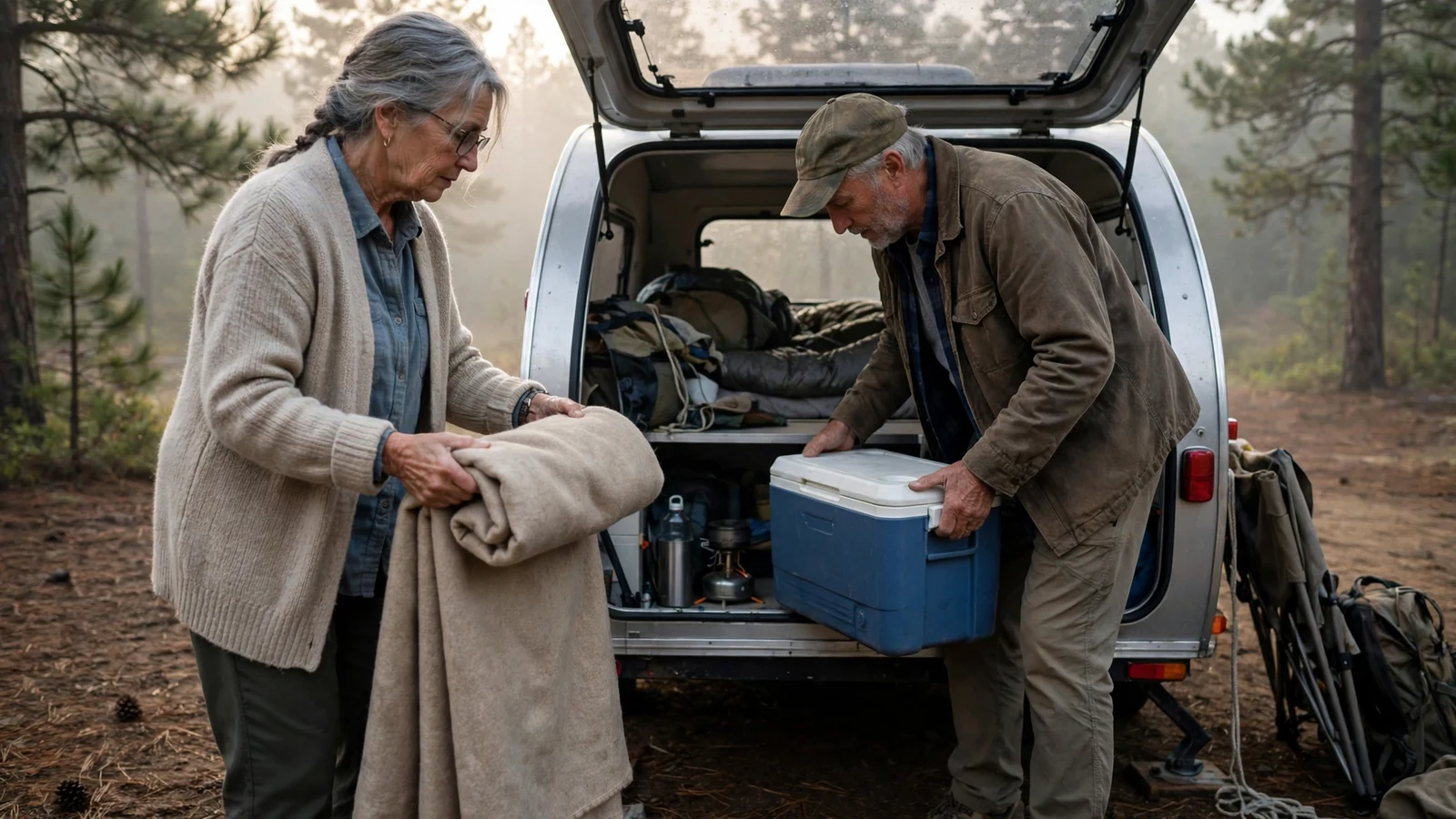
People ask what we would do differently, and the answer is small. We would pack less food and more patience. We would check the tires before we left, the way the man in the driveway told us to.
The trip taught us that a second act does not need to be big. It does not need a new house, a new job, or a new life. It can be a used camper, a paper map, and two weeks of road. The hobby you pick up together can be the road, if you let it. The dinner table for two can wait. The road is out there, and it is cheaper than you think, and it is quieter than you remember, and it is best traveled with the person who has sat beside you for thirty years.
If the house feels too quiet, and the weekends feel too long, and the two of you are looking at each other across a table that used to hold a whole family, try the road. Buy the camper with the dent. Pack the two mugs. Draw a circle on the map. Drive past it. The first night will teach you the rest.
Frequently asked questions
How much does a first camper trip cost?
Less than most couples expect. We bought a used camper with the money we had saved for a couch, and the trip itself cost gas, campground fees, and food we would have bought at home anyway. Start with a short trip close to home, and you will learn what the camper really costs before you plan a long one.
What should we pack for our first camper trip?
Pack less than you think you need. Two mugs, a cooler, bedding, a flashlight, a wrench, and a paper map will carry you through the first nights. The campground office can tell you where the water is, and the hardware store in the next town can sell you the part you forgot. The trip teaches you what to pack next time.
What if we argue on the road?
You will. Every couple does. Give the argument a size, the way we did with one per state, and let it go when it is over. The argument is almost never about the route. It is about two people who are tired, or hungry, or lost, and a sandwich and a nap will fix more arguments than a debate ever will.
Would you buy the camper with the dent, or would you wait for the perfect one? Tell us in the comments, if you are willing. Your answer might be the push another couple needs to draw their own circle on the map.
Going through something similar?
Share your experience anonymously with the Ever After Daily community. Every story is read by a human editor before anything is published.
Share Your Story