Couples Who Write Their Family Stories Down
Your parents are gone, your kids are asking questions, and the stories are fading fast. Here is the way couples write them down together, one story a week.
Couples Who Write Their Family Stories Down
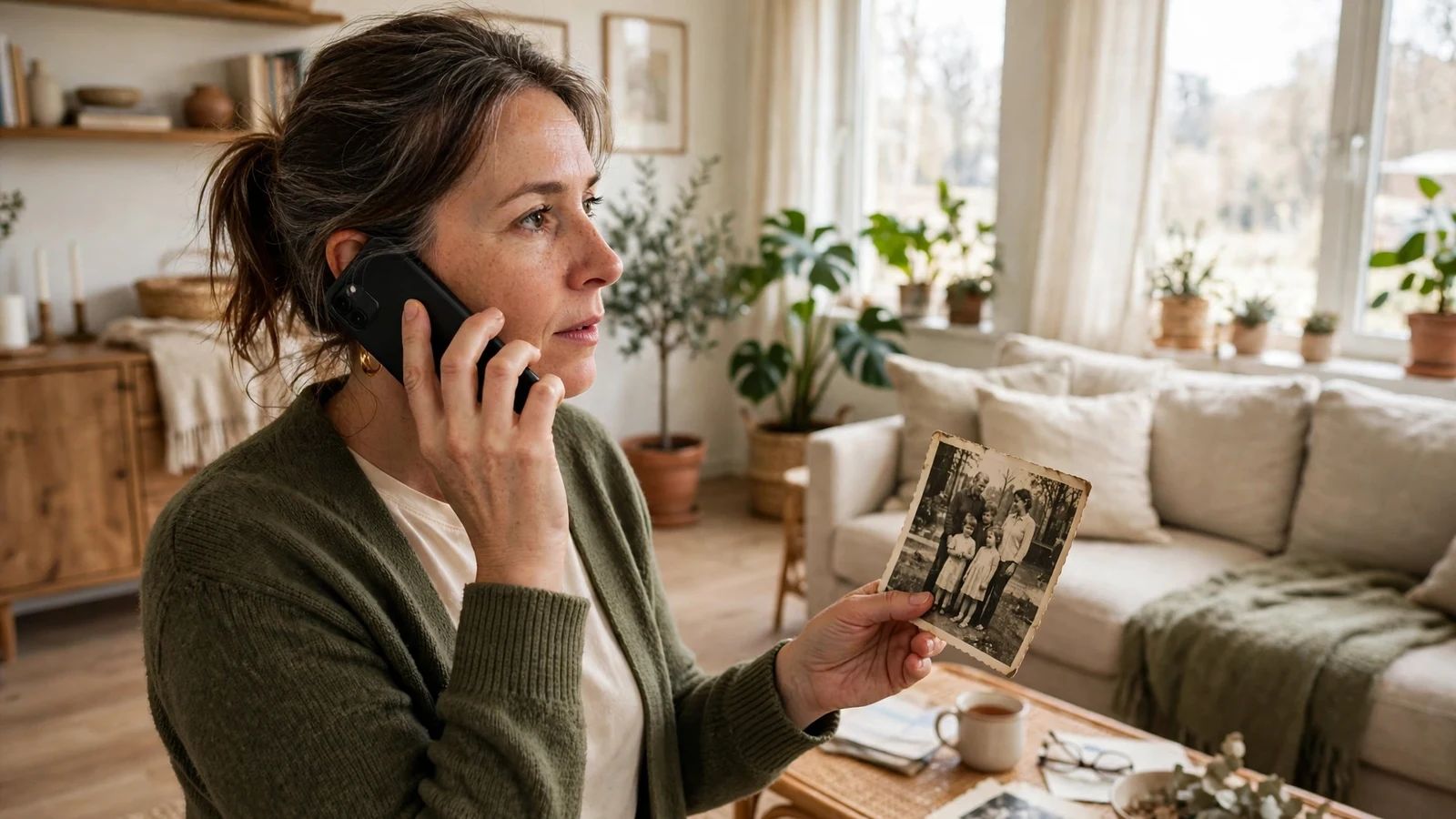
The question came from our daughter, on the phone, on a Tuesday. “What was Grandma’s kitchen like?” she asked. “Not the big things. The small things. What did it smell like?” I opened my mouth, and nothing came out. I could see my mother’s kitchen in my mind, the yellow curtains and the chipped blue mug, but the small things, the ones my daughter wanted, had gone soft around the edges. I said, “Let me think about it and call you back.” I hung up, and I sat at my own kitchen table, and I thought about all the stories I had never written down.
My husband came in from the garden with dirt on his hands, and I told him what she had asked. He washed his hands, sat down across from me, and said, “We should write them down. Before we forget the rest.” That night we started. One story a week, one page, no more than that. It sounded too small to matter. A year later we had fifty pages, and our daughter had stopped asking what Grandma’s kitchen smelled like, because she had the answer in writing, in our handwriting, on a page she could keep.
Why now
The stories fade faster than you think. It is not the big stories that go first. You remember the wedding, the house, the birthdays. The small stories go first, the ones nobody thought to keep: the way your father fixed a toaster with a paper clip, the song your mother sang while she folded laundry, the winter your car would not start and the neighbor pushed it down the hill with his truck. Those are the stories your kids will ask about one day, and they are the stories that slip away while you are busy living your life.
The parents are gone, or going, and that changes the clock. When your parents were alive, you could always ask. You could call your mother and say, “What was the name of the dog we had when I was seven?” and she would know. Now there is nobody left to ask, and the questions land on you. Your kids ask you, and you are the last person who knows. That is a strange feeling. It is also a good reason to pick up a pen.
The kids ask questions at odd times, and the questions are always smaller than you expect. They do not ask about the war or the Depression or the big history. They ask what Grandpa ate for breakfast. They ask whether Grandma was a good cook or only a fast one. They ask what the house smelled like on Sunday, and whether the dog slept on the bed, and what song was on the radio the summer you turned sixteen. The small questions are the ones that matter to them, because the small questions are how a person they never met becomes real.
Start now because the details are still there, even if they feel thin. You remember more than you think you do. The smell of your mother’s kitchen is still in your head, under the dust. The name of the dog is still there, behind the other names. Writing pulls those details out, one at a time, the way a magnet pulls nails out of a drawer. You do not need a good memory. You need a page and a half hour, once a week.
One story a week
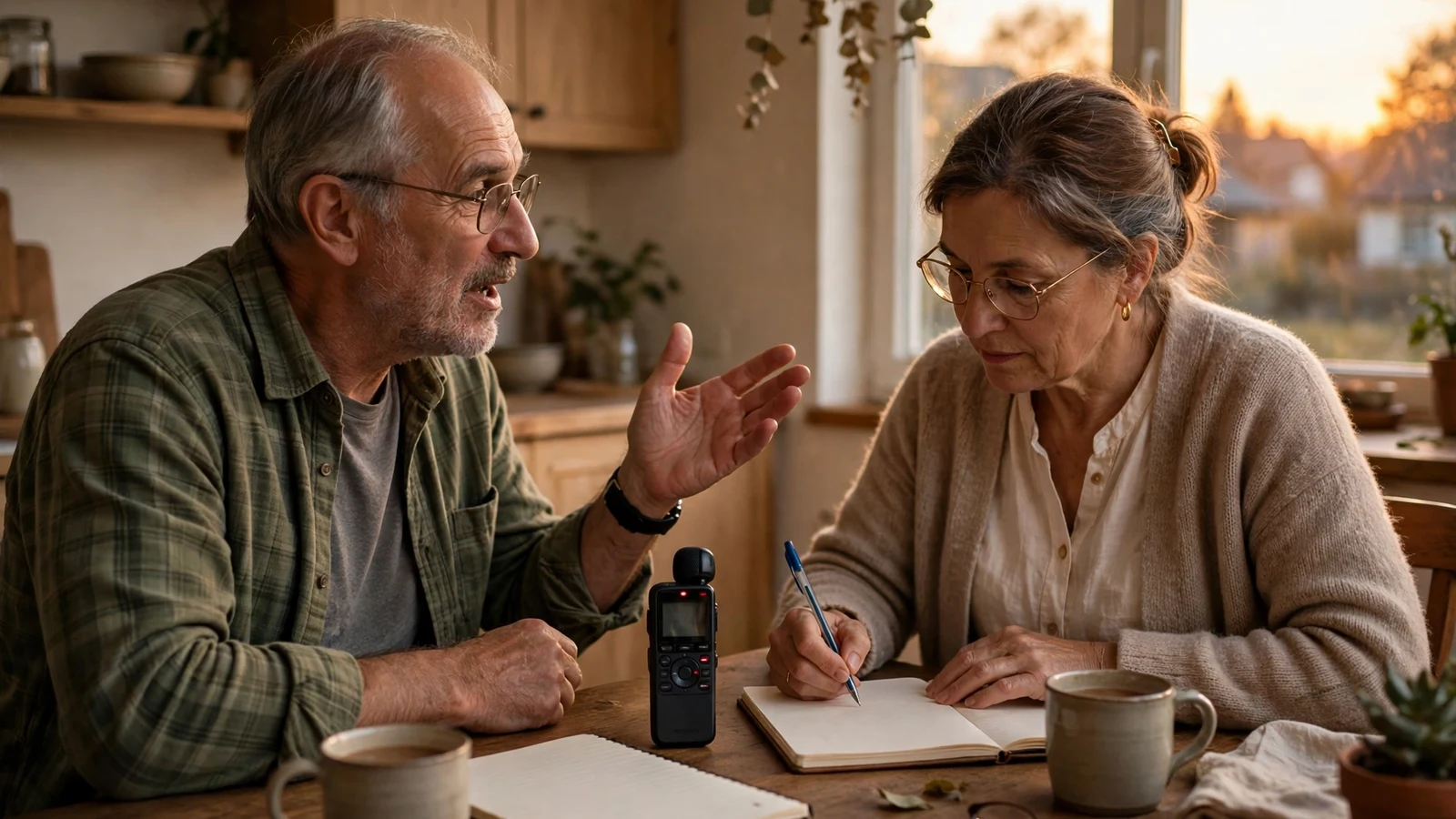
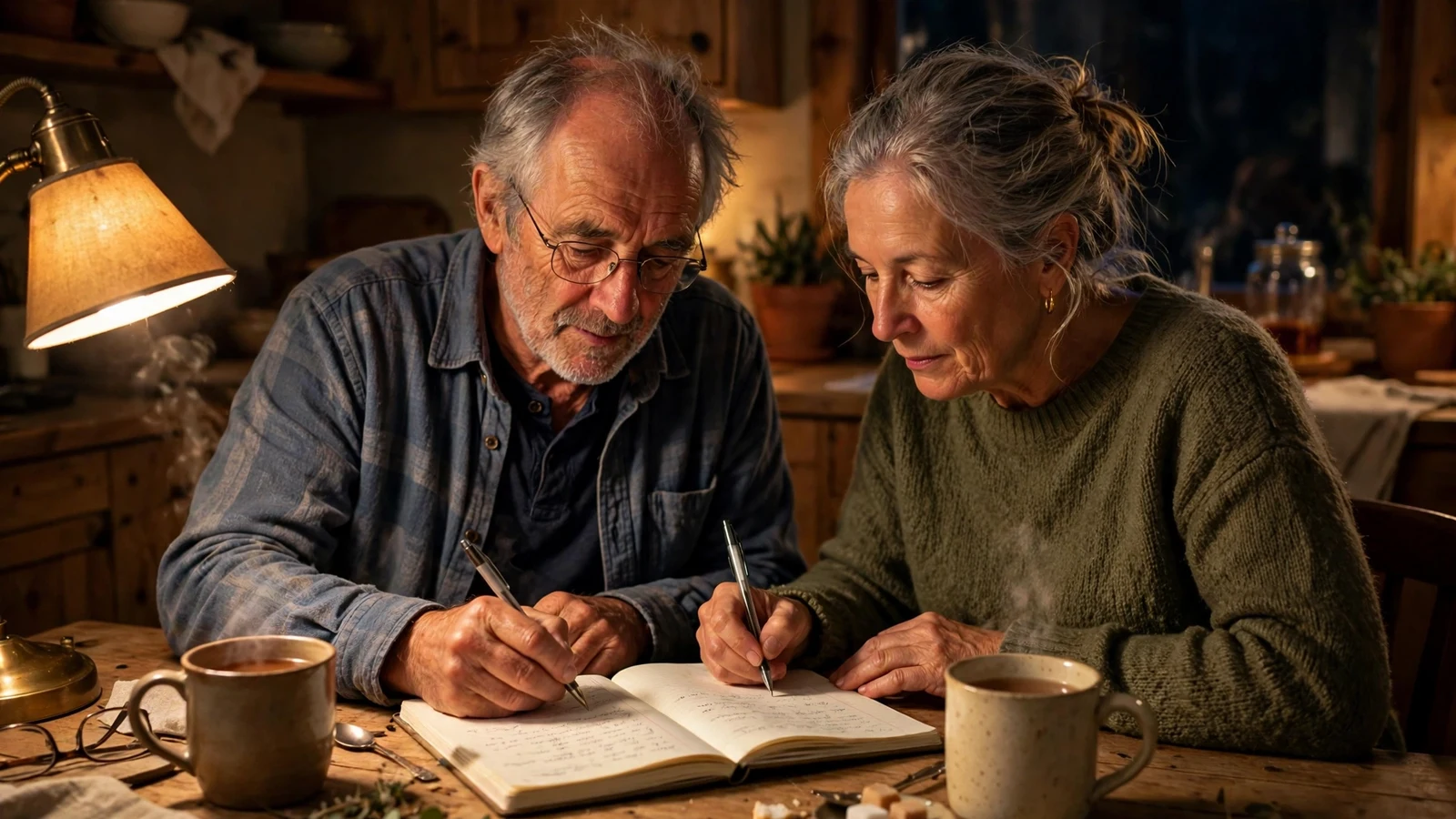
The method is simple, and the simple part is the point. One story a week. One page. One voice recorder, if you like to talk more than you like to write. My husband and I do it on Sunday nights, after dinner, at the kitchen table, with two mugs of tea. One of us picks the story. The other one asks questions. Then we write it down together, in plain words, the way we would tell it to a friend.
The picking is easy once you have a way in. We started with a list of prompts on the fridge: the first house, the first car, the worst meal, the best Christmas, the neighbor we loved, the neighbor we did not, the time Dad got lost, the time Mom laughed until she cried. Each Sunday, we pick one prompt off the list. Some weeks the story comes fast, and the page fills itself. Some weeks we stare at the prompt for ten minutes and talk about something else first. That is fine. The talking is part of the writing.
One person writes and the other person talks. That is the split that works for us. I hold the pen, because my handwriting is easier to read, and my husband tells the story, because he remembers the details I forget. He remembers the color of the car. I remember what was on the radio. Together we remember the whole thing. When we swap, when he writes and I talk, the stories come out different, and that is good too. The same story told twice is never the same story, and both versions are worth keeping.
The voice recorder sits on the table between us, in case the story runs long. Some weeks we talk for an hour and write for ten minutes. The recorder catches the parts we forget to write, the asides and the laughter, and we listen to it later, while we cook, and we write down the lines that matter. A recorder is not a replacement for the page. It is a net, for the stories that would have slipped through.
Keep each story to one page. That limit does the work for you. One page forces you to choose the details that matter and leave out the rest. You do not need the whole history of the house. You need the yellow curtains, the chipped blue mug, and the smell of bread on Sunday. Three details, written plainly, will bring a room back to life better than ten pages of history ever will. The first quiet week after the kids left gave us the time to do this, and the evening habit we keep gave us the hour. A story a week fits into a life that already has a rhythm. It does not need a new one.
Write the stories in your own voice, the way you talk. Do not try to sound like a writer. Your kids do not want a writer. They want you. If you say “ain’t” in real life, write “ain’t.” If your husband calls the car “the old beast,” write “the old beast.” The voice is the point. Fifty years from now, your granddaughter will read that page, and she will hear your voice in it, and that is worth more than perfect sentences.
The story that surprised them
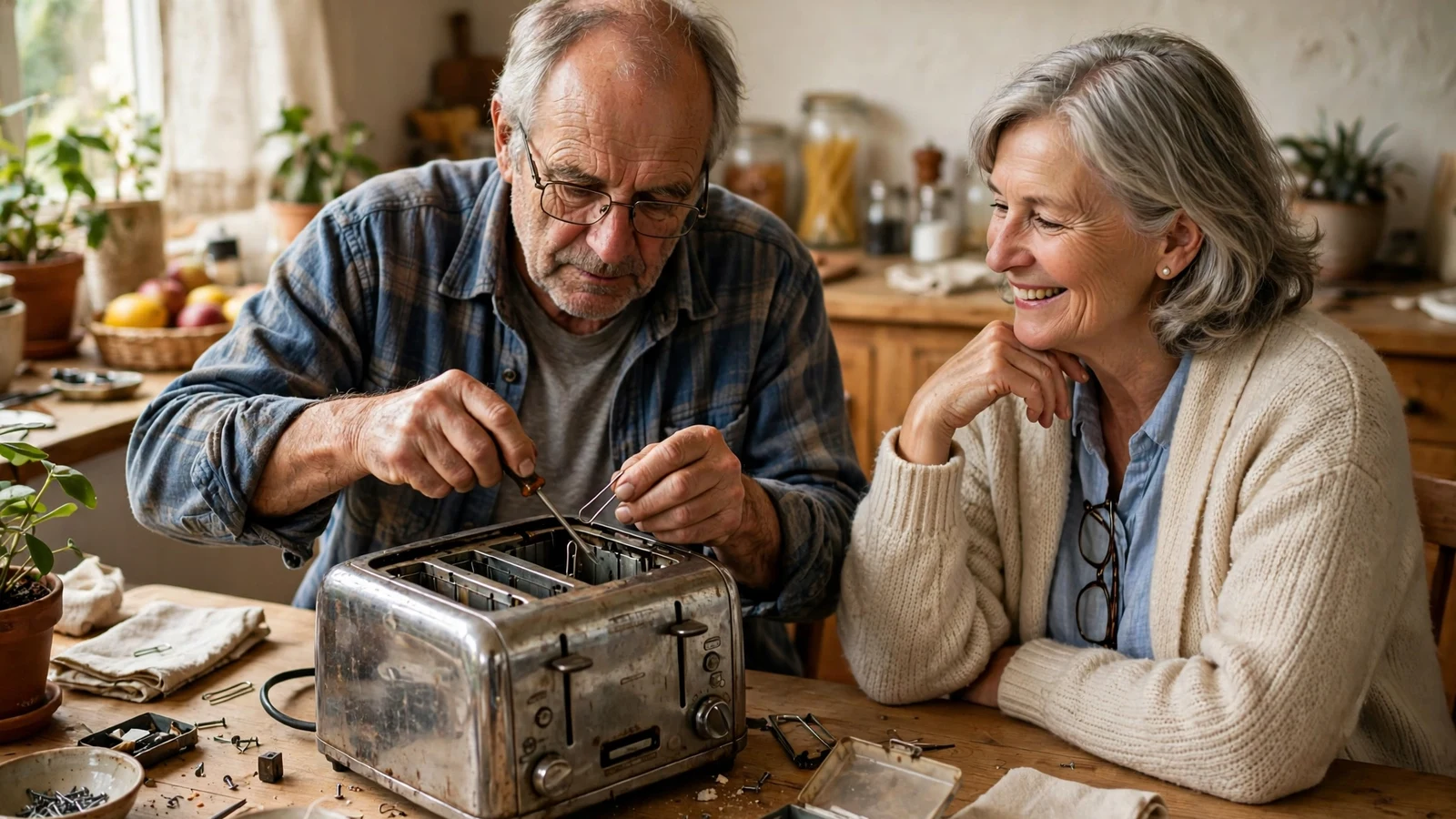
The story that surprised us was not the one we expected. We expected the big stories to matter most: the wedding, the house, the day the kids were born. The story our daughter asked to hear again, the one she read out loud to her own kids, was about a toaster.
My father fixed our toaster with a paper clip in the winter of 1974. The toaster had stopped popping up, and the bread burned on one side, and my father took the toaster apart on the kitchen table with a screwdriver and a paper clip, and he fixed it, and it worked for ten more years. That was the whole story. One page, one toaster, one paper clip. But my daughter loved it, because it told her something about her grandfather that the big stories never did: he was the kind of man who fixed things instead of throwing them away.
The story surprised us because it was small, and small stories were the ones we had almost thrown away. We had spent years thinking the family history was the big events, the ones with dates and places. The toaster taught us that the family history is the small events, the ones with a paper clip and a kitchen table. Your kids will not ask about the year your father bought the house. They will ask about the toaster. Write down the toaster.
Every family has a toaster story, a story so small you almost forgot it, and that story is the one your kids will keep. Ours came out on a Sunday in March, when my husband said, “Do you remember the toaster?” and I said, “The one Dad fixed with a paper clip?” and we both laughed, because we had not thought about that toaster in forty years, and there it was, back on the table between us, as plain as the day it happened. The page we wrote that night is the one our daughter keeps on her fridge.
Ask your spouse what their toaster story is. Sit at the table and ask, “What is the smallest story you remember about your parents?” Then listen. The answer will surprise you. It surprised us, and it will surprise you, because the small stories are the ones that stayed, even when you thought they were gone.
What to do with the pages when they are done
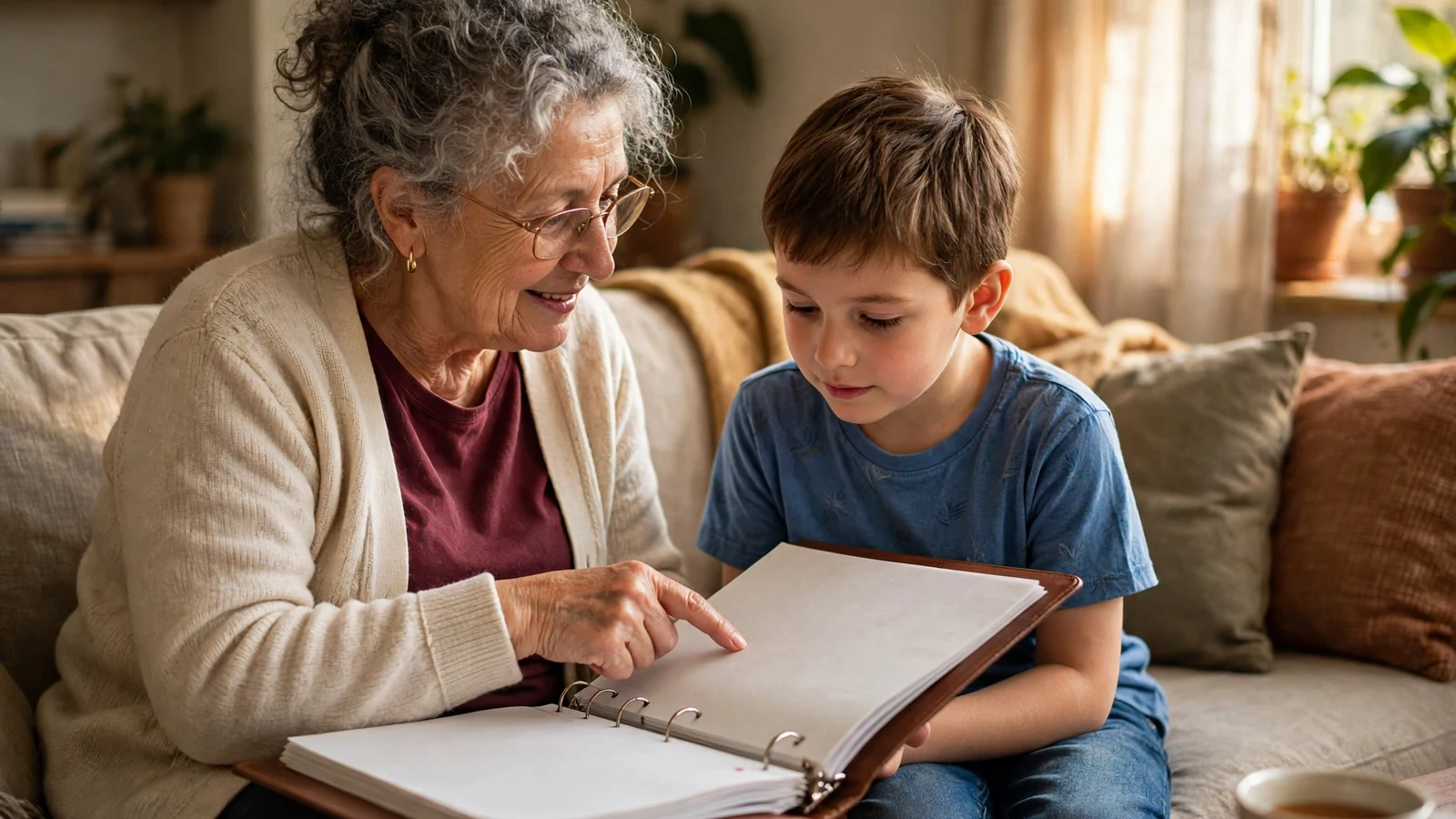
A page in a drawer helps nobody. When the pages pile up, do something with them. We keep ours in a binder with clear sleeves, one story per sleeve, in the order we wrote them. The binder sits on the shelf in the living room, where anyone can pick it up. Our daughter reads a page when she visits. Our grandson reads a page and asks what a paper clip is. That is the point. The stories are meant to be read, not stored.
Make a copy for each kid. A photocopy is enough. A binder from the office supply store is enough. Do not wait until the binder is full. Give them the first twenty pages at Christmas, and the next twenty at the next birthday. A gift of pages is a gift that gets read, and read again, and kept on a shelf long after the other gifts are gone.
If a story is too private for the binder, keep it in a separate envelope, and write the name of the person it is for on the front. Some stories belong to one person, not to the whole family. That is fine. The binder holds the stories everyone can read. The envelope holds the ones that need a little more care. Both are worth writing.
The stories will outlast you, and that is the reason to write them. Not to be remembered as great or wise or important. To be remembered as the people who sat at a kitchen table on Sunday nights, with two mugs of tea, and wrote down the toaster. Your kids will read those pages, and they will hear your voice, and they will tell their kids, and the stories will go on. That is all a family history needs to do.
If your parents are gone and your kids are asking, start this Sunday. One story. One page. One prompt off the fridge. The weekly talk you already have is a good place to start, and the small moments you share at the table are the ones worth writing down. The stories are still there. Write them before they fade.
Frequently asked questions
What if we cannot remember the details?
Write what you do remember, and write it plainly. Three honest details are better than a full story you had to guess at. If you are not sure about a name or a date, write “I think” and move on. Your kids would rather have a story with one soft edge than no story at all.
What if my spouse does not want to write?
Then let them talk while you write. Many people who hate writing love telling stories out loud. Put the recorder on the table, ask one question, and listen. You can write the page later from the recording. The story matters more than who holds the pen.
How do we pick which story to write first?
Start with the one your kids have already asked about. If your daughter asked about Grandma’s kitchen, write about Grandma’s kitchen. If your son asked about the first car, write about the first car. The questions your kids ask are the map. Follow them, one story a week, and the binder will fill itself.
What is the smallest story you remember about your parents? Tell us in the comments, if you are willing. Your answer might be the story another couple has been trying to remember.
Going through something similar?
Share your experience anonymously with the Ever After Daily community. Every story is read by a human editor before anything is published.
Share Your Story