12 Signs You and Your Spouse Are Becoming More Like Roommates
Marriage feels like roommates? Here are 12 signs you’ve drifted into roommate mode — plus small, truly realistic ways to start feeling like partners again.

You used to fight over the remote. Now you each have your own — your own shows, your own schedules, your own side of a quiet that doesn’t feel peaceful anymore. If your marriage has started to feel like a really well-run apartment share, this one’s for you.
Let me say the thing you’re probably thinking at 11 p.m., from your corner of the couch, while your spouse laughs at something on their phone that you’ll never hear about. You’re not miserable. That’s the confusing part. Nobody’s cheating, nobody’s screaming, the bills are paid. But somewhere between the school pickups and the grocery lists and the Thursday night routine, the two of you stopped being a couple and started being a logistics team.
And now you’re wondering: is it just us? Is this what marriage is supposed to feel like after a decade? Or did something quietly break while nobody was looking?
This article is the checklist you’re looking for — and the way back.

What Does “Roommate Marriage” Actually Mean?
A roommate marriage isn’t a marriage that’s over. It’s a phase where the logistics took over and the intimacy went quiet — where you run the household like a dream team but you couldn’t tell me the last time you felt like partners in anything except the mortgage.
It usually looks like this: you text about the dentist appointment. You coordinate who’s home when. You eat dinner in the same room while scrolling different feeds. You’re polite. You’re responsible. You’re efficient. You’re just not close.
Here’s what I need you to hear: this doesn’t make you a bad couple, and it definitely doesn’t mean your marriage is broken. Most long marriages pass through this exact season. Kids arrive, careers heat up, parents age, exhaustion becomes a personality trait — and the relationship slides into the background because the background is where everything urgent lives. The danger was never the phase itself. The danger is staying in it on autopilot, month after month, until “roommates” stops feeling like a phase and starts feeling like the permanent arrangement.
Think of it like drift, not damage. A boat doesn’t end up off course because someone steered it wrong. It ends up off course because nobody was steering at all.
12 Signs You’re Slipping Into Roommate Mode
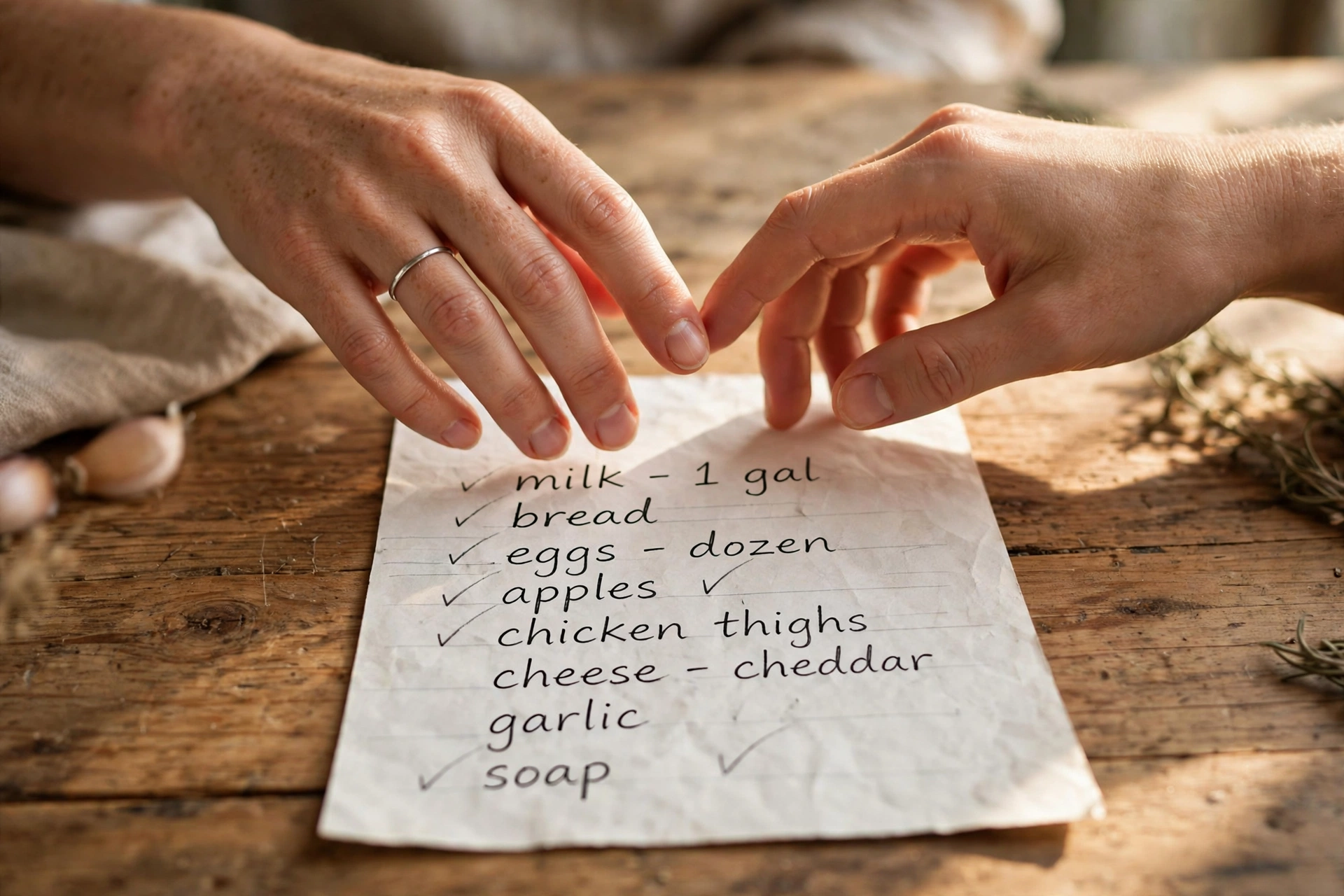
Run through these honestly. You don’t need all twelve to qualify — even five or six is your signal to pay attention.
1. You plan your days around each other instead of with each other. The calendar app is the third person in your marriage. You’ve got his meeting, her pickup, the plumber’s window, the soccer practice — and everything is arranged so you collide as little as possible. Coordination, not connection.
2. Ninety percent of your conversations are logistics. Groceries. Pickups. Bills. The roof guy. Whose turn it is to call the pediatrician. If you added up every word you said to each other yesterday, would any of it have been about something you felt? Or was it all operations?
3. You eat dinner together but on separate screens. Same table, different worlds. The food’s hot, the conversation isn’t. You could be sitting in two different apartments and the evening would look identical — and some part of you knows that, which is the loneliest part.
4. “Goodnight” gets said from across the room. One of you is already in bed, scrolling. The other is still in the living room. “Night” floats down the hallway like a memo. There was a time when goodnight was a whole production — teeth brushing side by side, a hand on a shoulder, some small ritual. Now it’s a word.
5. Touch has become accidental. You brush past each other in the hallway. You hand off a kid like a relay baton. But reaching for each other on purpose — a hand on the small of the back in the kitchen, a forehead kiss for no reason — that’s gone. Nobody’s avoiding touch. Nobody’s seeking it, either.
6. You’ve stopped being curious about their inner life. You know his schedule. You don’t know what’s been on his mind for three weeks. You know she handled the school thing. You don’t know it made her cry in the car afterward. You’ve replaced “how are you, really?” with “did you remember the milk?”
7. You feel relieved when they make plans without you. A Friday night alone used to feel like a loss. Now it feels like a vacation. That relief is worth examining — not with guilt, but with honesty. Relief isn’t evil. But relief at your spouse’s absence is information.
8. Sex feels scheduled — or quietly shelved. Either it’s on the calendar like a dentist appointment, stripped of anything spontaneous, or it’s just… not discussed. Not fought about. Just filed away under “things we’ll deal with later,” where later never comes.
9. You vent about your marriage to friends, not to your spouse. Your best friend gets the real story — the frustration, the loneliness, the “is this normal?” — while your spouse gets the weather report. The moment your confidant stopped being your partner, the roommate phase officially began.
10. You can’t remember your last real laugh together. Not a polite chuckle at a sitcom. A real laugh — the kind where you look at each other mid-laugh and it gets worse, where your stomach hurts and you can’t breathe. Couples who laugh together stay knitted together. When the laughter goes, something’s unraveling.
11. You’re excellent co-parents but strangers as partners. Parent-teacher conferences? Crushed. Bedtime routine? Flawless. But ask yourselves who you are to each other when the kids aren’t in the room, and the silence that follows is the whole problem in one sentence.
12. The thought “is this it?” shows up more often than you’d admit. In the shower. In traffic. At 2 a.m. It’s not dramatic enough to call a crisis. It’s too persistent to ignore. And the fact that you’re searching for this article at midnight tells me it’s been showing up a lot.
If you’re nodding along to half of these — breathe. Recognizing the pattern is the first step out of it, and most couples never even get that far.
Why Good Marriages Drift Into Roommate Mode
Nobody chooses this. That’s the part that trips people up — they go looking for the moment it went wrong, the fight, the betrayal, the decision. Most of the time there isn’t one. Roommate mode happens by a thousand tiny defaults.
Kids. Loving, wonderful, time-devouring kids. When the baby years hit, the marriage goes into survival mode, and survival mode has no room for lingering kisses or long talks. Then the kids get older and need different things — rides, homework help, emotional triage — and somehow the “survival” setting never got switched off.
Careers. His promotion, her pivot, both of you working harder than ever for a life you’re too tired to enjoy together. You fall into bed at 11 and the only energy left is for sleep.
Exhaustion. This is the boring, honest truth nobody puts on a greeting card: most drift happens because people are simply too tired to be romantic at the end of a day that started at 5:45 a.m. Intimacy takes energy, and the tank is empty.
Comfort. This one sneaks up on the happiest couples. Things are fine. The mortgage is handled, the kids are thriving, nobody’s fighting. Comfort feels like enough — until one Tuesday you realize comfort and closeness aren’t the same thing, and you’ve been confusing them for years.
Conflict avoidance. Every unresolved argument makes the next conversation feel riskier, so the conversations get smaller and smaller. First you stop arguing about the big stuff. Then you stop talking about the big stuff at all. Eventually you’re only safe talking about groceries. The peace you protected came at a price: each other.
None of these are anyone’s fault. They’re the weather of a busy adult life. But weather still gets you wet if you stand in it long enough.
Is a Roommate Phase Normal?

Yes. And yes, it’s reversible — but those are two separate answers, so don’t let the first one make you lazy about the second.
A roommate phase is a normal season. Most couples who’ve been together a decade or more have been here. Babies, job changes, moves, grief, plain old fatigue — life has a way of demoting the marriage to the background for a while. That’s not failure. That’s being human.
But there’s a difference between a normal phase and a new permanent setting. A phase has an end date, even if you can’t see it yet. A setting is what you get when you notice the drift and do nothing — when “we’ll reconnect when things calm down” becomes the plan, and things never calm down.
So here’s the honest test: does the distance scare you, or have you made peace with it? If it scares you, that’s good news wearing a scary mask. The fear means the love’s still in there, knocking. If you’ve made peace with it — if “this is just how it is now” feels settled — that’s the version of normal you want to fight.
How to Start Feeling Like Partners Again

You don’t need a couples retreat or a dramatic speech. You need small, repeated proof that you’re still choosing each other. Start here:
Build one shared ritual a day. Not an hour — ten minutes. Coffee on the porch before the house wakes up. A walk after dinner, phones left behind. Sitting on the couch with the screens off and the lamps on. Rituals are what couples do instead of what couples say, and doing beats saying every time.
Ask one non-logistical question every day. Not “what’s for dinner?” Something that reaches past the schedule: “What was the best part of your day?” “What’s been on your mind lately?” “What’s something you’re looking forward to?” It’ll feel forced for about three days. Then it’ll feel like remembering something you forgot.
Reintroduce casual touch. A hand on the back of their neck when you pass. A longer hug at the door. Holding hands on the walk you just started taking. Touch is the fastest language couples have, and it’s the first one roommate marriages lose. Start speaking it again, even if it’s clumsy at first.
Plan one thing a week that’s just for fun. Not productive. Not for the kids. Just fun — a dumb movie, a drive to somewhere new, takeout from the place you used to go before kids. If money’s tight, there are endless [cheap at-home date night ideas](/cheap-date-night-ideas-at-home/) that cost less than the pizza you’d order anyway.
Say the quiet part out loud. This is the bravest move on the list, and the most important: “I miss us.” Not “you never” or “we need to.” Just the plain truth, said gently. Most roommate marriages are two people waiting for the other one to say it first. Be the one who says it.
If the disconnection runs deeper on her side specifically — if she’s gone quiet in a way that feels bigger than logistics — here’s [what emotional disconnection feels like for her](/wife-feels-emotionally-disconnected/). Sometimes the roommate phase is covering something one partner has been carrying alone.
The roommate test: one week of small returns
Naming the roommate phase is a start, but a name does not change a Tuesday. What changes a Tuesday is one small shared moment a day, for one week, planned in advance so tiredness cannot talk you out of it. Think of it as a test. You are finding out whether small returns still work in your marriage, and one week is long enough for an honest answer.
Monday: coffee together before the house wakes up. Ten minutes, two mugs, no phones, no news. If mornings are chaos, move it to the last ten minutes before bed. The point is a shared hour that belongs to no chore.
Tuesday: a short walk after dinner, even if it is only around the block. Walking side by side makes talking easier, because nobody has to hold eye contact while finding words.
Wednesday: a phone-free dinner. Put both phones in another room, not face-down on the table. Notice how strange the first five minutes feel. That strangeness is the habit you are breaking, and it fades fast.
Thursday: one question that is not logistics. Try this: “What was the best part of your day, and what was the hardest?” Ask it while you are doing dishes or sitting on the porch. Do not grade the answer, and do not fix the hard part unless you are asked to.
Friday: touch on purpose. A hand on the back of the neck when you pass in the kitchen. A longer hug at the door than the usual quick one. A hand held on the couch, even if the television is on. Touch is the first language roommate marriages lose, and it comes back through small deliberate moments, not speeches about it.
Saturday: one thing that is only fun. A bad movie, a drive to somewhere new, dessert before dinner, a board game you have not played in years. Fun is not a luxury in a marriage. It shows you still like each other, beyond relying on each other.
Sunday: a ten-minute review, just the two of you. Ask each other one question: “Which day this week felt most like us?” Write the answer down where you will see it, on the fridge or in a phone note. That day is your starting point for next week, because it shows you what kind of togetherness still fits your real life.
Now, the part that matters most: what to do when a day slips. A day will slip. Someone works late, a child gets sick, one of you falls asleep on the couch at nine. When it happens, do not restart the week, and do not keep score. A slipped day is not a failed test. Say one sentence about it, out loud, and mean it. Try this: “We missed today, and that is fine. We will pick it up tomorrow.” Then do exactly that. Couples do not drift because they miss a day. They drift because a missed day turns into a missed week, and a missed week turns into “we tried that once.”
If only two or three days happened, you still have something real: you know which days worked, and that a missed day did not end the marriage. Keep those two or three days and build next week around them. If every day felt forced or empty, that is useful information too, worth taking to a counselor together, because the distance may need more than small returns can give.
An evening ritual can hold these small returns after the test week ends. One shared habit at the same time each night, phones down, lamps on, gives next week a shape without a new plan each day. And if the distance runs deeper than a week of small moments can reach, a fuller guide to reconnecting emotionally can walk you through the longer work, step by step.
FAQ
Is it normal to feel like roommates in marriage? Completely. It’s one of the most common seasons in long marriages, especially during the busy middle years of kids and careers. Normal, though, doesn’t mean “leave it alone” — it means you’re not broken, and you’re not the only ones.
Can a marriage recover from the roommate phase? Yes — and most couples who name it early recover well. The couples who struggle are the ones who let it run for years without acknowledging it. The fix is rarely dramatic: small daily rituals, honest conversation, and time spent like partners instead of shift managers.
Does feeling like roommates mean we should separate? Almost never, on its own. Feeling like roommates means the connection went quiet, not that it died. Separation is for marriages where respect, safety, or willingness are gone. What you’re describing is a couple that’s tired and distracted — and that’s fixable.
How long does the roommate phase usually last? It depends entirely on when someone names it. Some couples drift for a few months during a hard season and bounce back naturally. Others let it run for years because nobody said “I miss us” out loud. The phase lasts exactly as long as it stays unnamed.
What if my spouse doesn’t think there’s a problem? This is the hardest version of this problem. Start by telling them what you feel, not what they should think — “I feel lonely in our marriage” lands differently than “you’re neglecting me.” [Learning to talk about feelings without starting a fight](/talk-to-spouse-about-feelings/) helps here. And remember: one person changing the dynamic often pulls the other along. You don’t need their permission to start being warmer, more curious, more present. Small shifts are contagious.
—
So here’s my question for you, and I’d genuinely love to hear your answer in the comments: which of the twelve signs hit you hardest? Not the one that made you nod politely — the one that made your stomach drop a little. That’s your starting point. That’s the one to talk about first.
Because here’s what I believe after writing about marriages for years: the couples who make it aren’t the ones who never drift. They’re the ones who notice the drift and do something about it. You just noticed. Now you get to choose what happens next.
Going through something similar?
Share your experience anonymously with the Ever After Daily community. Every story is read by a human editor before anything is published.
Share Your Story