9 Things Long-Lasting Couples Do Differently
What long-lasting couples do differently isn’t grand romance. It’s quick repair, deep friendship, and choosing each other in the boring years, too. Here’s how.

Ask a couple married 40 years their secret and they’ll laugh. Then, if you listen past the joke, they’ll tell you the truth — and it’s never what the wedding magazines say.
They’ll wave off the question at first. “Oh, I don’t know, we just got lucky.” “He still makes me laugh.” “She never learned how to hold a grudge.” It’s only when you keep sitting there, coffee going cold, that the real answer slips out sideways. It has nothing to do with a perfect wedding or a perfect match. It has everything to do with Tuesday.
That’s the part nobody wants to print on a greeting card. What long-lasting couples do differently isn’t glamorous, and it isn’t a secret you buy once and keep forever. It’s a set of quiet choices they make when they’re tired, annoyed, broke, grieving, or just bored out of their minds at the kitchen table. Here are the nine that come up again and again.
9 Things Long-Lasting Couples Do Differently
1. They stopped keeping score. Somewhere around year eight, the ledger burned. Who emptied the dishwasher last, who apologized first, who gave up more on the house decision — long-lasting couples quit the math. They noticed scorekeeping turned the kitchen into a courtroom, and nobody wants to live with a judge who remembers every Tuesday since 2014. Now if she handles the dentist appointments, he handles the trash and the weird noise the car is making, and neither one announces it for credit. The help just counts.
2. They became experts at repair, not at avoiding fights. They still argue — about money, about in-laws, about the thermostat war that has lasted two decades. The difference is the recovery time: hours, not weeks. A slammed cabinet at 7 p.m. becomes “I’m sorry, that came out mean” in the driveway at 9, and a real hug before bed instead of backs turned in the dark. They got good at the comeback, and that comeback is the whole skill.
3. They kept a private world. It’s the inside joke from 1998 that still makes them lose it in the grocery store. It’s the dumb nickname for the neighbor, the song they always skip, the way one of them says “well, that went great” after any minor disaster. Nobody else gets it, and that’s the point. That shared world becomes a place to retreat when the outside one is hard, a little room only two people have the key to.
4. They let each other change. The person they married at 25 is not the person sitting across from them at 55, and they didn’t panic about that. She got more opinionated. He got softer. Their politics shifted, their faith deepened or loosened, their hobbies and hair and bodies changed. Couples who last keep re-choosing the new version instead of punishing each other for not staying frozen. They treat change like weather, not betrayal.
5. They protected the friendship, not just the romance. Romance ebbs and flows — ask anyone who has survived newborn twins or a parent’s long illness. The couples who last genuinely like each other underneath all of it. They’d pick each other as friends if they met today. They actually enjoy the errand run, the porch coffee, the recap of the day that goes nowhere special. If the spark dimmed for a season, the friendship carried the marriage across it.
6. They never weaponized the past. The old mistake stays buried where it belongs. Bringing up 2009 in a 2026 argument is how marriages die slowly, one ambush at a time, and they figured that out early. When they fight, they fight about today: the forgotten errand, the sharp tone at dinner, the bill neither of them opened. Yesterday already got its apology. It doesn’t get to testify forever.
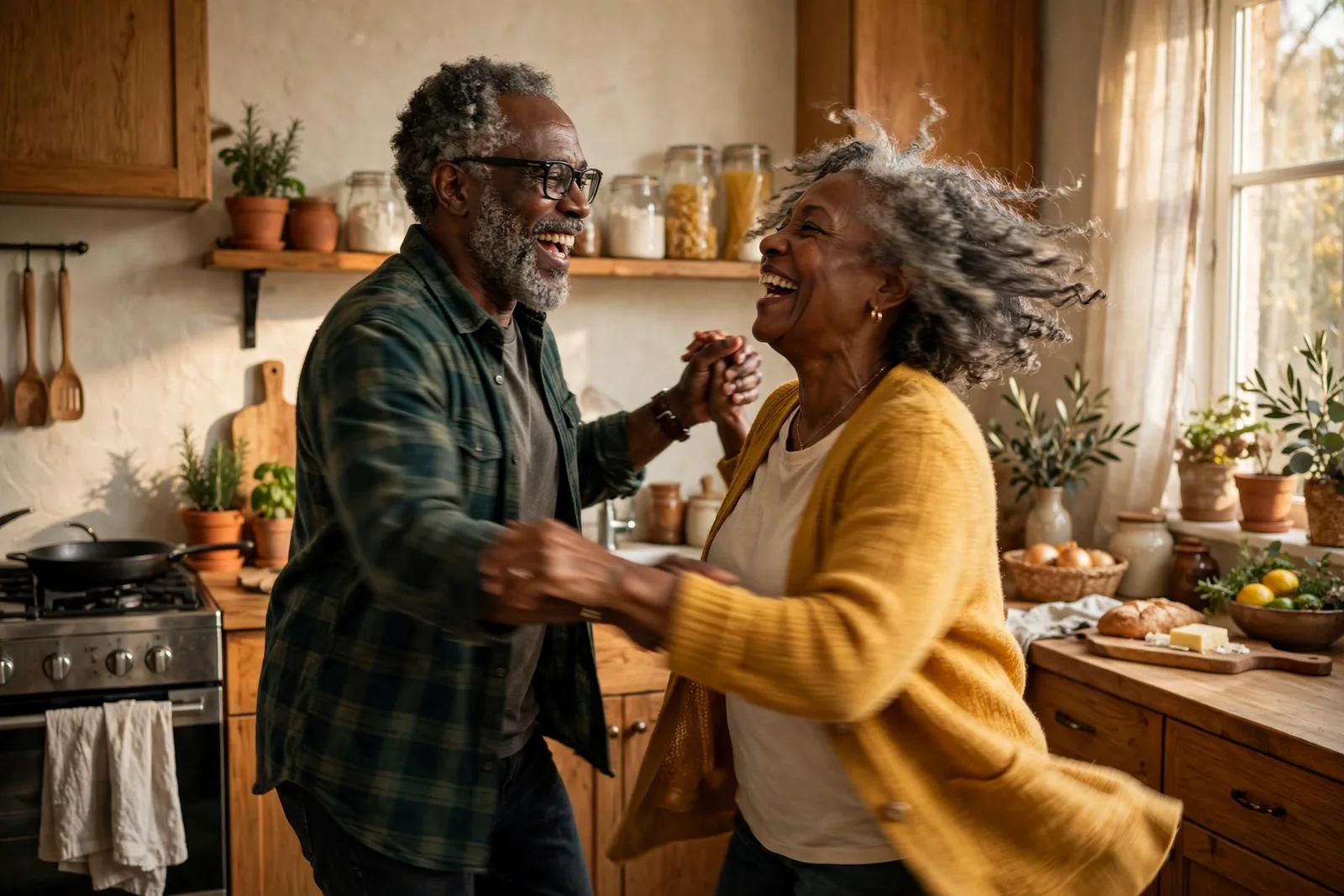
7. They made the boring years count. The decade of diapers and mortgages and minivans wasn’t a waiting room for real life to start again — it was the marriage. They found the joy inside the routine instead of resenting the routine for not being exciting. Pizza on Friday, dancing badly while the pasta boils, laughing at the same story at the family cookout. They didn’t wait for the kids to grow up to enjoy each other. They practiced enjoying each other with goldfish crackers crushed into the car seats.
8. They chose each other in front of everyone. With the in-laws, with friends, with the kids sprawled on the living room floor — they practiced public loyalty for decades. He doesn’t make her the punch line to get a laugh from his brothers. She backs him up in front of the kids even when she’ll ask questions later in private. That loyalty, repeated in front of witnesses for thirty years, becomes private trust you couldn’t break with a crowbar.
9. They decided divorce wasn’t the default exit. Not out of fear, and not out of stubborn pride. Out of commitment. When leaving isn’t on the table as the automatic answer, you get creative about staying: you go to counseling, you take the walk, you sleep on it, you try the conversation again on Saturday morning when you’re both fed and rested. The locked exit felt less like a trap and more like a promise — we will figure this out because we decided to.
The one night a week they put the phones down
Ask a couple married forty years what changed in the last decade, and plenty of them will mention the phones first, before the money, the kids, or the house. The phones arrived quietly, one upgrade at a time, and they moved into the evenings a little more each year, until one day they owned the room.
The couples who last noticed it early, and did something small about it. They picked one night a week, a weeknight, and the phones went into a basket by the front door at six and came out at nine. No speech, no detox. A basket by the door, a night, and a habit that stuck.
What the night gives back is small, and that is why it works. It gives back the small talk that keeps a marriage warm, the kind that goes nowhere in particular and needs no reason to happen. Who called today. Whether the car needs new tires before winter. None of it matters much on its own, and all of it together is the marriage, the small check-in that keeps two people from guessing.
Picture a Tuesday in February. Dinner is done, the dishes are in the sink, and the phones are in the basket by the door. He is on the couch with a book. She is at the table with the crossword. Nobody is saying anything, and it is the good kind of quiet, the kind where two people share a room without filling it. After a while he reads a funny sentence out loud, and she laughs. The evening goes on like that, in small pieces, until nine, when the phones come out and neither rushes to pick theirs up.
The night works because it is small, and because it is regular. A couple that tries to give up phones for a whole weekend usually quits by Saturday lunch, and the quitting ends the whole idea. A couple that gives up phones for three hours on a Tuesday just has a nice Tuesday, and a nice Tuesday is easy to repeat. After a month of nice Tuesdays, the night stops feeling like a rule and starts feeling like the best night.
If the house runs on phones, start smaller. Phones in the basket for dinner only, from the first plate to the last dish in the sink. One hour proves the evening survives without them, and one proved hour is easier to stretch than a forced evening. Couples who spend a rainy weekend without screens find the same thing on a bigger scale, and couples who talk about aging without fear learn it from the other side, that the talks that matter most need a room with no buzzing in it.
To start the night, keep the words simple. “One night a week, phones in the basket, six to nine. Tuesday. Will you try it with me for a month?” If your partner worries about missing something, answer with the plan. “The school and your mom can still reach us. Everything else can wait three hours.” And when the first night goes well, say so before bed, because habits need someone to notice them out loud. “I liked tonight. Same time next week?”
What They’ll Tell You If You Ask
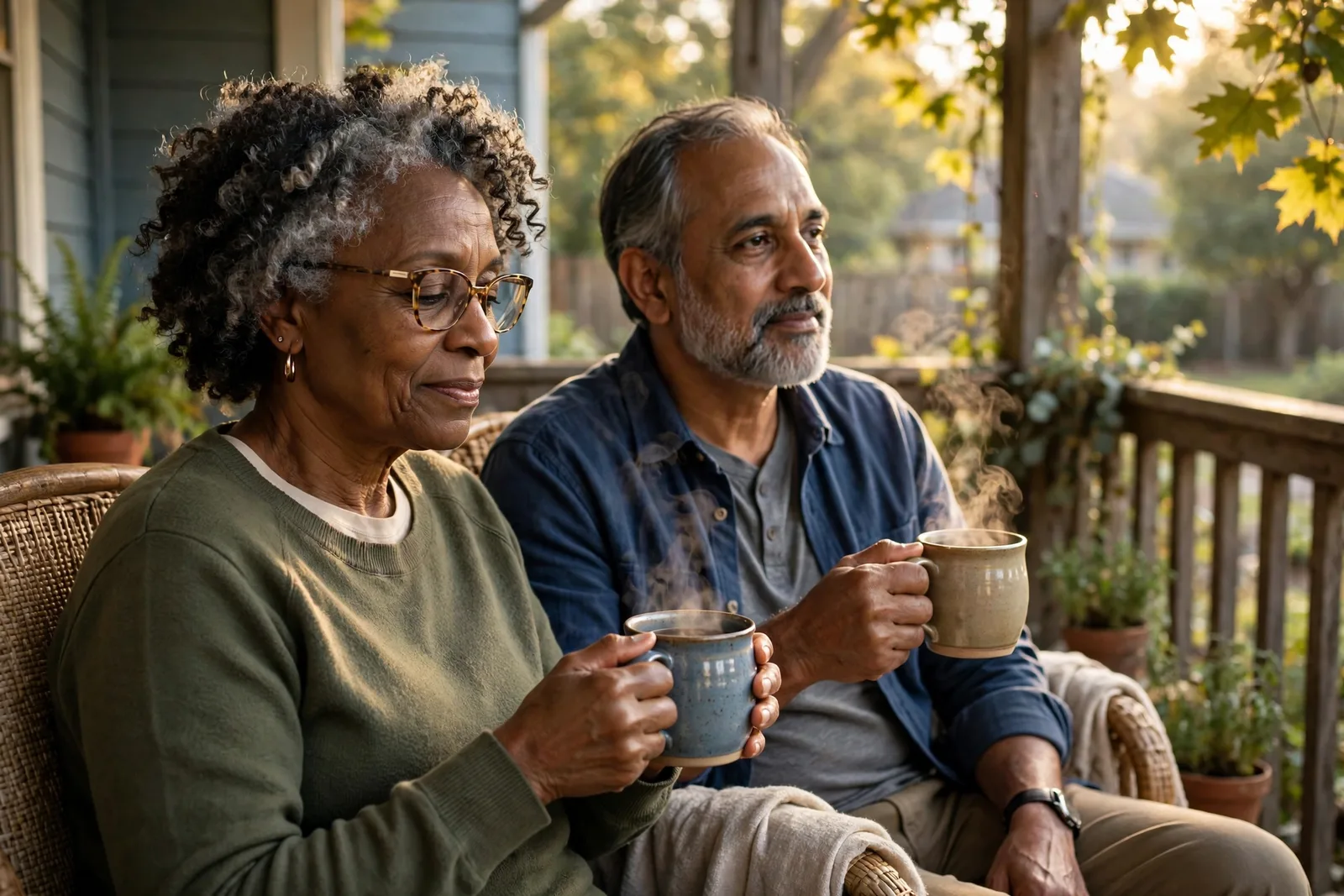
If you actually sit down with a couple who has made it forty years, the “secret” is always a little embarrassing in how ordinary it is. Be kind, especially when you don’t feel like it. Keep laughing at each other’s worst jokes. Be stubborn about the person, not about being right.
They’ll tell you he learned how she takes her coffee and still brings it to her in bed on Saturdays. They’ll tell you she can read his whole mood from how he shuts the front door, and she asks anyway. They’ll shrug like this should have been obvious, and honestly, maybe it should have been. There is no vault where long-lasting couples keep a different set of rules. They just kept choosing the small kind thing on the days when the big feelings weren’t showing up to help.
So tell me — of these nine, which one does your marriage already do without even trying, and which one stings a little because you know it’s the one you’re missing?
Frequently Asked Questions
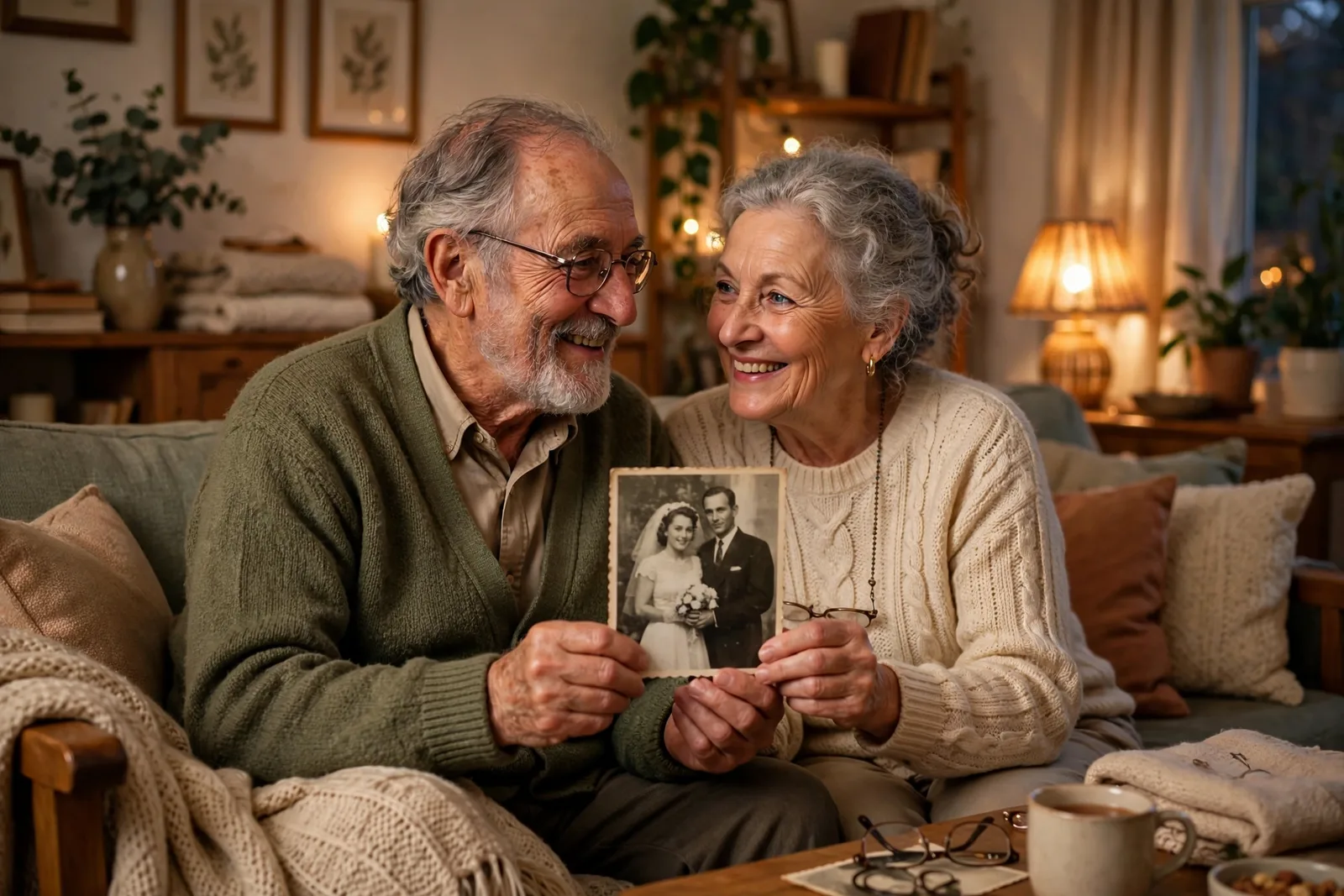
What is the secret of couples married 30+ years?
There isn’t one secret, and that’s the secret. They repair fast, they stay friends, they quit keeping score, and they keep choosing each other in public and in private. It’s kindness and humor, repeated on ordinary days for a very long time.
What do long-lasting couples have in common?
They like each other, not just love each other. They have a private world of jokes and rituals, they let each other change without panic, and they never drag old mistakes into new arguments. Above all, they recover from fights in hours instead of weeks.
How do couples stay together for decades?
They treat the boring years as the real marriage, not a pause between exciting chapters. They protect the friendship during the seasons when romance runs low, and they get creative about staying because leaving was never the default answer.
Is it luck or effort that keeps marriages together?
A little luck in the match, but mostly effort in the maintenance. The couples who last will tell you they lucked into a good person and then worked like it mattered — because on the hard years, effort is the only thing standing between a rough patch and a ending.
What’s the hardest year of marriage?
It varies — for a lot of couples it’s the first year of living as a real team, or the thick of the small-kids-and-no-sleep years. Long-lasting couples say the hardest year is whichever one you stop repairing in. Hard years don’t end marriages. Unrepaired ones do.
Keep Reading
If this hit home, these might too:
- what couples who stay in love never stop doing
- can a good marriage still have bad years
- signs your marriage is stronger than you realize
Going through something similar?
Share your experience anonymously with the Ever After Daily community. Every story is read by a human editor before anything is published.
Share Your Story