What Fifty Years of Marriage Teaches You
Fifty years in, the lessons are plain and hard-won: show up, say the small things, stay put. A warm, honest map of what a long marriage actually teaches.
What Fifty Years of Marriage Teaches You
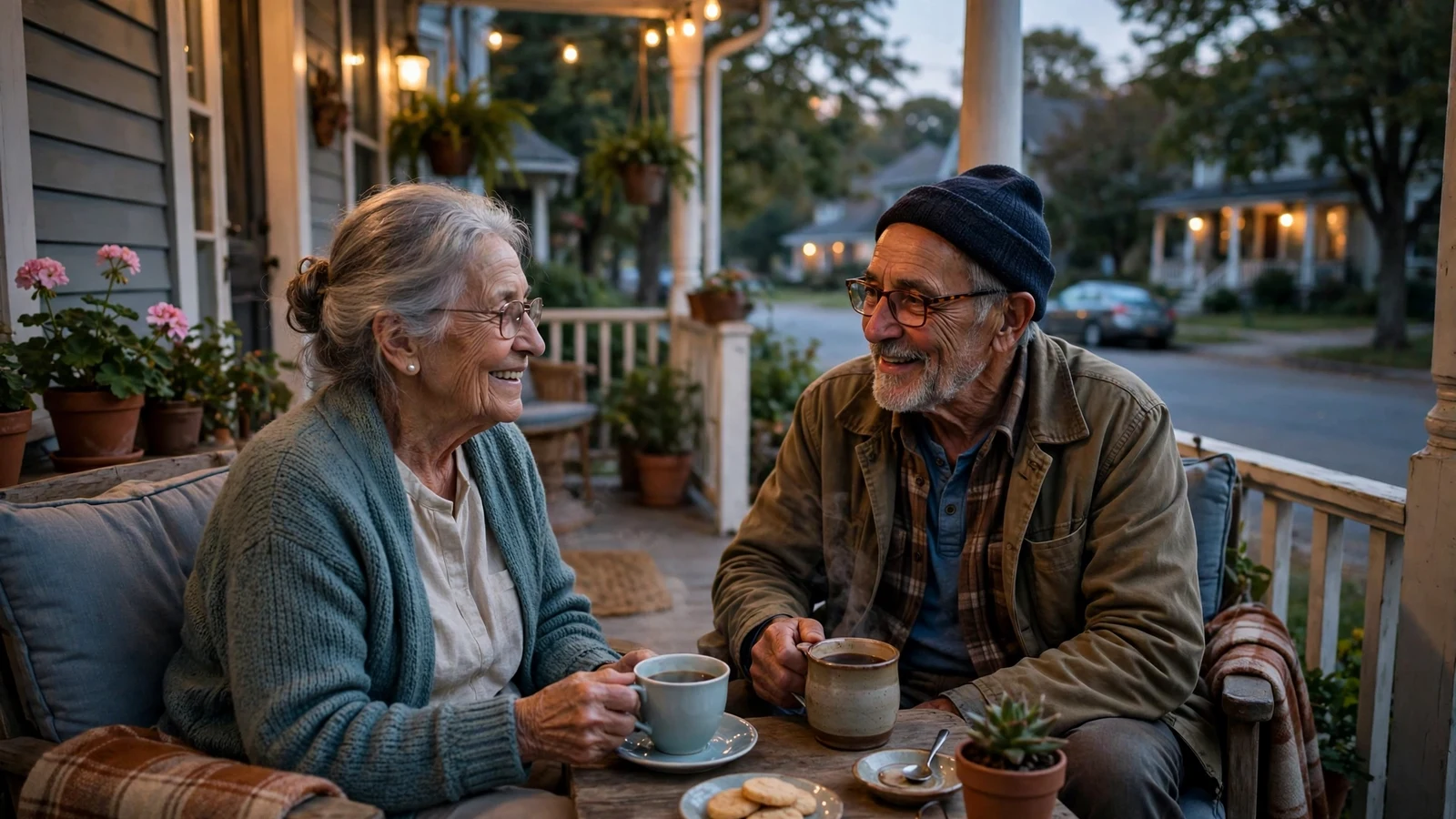
Walter and June married in 1976, in a small church with folding chairs and a cake June’s mother made in their kitchen. They were twenty-two and twenty-one. They had a used car, a rented apartment above a bakery, and a plan that ran about as far as the end of the month. Fifty years later, they sit on the same porch most evenings, June with her tea, Walter with his coffee, and they watch the street go quiet. People ask them what fifty years teaches you, and Walter always says the same thing: “Less than you would think, and more than you would guess.”
June laughs at that. She says the lessons are not the kind you can put on a card. They are the kind you learn by doing the same thing wrong for ten years and then, one day, doing it right by accident, and noticing. This is not a list of secrets. It is a map of the fifty years as they lived them, in plain words, so a couple in year five or year twenty can see the road ahead and know it is a road other people have walked.
The first ten: learning each other

The first ten years taught Walter and June that they had married a stranger, and so had everyone else. You think you know a person because you dated them for two years and you like the same music. Then you live with them, and you find out they squeeze the toothpaste from the middle, they leave wet towels on the bed, they need an hour of quiet in the morning before they can talk, and they say “I’m fine” when they are not fine at all.
June learned that Walter goes quiet when he is worried, and quiet does not mean angry. It took her three years to stop asking “What’s wrong?” every ten minutes and start saying, “I’m here when you want to talk,” and then going about her day. Walter learned that June cries when she is frustrated as well as when she is sad, and the tears are not a signal to fix something. They are a signal to sit down and listen. “I spent the first five years trying to solve her tears,” Walter says. “Then I learned to hand her a tissue and shut up. The marriage got better the week I learned that.”
The first ten years also taught them how to fight without breaking things. Their worst fight came in year four, over money, over a car repair, over a bill Walter had forgotten to pay. June slept on the couch. Walter slept in the bed and stared at the ceiling until three in the morning, and then he got up, went to the living room, and sat on the floor beside the couch, and said, “I don’t want to be the couple that goes to bed mad.” June said, “Then don’t pay the bill late.” They laughed, which was not the same as solving it, and then they solved it the next morning, together, at the kitchen table, with the checkbook between them. The lesson was simple: the fight is not the problem. Going to bed without a plan is the problem. If you and your spouse are still learning how to argue without damage, a weekly marriage check-in gives you a regular time to say the hard things before they grow.
They also learned that love in the first ten years is mostly showing up. Showing up to the job you hate because the rent is due. Showing up to the baby’s room at two in the morning because it is your turn. Showing up to the dinner table even when the day was bad and you would rather eat standing up in the kitchen. Nobody writes songs about showing up. Fifty years is built from it.
The middle twenty: kids, work, the hard years
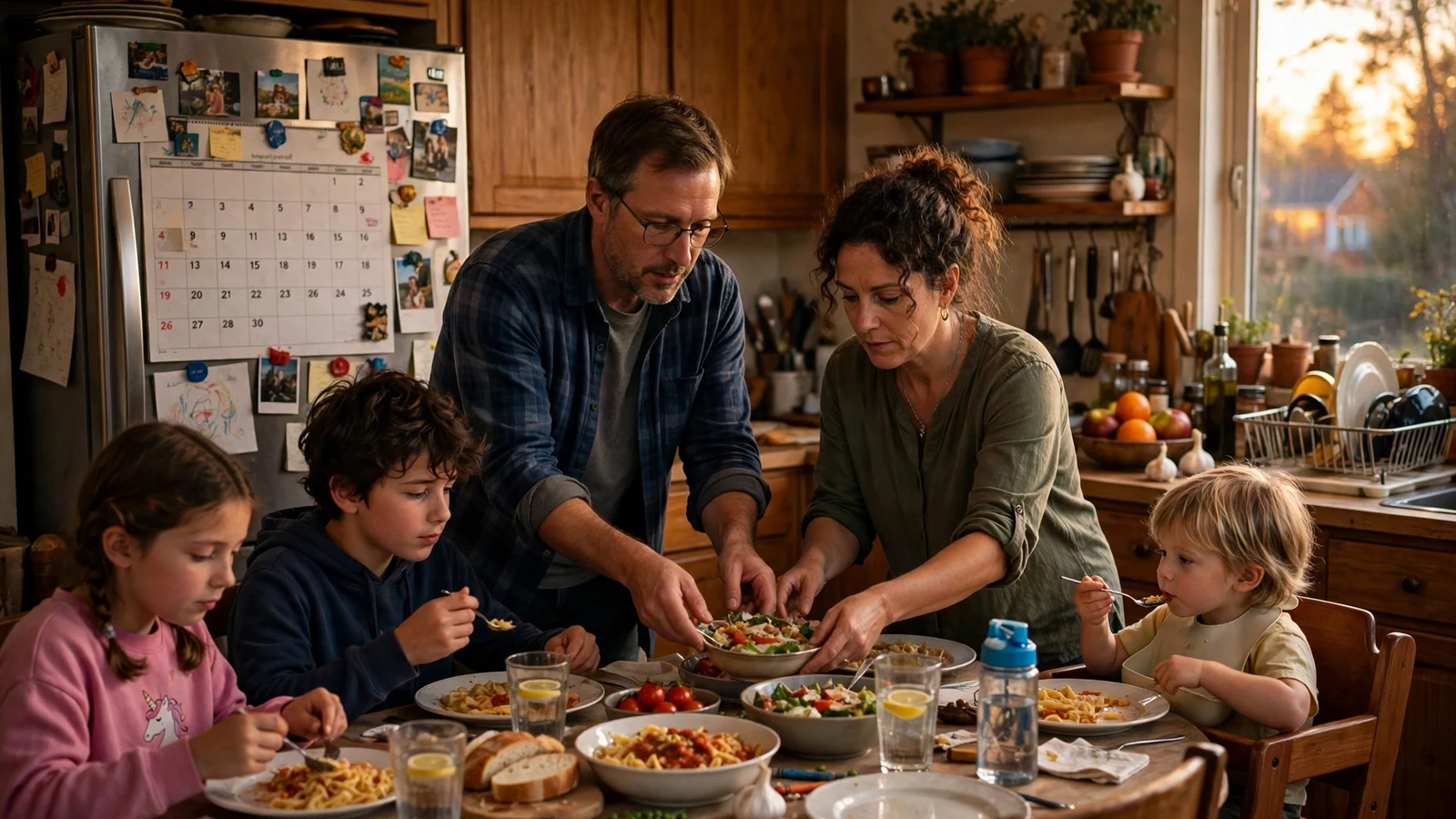
The middle twenty years were the loudest. Three kids, two jobs, a mortgage, a minivan with a door that stuck, and a calendar on the fridge so full it looked like a crossword puzzle. June worked days. Walter worked nights for four of those years, and they passed each other in the hallway like shifts changing at a factory. They loved each other. They barely saw each other. That is the part nobody warns you about: a marriage can be strong and lonely at the same time.
The hard years came in the middle of the middle. Walter lost his job when the plant closed, and for seven months he sat at the kitchen table with the want ads and a cup of coffee gone cold, and June worked extra shifts, and they did not talk about how scared they were, because talking about it made it real. Then one night June came home, put her bag down, and said, “I am scared, and I am tired, and I need you to tell me we will be all right, even if you are not sure.” Walter said, “We will be all right,” and he was not sure, and saying it anyway was the truest thing he had done in months. The job came back, a different job, less pay, and they made it work, because they had finally said the scared part out loud.
The kids left in those years too, one by one, and each goodbye taught a different lesson. The first one left and June cried for a week. The second one left and Walter cried in the car and pretended it was allergies. The third one left and they both stood in the driveway and waved until the car turned the corner, and then they went inside and the house was quiet, and June said, “Well. It is just us now.” Walter said, “It was always just us. The kids were the noise.” They laughed, and then they sat on the couch, and they did not know what to do with an evening that belonged only to them. The quiet first week after the last child leaves is a strange, tender time, and the first week after the kids leave is a good place to start if you are standing in it now.
The middle years taught them that a marriage survives the hard parts by getting smaller, not bigger. Not a big talk, not a big trip, not a big change. A small talk at the kitchen table. A walk after dinner. A hand on the shoulder while the other one is washing dishes. The grand plans fail. The small habits hold.
The last twenty: the quiet, the closeness, what remains

The last twenty years have been the quietest, and June says they are her favorite. The kids are grown. The jobs are done. The house is paid for. Walter retired, and June retired a year later, and for the first month they got on each other’s nerves in a way they had not since the first ten years. Walter followed June around the kitchen, offering to help, and June said, “Walter, I have cooked in this kitchen for forty years. Go find something to do.” He found the garden. She found her books. They found a rhythm: together in the morning, apart in the afternoon, together again on the porch at night.
What remains after fifty years is not romance the way the movies show it. It is a closeness built from knowing someone completely and staying anyway. Walter knows how June takes her tea, which pill she takes in the morning, which of her knees aches when it rains, and the exact sound she makes when she is about to laugh. June knows Walter’s snore, his moods, the way he hums when he is fixing something, and the look on his face when he is worried and trying not to say so. They do not need to ask how the other one is doing. They can tell from the way the other one walks into a room.
The quiet has its own hard parts. Friends have died. Parents have died. Walter’s brother died last spring, and June sat with him on the porch for three evenings while he said almost nothing, and that was the right thing, because she had learned, forty years earlier, that quiet does not mean angry. It means give him time. The closeness of the last twenty years is the closeness of two people who have buried people together, and cried together, and kept going, and who know, without saying it, that they will do the same for each other when the time comes.
What fifty years does not teach you

Fifty years does not teach you how to be married. It teaches you how to be married to one person, and that is a smaller, harder lesson. Walter could not hand his fifty years to a young couple and expect it to fit. He could only say: learn your person. Learn how they go quiet, how they cry, what they need when they are scared. Learn it slowly, over years, by paying attention. That is the whole job.
It also does not teach you to stop making mistakes. Walter still forgets things. June still loses her temper over the small stuff. Last month they argued about a thermostat, of all things, and Walter slept on the couch for one night, not out of anger, but because June said, “Go sleep on the couch, Walter, you are snoring like a freight train,” and he did, and they laughed about it in the morning. Fifty years does not make you perfect. It makes you forgiving, faster. The argument that used to last a week now lasts an evening. That is the real gain.
What fifty years teaches, in the end, is that a marriage is a long series of ordinary days, and the ordinary days are the marriage. The porch. The tea. The coffee. The hand on the shoulder. The “I’m here when you want to talk.” If you are in year five and the days feel ordinary, good. The ordinary days are the ones that add up. If you want a small habit to carry you through them, a simple evening ritual for couples does the same job Walter and June’s porch does: a few minutes at the end of the day that belong to the two of you.
If you have been married a long time, what is the one lesson you would pass on to a couple just starting out? Tell us in the comments, if you are willing. Your answer might be the map another couple needs for the road ahead.
Frequently asked questions
What is the hardest part of fifty years of marriage?
The middle years, when the kids are small, the money is tight, and you barely see each other. Walter and June say the hardest part was not any one fight. It was the stretch of years when they were both so tired that they stopped talking about anything except the schedule. The fix was small: a walk after dinner, a talk at the table, a few minutes that belonged to them.
Does a long marriage mean you never fight?
No. Walter and June still argue, most recently about a thermostat. A long marriage does not end the fights. It shortens them. After fifty years, they know how the other one fights, what the other one needs to hear, and how to come back to the table the same evening instead of the same week.
What advice would a fifty-year couple give to newlyweds?
Learn your person, slowly, by paying attention. Learn how they go quiet, how they cry, what they need when they are scared. Show up every day, even on the ordinary ones, especially on the ordinary ones. And when you fight, go to bed with a plan, not with silence.
Going through something similar?
Share your experience anonymously with the Ever After Daily community. Every story is read by a human editor before anything is published.
Share Your Story