
The Night I Slept in a Hospital Chair
One night in a hospital chair beside my husband taught me more about our marriage than twenty years at home. The beeping, the 2 a.m. talk, and the drive home.
The Night I Slept in a Hospital Chair
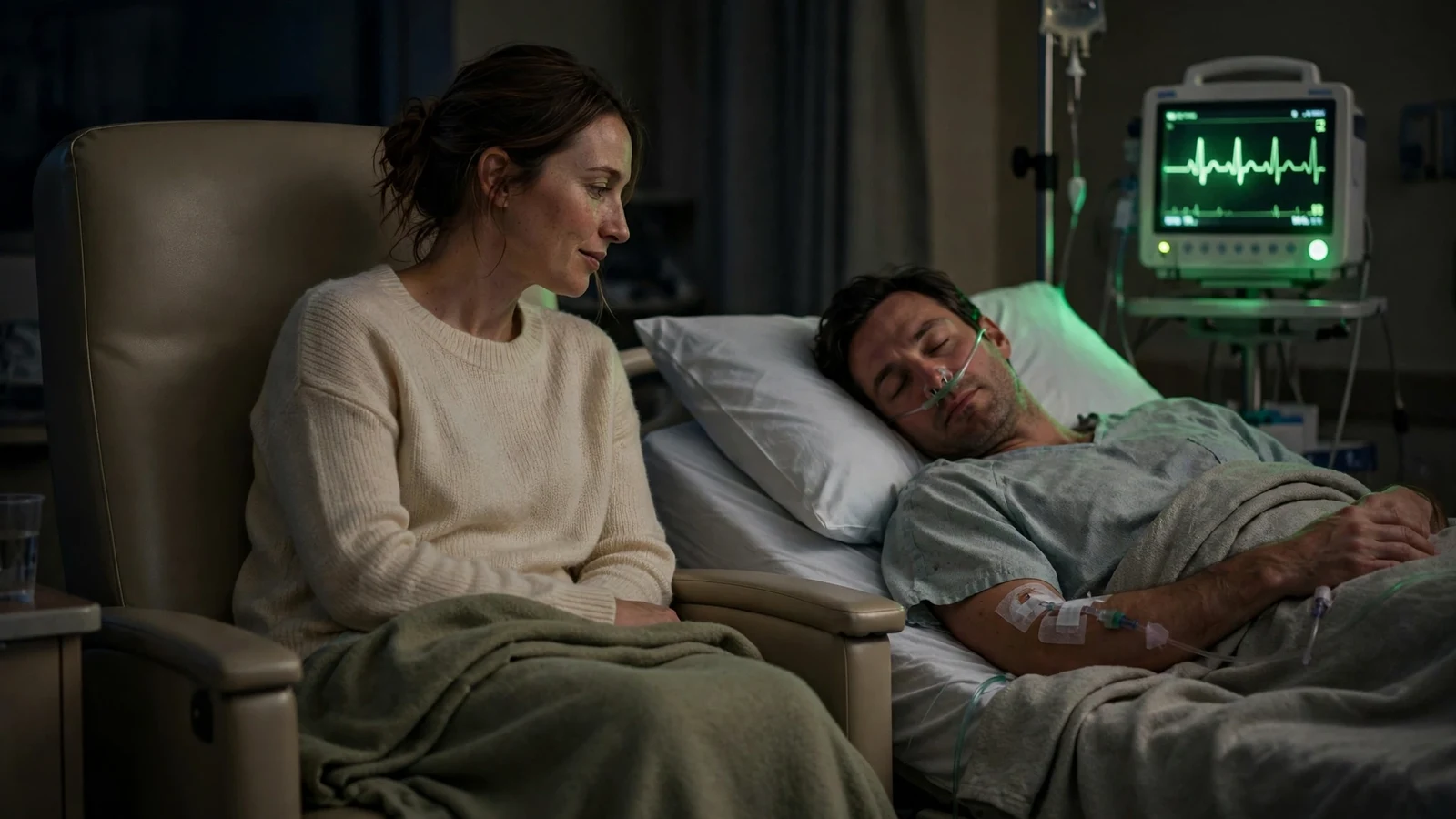
The nurse pointed at the chair in the corner and said, “That one pulls out a little,” in the tone of someone who has said the same sentence a hundred times. It was not a bed. It was a vinyl recliner with a handle on the side and a stain on the armrest that I decided not to look at twice. I put my bag on the floor, folded my coat into a pillow, and sat down next to my husband’s hospital bed at nine in the evening, sure I would go home in an hour.
I did not go home. The doctor had said someone should stay, and I was the someone. So I stayed, and the night stretched out in front of me like a road I had not planned to drive.
The chair
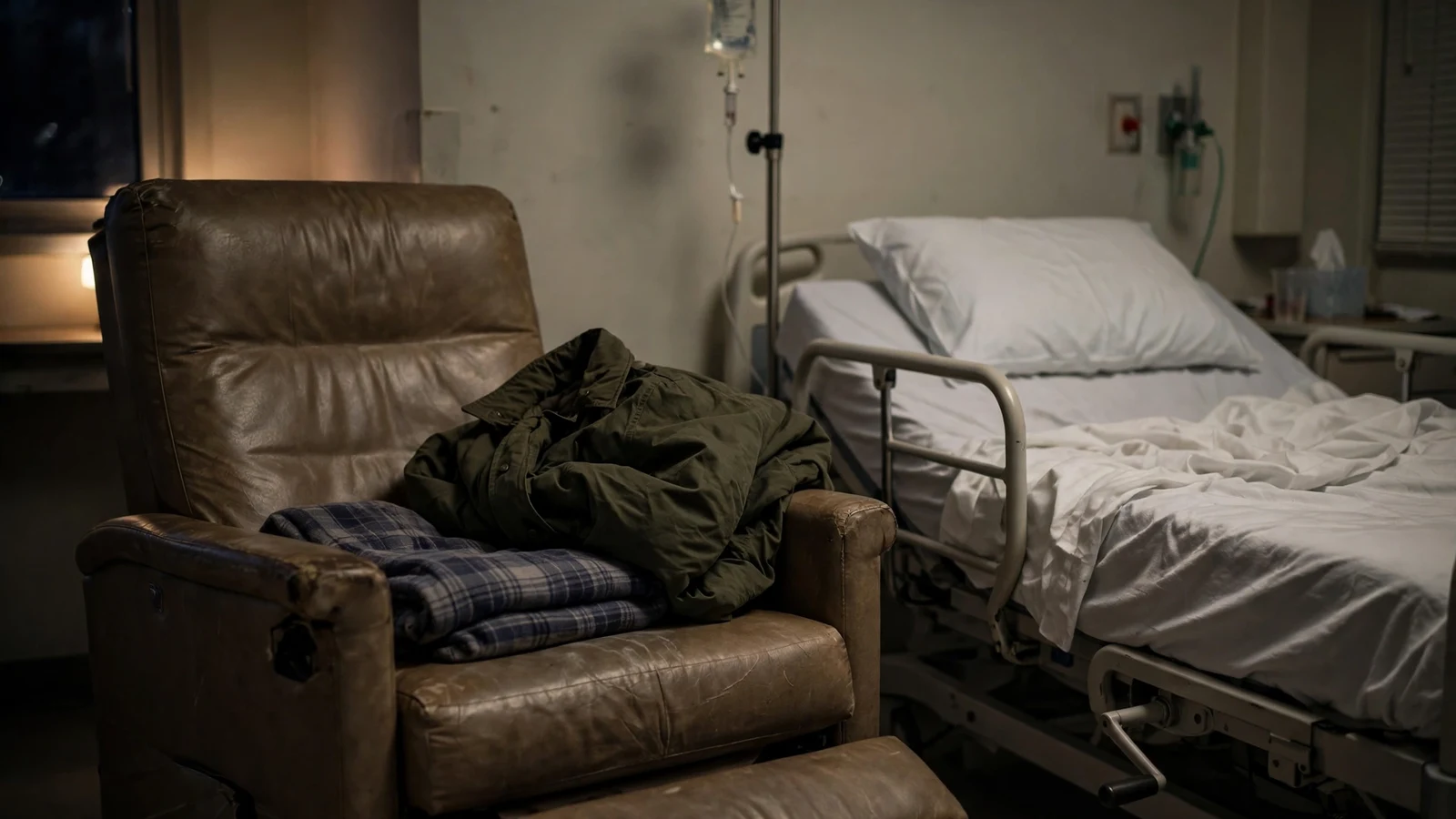
The chair did not recline so much as sigh. I pulled the handle and the footrest came up with a clunk, and I learned in about four minutes that there was no position in it that counted as comfortable. Flat hurt my back. Upright hurt my neck. Halfway between the two hurt both, just more slowly. I settled on sideways, knees bent, coat bunched under my head, and told myself it was fine. It was not fine. It was the deal I had made by staying, and I would have made it again.
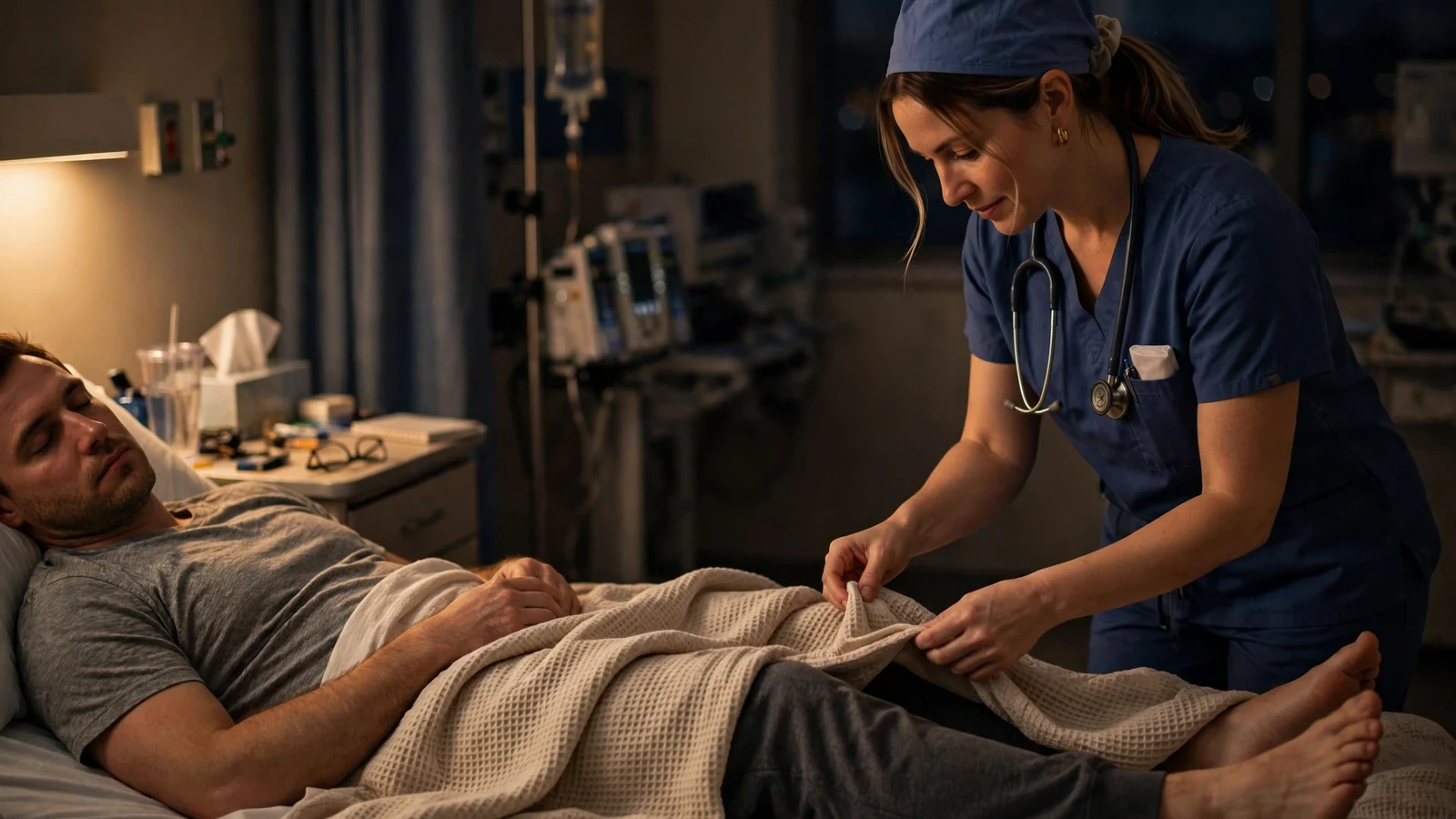
The blanket was the thin kind hospitals keep in a warmer, and the nurse brought me one without my asking. She folded it once over my legs and gave the smallest nod, the nod that said she had seen a hundred spouses in this chair and knew exactly how the night would go. I remember that nod better than I remember most of what the doctor said that evening. It was the first kind thing that had happened since the ambulance doors closed, and I held on to it.
The room had its own sounds. The monitor beeped in a slow, steady rhythm, and every time it skipped a beat my head came up. The IV pump clicked. The hallway had footsteps, a cart with a squeaky wheel, a voice on a speaker asking for a nurse to call the desk. Somewhere down the hall a television played a laugh track at low volume. My husband slept in fits, waking to ask for water, then drifting off again with the cup still in his hand. I held it for him and set it back on the tray.
The blanket and the beeping
I learned the blanket trick around midnight. If I tucked it under my chin and pulled my feet up, the cold stayed out for about twenty minutes. Then the air conditioning kicked in and I started over. I counted the ceiling tiles twice. I read the whiteboard on the wall where the nurse had written the date, the doctor’s name, and the plan for the morning in blue marker. The plan said “labs at 5, doctor rounds at 7.” I read it five times, like reading it again would make the morning come sooner.
The beeping became a kind of company. When it was steady, I could breathe. When it changed, I sat up. Once, a nurse came in to silence an alarm, checked the lines, and said, “He is doing fine. Try to rest.” I nodded and did not rest. Rest was not on the menu that night. I watched his chest rise and fall and matched my breathing to it without meaning to, the way you do when you have slept next to the same person for twenty years.
At some point I stopped trying to sleep and just sat with it. The room was dark except for the green glow of the monitor and the strip of light under the door. My phone was at four percent. I put it away. There was nothing to scroll for. The only news that mattered was in the bed next to me, and it was not going to arrive by notification.
If you have ever sat beside a spouse in a hospital room, you know the particular ache of supporting a spouse through illness: the waiting, the small jobs, the way love turns into fetching water and holding a cup. That night the chair taught me the same lesson, one hour at a time.
Two in the morning
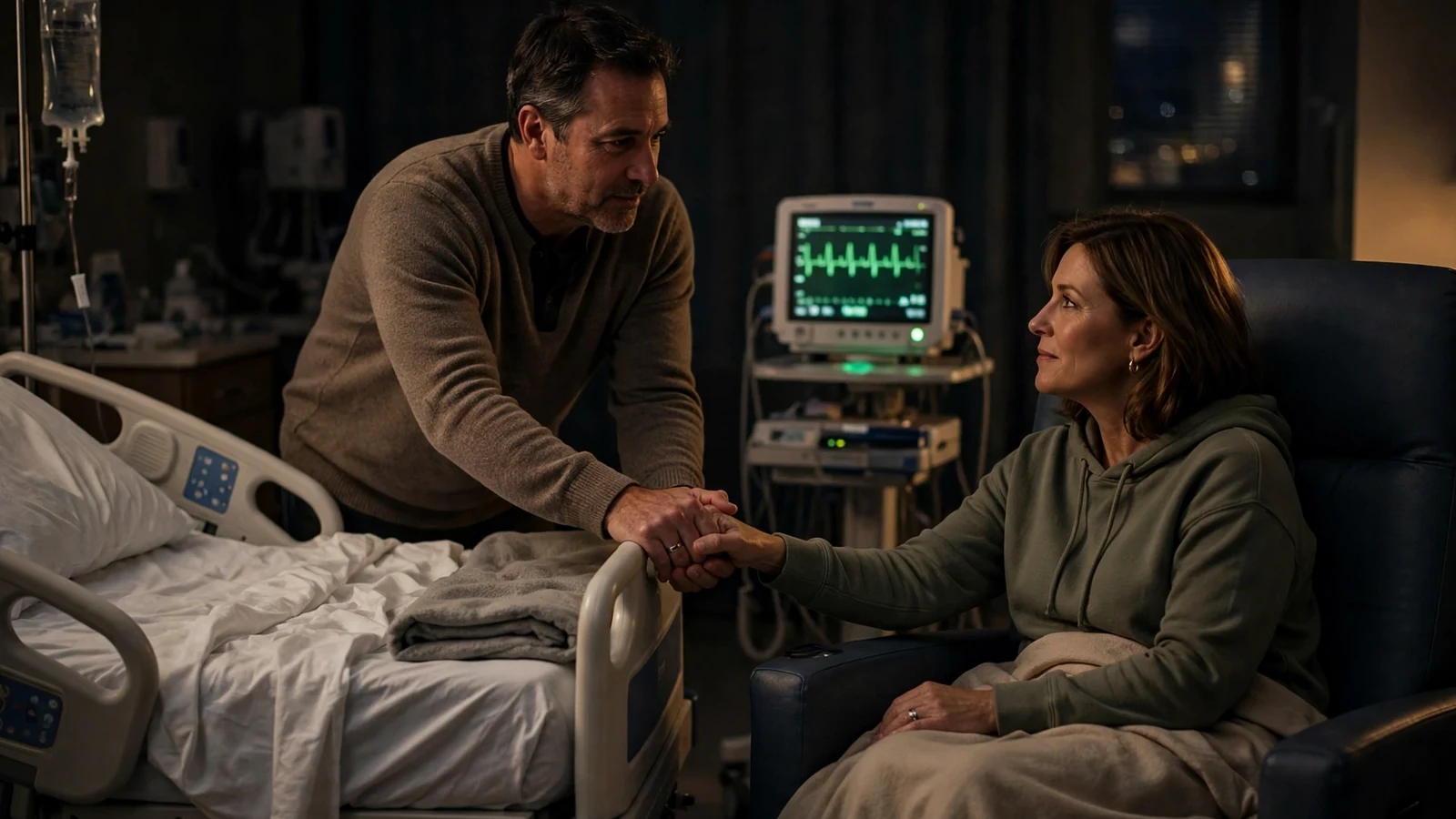
At two in the morning he woke up all the way, and we talked. Not about the illness, or the tests, or what the doctor might say. About the house. About the fence that needed fixing before winter, and whether we had paid the water bill, and what his mother would say if she saw the state of our garden. Ordinary things, said in low voices so the nurse at the desk would not hear us laughing. He told me the hospital food was terrible and asked me to bring him toast from home in the morning, real toast, with butter. I said I would. He said, “Promise?” I said, “I promise,” and meant it the way you mean a promise at two in the morning, which is completely.
Then he said something I have never forgotten. He said, “You did not have to stay.” I said, “I know.” He said, “I am glad you did.” And we did not say anything else for a while, because there was nothing else that needed saying. The monitor beeped. The cart squeaked past in the hallway. His hand found mine across the gap between the bed and the chair, and we stayed like that until his breathing slowed and he slept again.
I thought about all the nights we had spent in the same bed at home, back to back, half asleep, one of us snoring, the other one nudging. I thought about how easy it is to share a house for years and miss each other anyway, and how strange it was that a vinyl chair in a hospital room had done what a thousand ordinary evenings had not: it had put us in the same small space with nothing to do but be together.
The sleep that never comes
I did not sleep. I want to be honest about that, because every story about a hospital night pretends the spouse dozed off and woke refreshed, and that is not what happens. I closed my eyes for ten minutes at a time and woke up every time the blanket slipped or the pump clicked or a nurse came in to check his blood pressure. By four in the morning my neck had a crick in it that I could feel all the way down to my shoulder, and my mouth tasted like the paper cup of water I had drunk at midnight.
The hours between three and five are the longest hours I have ever sat through. The hallway went quiet. The television down the hall went off. Even the beeping seemed to slow down, though I know it did not. I thought about calling my sister and did not. I thought about going downstairs for coffee and did not, because I did not want to leave the room. I sat in the chair and watched the sky outside the window go from black to gray, and I understood something plain and simple: staying is not the same as doing nothing. Staying is the thing itself.
Around five, the lab tech came in with a tray and a soft knock, and the day started moving again. The nurse brought fresh water. The room filled with the small sounds of morning, and I folded the blanket, stood up, and felt every hour of the night in my back all at once. My husband opened his eyes and said, “You look terrible.” I said, “You should see yourself.” We both laughed, and it was the first real laugh of the night.
Morning, the doctor, and the drive home

The doctor came at seven, the way the whiteboard had promised. He stood at the foot of the bed, read the chart, and said the numbers looked good and the tests had come back the way he hoped. He used plain words, and I asked the questions I had written on my hand in pen at three in the morning, and he answered all of them. When I asked what we should watch for at home, he told me plainly, and I wrote that down too. If a question comes up after you leave a hospital, ask your doctor, not the internet at midnight. That is the one piece of advice I will give from that night, because it is the one I am sure of.
The relief came in stages. First the shoulders dropped. Then the breathing slowed. Then the tears came, quick and embarrassing, while the doctor was still talking, and he pretended not to notice, which was kind of him. My husband reached for my hand again and said, “See? I told you it would be all right.” He had told me no such thing, but I let him have it. He had earned it.
We drove home at ten, me driving, him in the passenger seat with a pillow against his chest and the toast I had promised him in a paper bag on his lap. The house looked the same as when we left it, which felt wrong and right at the same time. The fence still needed fixing. The garden still needed weeding. The bed was still unmade from the morning we left in a hurry. We stood in the kitchen for a minute, not saying anything, and then he sat down at the table and I made the toast, and we ate it standing up, because neither of us wanted to sit down in a chair again just yet.
That night did not fix our marriage. Our marriage was not broken. What it did was show me the shape of it, up close, in a room with no distractions and no place to hide. We are the kind of couple that stays. I had always believed that in theory. After the chair, I knew it in my body, in my neck, in the hours I sat awake and did not leave. A marriage is a lot of small stays, added up over years, and that night was one of the biggest. A weekly check-in at the kitchen table is a smaller stay, the same promise in a quieter form, and after that night I have never skipped one. And when the week feels long, a simple evening ritual for couples does the same work at home: a short, repeated time when you sit down together and stay.
Frequently asked questions
Is it normal to feel useless sitting in a hospital chair all night?
Yes, and the feeling lies. Fetching water, holding a hand, staying awake so the other person does not wake up alone: none of it looks like much, and all of it counts. Your presence is the job that night, and it is a real one.
How do you sleep in a hospital chair?
Most people do not, not really. Bring a small pillow from home, a blanket if the hospital allows it, and earplugs. Recline as far as the chair goes, put your feet up, and take ten-minute rests instead of chasing a full night of sleep. Ask the nurse what the night usually looks like so you know when to expect interruptions.
What should you ask the doctor in the morning?
Write your questions down the night before, even on your hand if that is what you have. Ask what the test results mean in plain words, what to watch for at home, and who to call if something worries you. If an answer is unclear, ask again. If a health question comes up later, ask your doctor, not a search engine at midnight.
If you have ever spent a night in a hospital chair beside your spouse, what got you through the long hours, and what did you learn about the two of you in that room? Tell us in the comments, if you are willing. Your answer might be the company another spouse needs at two in the morning.
Going through something similar?
Share your experience anonymously with the Ever After Daily community. Every story is read by a human editor before anything is published.
Share Your Story


