Couples Who Get Happier After 50 Tend to Do These 8 Things Differently
Some couples say their 50s and 60s are the happiest years of their marriage. Here are the eight things they do differently, and none of them require luck.
Couples Who Get Happier After 50 Tend to Do These 8 Things Differently
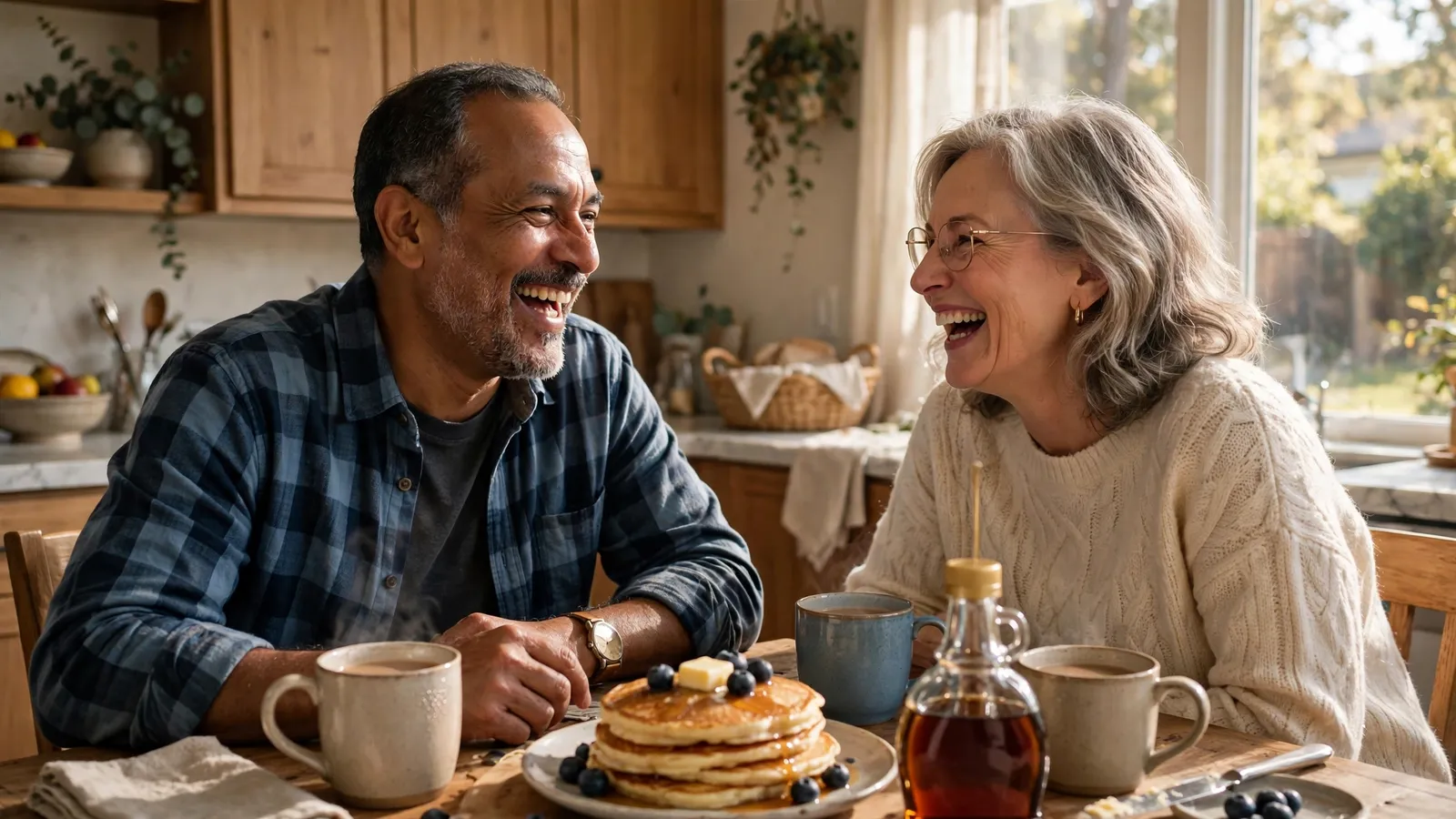
On a Saturday morning last spring, I stood in a friend’s kitchen and watched her and her husband, both in their early sixties, bicker about pancake batter. She wanted it thinner. He said thin pancakes were a tragedy. They carried on like this for a full ten minutes, both laughing, both completely unbothered, and then they sat down and ate the pancakes together like it was the best part of the week. Because it was.
Nobody writes about couples like that. The midlife marriage story we hear is all doom: the affair, the gray divorce, the roommate years. But walk through any neighborhood on a Sunday and you will see a quieter story playing out on porches and walking trails. Some couples genuinely get happier after 50. Not perfect. Happier.
They are not luckier than the rest of us. They just do a few things differently. Here are the eight I keep noticing.
They got curious about each other again

Somewhere around year twenty, most of us stop asking our spouse real questions. We know their order at the restaurant. We know the stories. So we stop asking, and the person across the table slowly becomes furniture.
The happier couples caught themselves doing this. One woman told me she realized she had not asked her husband a real question in months, so she started with a strange one at dinner: “Tell me something you have been thinking about that I don’t know yet.” He talked for twenty minutes about a woodworking video series he had fallen into. She had no interest in woodworking. She was interested in him.
Curiosity is a muscle. It atrophies fast and comes back fast. If you feel like you already know everything about your spouse, that is the surest sign you stopped looking. A single honest question at the kitchen table can restart the whole thing. If the distance has grown past what dinner questions can fix, the slower work of learning how to reconnect with your spouse emotionally is worth doing before anything else.
They let the small stuff die
Every long marriage has its inventory of tiny offenses. The socks on the floor. The thermostat set two degrees wrong. The dishwasher loaded like a crime scene. For years, these things get logged, argued, and re-argued.
The couples who got happier made a conscious decision: the small stuff dies here. One husband told me he stopped refolding his wife’s laundry “correctly” after she refolded his shirts one too many times. Not in anger. He just said, “The shirts can stay unfolded. I’d rather have a calm evening.” She laughed, and something loosened in their house that week.
Real grievances still deserve airtime. This is about sorting those from the trivia, then letting the trivia go on purpose. The thermostat is not a grievance. Pick the three things that actually matter to you, and let the rest go on purpose. Scorekeeping over trivia is the tax some couples pay forever. The happy ones stopped paying it.
They built friendships on purpose
Here is a pattern I see in the happiest older couples: they each have people who are theirs. His Thursday poker game with two college friends. Her book group that has met for nine years and barely discusses the books. They guard each other’s outside friendships like they matter, because they do.
The couples who struggle at midlife often have only “couple friends,” and when one person’s social battery dies, both people sit home. Or worse, one spouse becomes the other’s entire social life, which is a job no one applied for and no one can do well.
Separate friendships take the pressure off the marriage to be everything. A spouse is a terrible best friend, therapist, coworker, and entertainment director all at once. Let the marriage be a marriage. Go get the rest elsewhere, and come home with something to talk about.
They talk about the ending, honestly

This is the one nobody expects. The happiest couples over 50 have talked, plainly, about the fact that one of them will go first.
Usually it starts with something ordinary. A parent’s funeral. A health scare that turns out fine. A friend’s diagnosis. And instead of changing the subject, they stay in it. They talk about what they want at the end. They update the advance directives over takeout. They say the thing everyone is thinking: “I don’t want to do the last part alone, and I probably will.”
Couples who have this conversation describe the same strange result. The ordinary days feel borrowed afterward, in the good way. The Tuesday grocery run feels like something you got to do, not something you had to do. Avoiding the ending does not postpone it. It just steals the sweetness from the middle.
They protect play

Play is the first thing to leave a serious marriage, and the first thing the happy older couples put back. I am not talking about date nights with a reservation and a performance review afterward. I mean the goofy stuff. Dancing in the kitchen while the coffee brews. The terrible puns at breakfast. The couple I know who rate each other’s sneezes on a ten-point scale.
Play does something serious: it reminds your nervous system that this person is safe and fun, a partner rather than a co-manager of a household. When your marriage starts to feel like a business, with agendas and quarterly reviews, play is the fastest way back to being people who actually enjoy each other. It costs nothing. It takes four minutes. And it is almost always the thing couples tell me they miss most when it is gone.
They renegotiated the chores
The chore division in most marriages was designed for a life the couple no longer lives. She was home more, or he worked longer hours, or the kids created a system that made sense in 2009. Then retirement, remote work, or an empty house scrambled everything, and nobody sat down to redo the deal.
The happier couples did. One woman told me the conversation started when she realized she was still doing all the grocery shopping even though her husband had been retired for two years and she had not. Her exact words to him: “Our old system was built for a life we don’t live anymore. Let’s rebuild it.” He took the groceries and the laundry. She stopped pretending she preferred doing it all. Neither of them remembers what the old argument was even about.
If you are planning retirement as a couple, do this conversation before the last day of work, not a year after. The couples who renegotiate early skip the entire “he’s underfoot and I’m furious” phase.
They dream out loud

The couples who got happier kept dreaming in the plural. Not big dreams, necessarily. On a car ride to visit the grandkids, one of them says, “What if we took that cooking class in the fall?” The other one does not shoot it down or file it under someday. They talk about it. They look it up at a rest stop. It becomes a plan.
Dreams do not have to be big. They have to be shared. A marriage with no shared future tense starts to feel like a waiting room. It can be a trip, a garden bed, a class, a ridiculous goal like learning to sail at 63. The content matters less than the grammar: we, next, together. Couples who still say “we should” are couples who still have somewhere to go. If you need raw material, a couples bucket list is a fine place to start stealing ideas from each other.
They touch without an agenda
A hand on the back walking past in the hallway. A forehead kiss before the morning walk. Sitting close enough on the couch that shoulders touch, for no reason. The happy older couples touch constantly, and most of it leads nowhere, which is exactly the point.
When touch only happens as a prelude, it starts to feel like a transaction with an expected outcome, and most people quietly opt out of transactions. Touch without an agenda says something simpler: you are my person and I like being near you. It is the cheapest, fastest reassurance a marriage has. The couples who kept it never had to have a big talk about it. They just never stopped.
What the unhappy ones kept doing instead
I want to be honest here, without cruelty. The couples who did not get happier after 50 were not worse people. They kept doing what had always worked, long after it stopped working. They kept score on the small stuff. They kept the peace instead of being honest, until the peace felt like loneliness. They let the kids’ schedules eat every fun thing for a decade and then were surprised the fun did not come back on its own. They treated retirement like a finish line instead of a new season that needed its own plan. None of that is a character flaw. It is just a set of habits, and habits can be changed later than most people think.
How to start the shift this week
You do not need a marriage overhaul. You need one small, deliberate start. Pick one:
- Ask one real question at dinner tonight. “What’s been on your mind that I don’t know about?” Then listen without fixing.
- Drop one small grievance on purpose. The socks. The thermostat. Let it go and notice the evening get lighter.
- Protect one friendship. Text one friend and make one plan that is yours.
- Say one dream out loud. In the car, at the table, on the walk. “What if we…” and mean it.
- Touch without an agenda. Hand on the back. Shoulder against shoulder. No reason.
And if you want the words for bringing this up, try these: “I was thinking about us this week, the good parts, and I realized I want more of them. Can we try one small thing together?” No accusation. No summit. Just an invitation.
FAQ
Is it too late if we are already in our 60s and disconnected?
No. The couples in this piece did not start at 50 with perfect marriages. Most of them started with the same flat, tired dynamic you might be feeling, and they changed it with small, repeated choices. Disconnection is a habit, not a life sentence. Start with curiosity and touch, the two cheapest interventions there are.
What if my spouse is not interested in changing anything?
Start alone. You can ask better questions, drop your own scorekeeping, build your own friendships, and dream out loud without permission. Marriages are systems, and when one person changes their moves, the dance changes. If nothing shifts after a few months of real effort, that tells you something worth paying attention to, too.
Do the happy couples still fight?
They still argue, and they will tell you so. What left their marriages was contempt: the quiet belief that the other person is the problem. They argue about the thing in front of them, repair it, and move on. They do not use a fight about dishes to litigate twenty years of disappointment. Short fights, clean repairs, no stored ammunition.
Can this work if we have been unhappy for years?
Years of unhappiness usually mean years of unaddressed patterns, not years of proof that you are wrong for each other. The eight behaviors above work on patterns, not on history. That said, if there has been betrayal, addiction, or cruelty, you need more than a list. You need a professional in the room. There is no shame in that. It is the bravest version of trying.
Which of the eight would you try first?
Here is what I keep coming back to. Nobody in these couples had a dramatic breakthrough. There was no ultimatum, no second honeymoon, no lightning bolt. There was a Tuesday question, an unfolded shirt, a hand on a back. Small things, done on purpose, for years.
So I will ask you the same question I asked my friend in her kitchen that Saturday: if you could change one small thing this week, just one, which of the eight would it be? Tell me in the comments. I read every one, and your answer might be exactly what another reader needs to hear.
Keep Reading
If this hit home, these might too:
- how to reconnect with your spouse emotionally
- couples bucket list ideas
- when your marriage feels like a business
- love my spouse but don't feel close
- planning retirement as a couple
- empty nest marriage advice
Going through something similar?
Share your experience anonymously with the Ever After Daily community. Every story is read by a human editor before anything is published.
Share Your Story