Introvert Married to an Extrovert? How to Stop Fighting About the Social Calendar
When an introvert marries an extrovert, the social calendar becomes a battleground. Here are the agreements and exact scripts that stop the fighting for good.

Introvert Married to an Extrovert? How to Stop Fighting About the Social Calendar
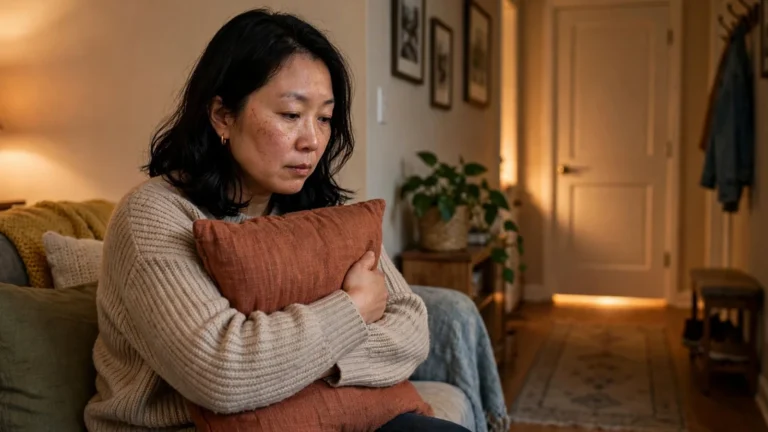
The invitation arrives on a Tuesday. Someone’s fortieth birthday, a backyard thing, “bring the kids if you want.” He reads it out loud from the couch and his face lights up. She hears the same sentence and does a fast, silent calculation: people she doesn’t know well, small talk until ten, a whole Saturday gone, Sunday spent recovering. By the time he says “sounds fun,” she has already said no in her head, and he has already heard it in her silence.
If you are an introvert married to an extrovert, you know this scene by heart. It is not really about the birthday party. It is about two people with opposite social batteries trying to share one calendar, one weekend, one life, without either of them feeling like the marriage is slowly erasing who they are.
Where the fighting actually starts
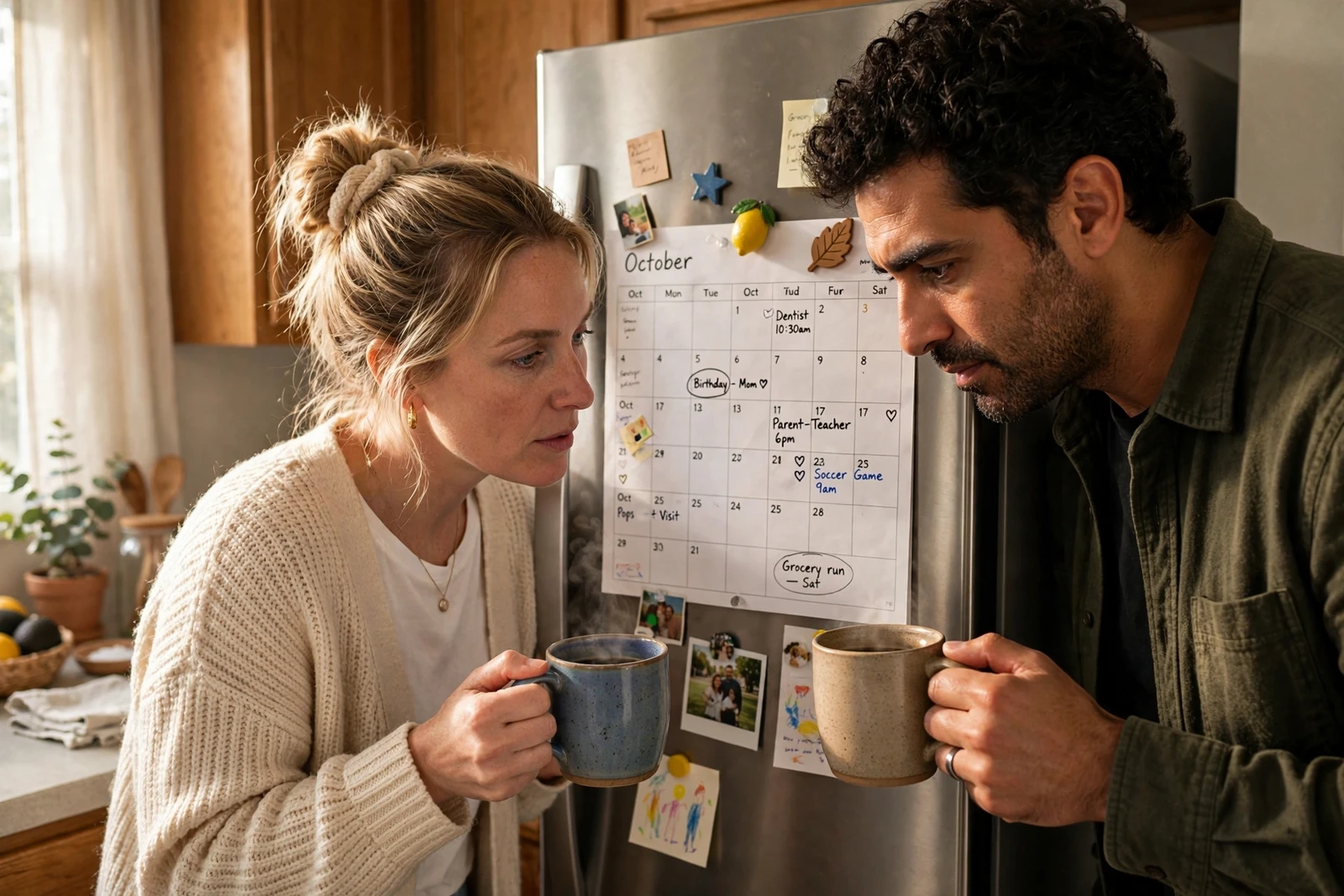
It starts with the invitations, but it lives in the pattern. The extrovert keeps suggesting things. Dinners, game nights, the neighbors’ cookout, a spontaneous trip to the lake with another couple. The introvert keeps finding reasons to decline, and the reasons are honest: crowds drain them, small talk feels like work, and a quiet Saturday at home is not laziness, it is how they refill.
After a few years of this, both people are keeping a private tally. The extrovert’s version: “She never wants to go anywhere. I married someone who doesn’t like my friends.” The introvert’s version: “He never lets me have a quiet weekend. I married someone who doesn’t respect my limits.”
Then the holidays arrive and pour gasoline on the whole thing. His family does Christmas Eve with thirty people and a gift exchange that takes four hours. Her idea of a holiday is the four of them in pajamas until noon. Weekends become a negotiation. “Why don’t you ever want to go?” becomes a sentence one of them says out loud, and it lands like an accusation because it is one.
The painful part is that both people are right about what they need, and both feel rejected by what the other needs. She is not rejecting him when she declines the cookout. He is not steamrolling her when he wants to go. But without a shared language for this, every invitation turns into a small referendum on the marriage.
Neither battery is broken
Here is the reframe that changes everything, and it sounds almost too simple to work: nobody’s battery is defective. His need for people is as real as her need for quiet. She is not broken for wanting a Saturday with a book. He is not shallow for wanting a house full of friends on Friday night.
Marriages between opposites are everywhere, and they work all the time. They work when both people stop trying to convert each other. The goal was never to turn her into a party person or him into a homebody. The goal is an arrangement where both batteries get charged and nobody keeps score of who bent more.
If you have ever sat in the car after a party, one of you glowing and the other hollow-eyed, and wondered if you married the wrong person, that thought is just exhaustion talking. The marriage does not have a personality problem. It has a logistics problem. And logistics can be fixed.
The agreements that actually work

Forget compromising by going to half of everything. That leaves both of you half-satisfied, which is somehow worse than one of you being fully happy. What works is a small set of clear agreements, decided once, in a calm moment, not in the doorway on the way to the thing.
The plus-one rule
The extrovert is allowed to go alone, or with a friend, and nobody treats it as a slight. This one agreement ends more fights than any other. She does not have to attend every gathering. He does not have to stay home to keep the peace. He goes to the poker night. She stays home with her novel. He comes back full of stories, and she is rested enough to actually enjoy hearing them. Some couples even find the solo social life makes the reunion warmer, which is exactly what couples with separate hobbies discover too.
The early-exit deal
For the events that matter to both of you, agree on the exit before you arrive. She shows up for the first hour, smiles at the people who matter, and leaves at a pre-agreed time with zero guilt and zero drama. Drive separately, or have her car as the escape plan. “I’ll slip out at nine” said at home on Friday beats “I’m dying, can we go” whispered at the party on Saturday. The extrovert stays as long as they want. Everyone’s battery gets what it needs.
Separate social lives are healthy
This one scares couples, and it shouldn’t. He has his people. She has hers. They overlap where they overlap and don’t where they don’t. A marriage is not a buddy system where both members must attend everything. The happiest long marriages I know have real overlap and real independence. If the idea of him going out without you makes you anxious, that anxiety deserves its own conversation, because it is about trust, not about parties. The friendship at the center of a marriage gets stronger when both people stay interesting, which is what spouses who are best friends tend to understand.
The recharge calendar
Block recovery time the way you would block a dentist appointment. Big social Saturday means a protected Sunday morning: no brunch plans, no errands, no “while you’re up.” The introvert gets real recovery. The extrovert gets a partner who isn’t quietly resentful all Sunday. This is not indulgence. It is maintenance, the same way alone time in marriage is maintenance. When the calendar shows the recovery block, nobody has to ask permission for it or apologize for needing it. It is just there, the way his Thursday basketball is just there.
Exact words for the two hardest conversations

Scripts matter because in the moment, tired people say the wrong thing. Rehearse the right thing while you are calm.
Declining without guilt
Try: “I love your friends, and I need a quiet Saturday so I can be a decent human on Sunday. Go have fun, and tell me everything when you get home.”
Notice what is not in that sentence. No criticism of the event. No apology that sounds like a confession. No “your friends exhaust me,” which turns a battery problem into a character verdict on people he loves. You are naming your need, blessing his plan, and staying connected to it by asking for the stories. How to talk to your spouse about feelings without it becoming a fight is a skill worth building, and this sentence is a good first rep.
Inviting without pressure
Try: “There’s a thing Friday I’d love you to come to, and there is zero pressure if your tank is empty. Let me know by Thursday so I can plan.”
The deadline matters. It stops the hopeful hovering that makes introverts feel cornered and extroverts feel strung along. And “I’d love you to come to” tells her she is wanted, which is usually what the extrovert is really asking. They are not asking her to love crowds. They are asking to not walk in alone.
What not to do: stop keeping score

The fastest way to poison this arrangement is the ledger. “I went to your work thing, so you owe me the lake house weekend.” The moment love becomes a transaction, both people start auditing instead of enjoying. Trust the agreements instead of counting the events.
And two more things that quietly do damage. Don’t try to change each other, not really, not the slow campaign of “maybe you’ll like it this time.” A personality is not a project. And don’t label each other in front of other people. “He’s antisocial” at the dinner table and “she drags me to everything” at the poker game both sting for days. The things happily married couples do almost always include this: they describe each other generously in public, even when the private negotiation is ongoing.
Questions readers ask
Is it normal for one spouse to never want to go out?
Yes, and it is not a verdict on how much they love you. Some people recharge alone the way others recharge in a crowd. The thing to watch is not the number of events declined. It is whether they show up for what truly matters to you, and whether the two of you have an honest arrangement about the rest. A spouse who skips the neighborhood cookout but shows up beaming at your best friend’s wedding is not rejecting your life. They are budgeting their energy.
My extroverted husband takes it personally every time I say no. What do I say?
Name what is actually happening, because he is probably hearing rejection when you mean fatigue. Try: “When I say no to the party, I am saying no to noise and crowds, not to you. You matter more to me than any guest list. Can we pick the three events this month that matter most to you, and I’ll be all in for those?” Giving him chosen, wholehearted yeses usually dissolves the sting of the nos faster than any explanation.
Can this actually get better, or will we fight about this for the next thirty years?
It gets better the moment you stop trying to convert each other and start running a system. Couples who fight about this for decades are usually fighting the same unmade decision over and over: who are we, the couple who goes or the couple who stays home? Once you decide you are the couple with agreements, the fight loses its fuel. Most couples I know settled this in one honest conversation and a month of practice.
Should we just compromise and go to half of everything?
Half-of-everything is the compromise that satisfies nobody. She spends half her weekends drained, he spends half his weekends disappointed, and both keep a mental receipt. The agreements above work better because they give each person whole wins: full attendance at what matters, full freedom at what doesn’t. Compromise sounds fair. Systems actually feel fair.
So tell me in the comments: are you the introvert or the extrovert in your marriage, and what is the one agreement that keeps the peace at your house? The couple reading this at midnight, mid-argument about Saturday, could use your exact words.
Keep Reading
If this hit home, these might too:
- spouses who are best friends
- talk to your spouse about feelings
- things happily married couples do
- couples with separate hobbies
- alone time in marriage
Going through something similar?
Share your experience anonymously with the Ever After Daily community. Every story is read by a human editor before anything is published.
Share Your Story