When Your Spouse Finishes Your Sentences, and When to Stop
He starts your story and you both laugh. One night he finishes it wrong, and the room goes quiet. Here is where closeness turns into cutting someone off.

When Your Spouse Finishes Your Sentences, and When to Stop
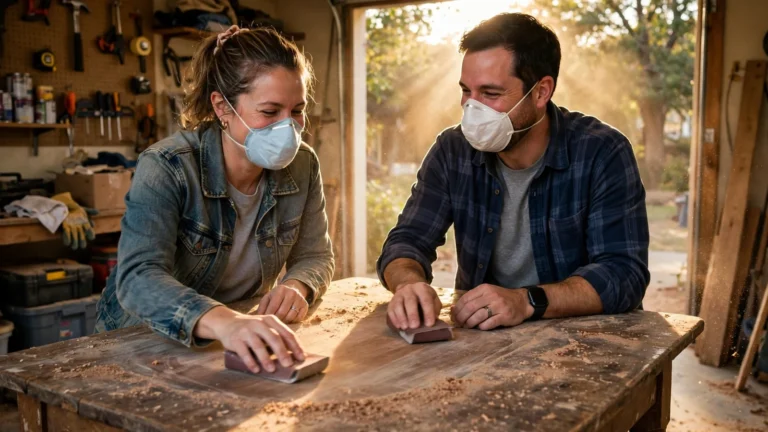
You are halfway through a story at dinner, the one about the plumber and the flooded laundry room, and your husband jumps in with the ending before you get there. He says the line about the wet socks, in your voice, almost word for word. You both laugh, because he was there, and because he remembered. The kids roll their eyes in that fond, embarrassed way kids have when their parents act like a team. For a second, the table feels warm and easy, like you are not two people telling a story but one household remembering it together.
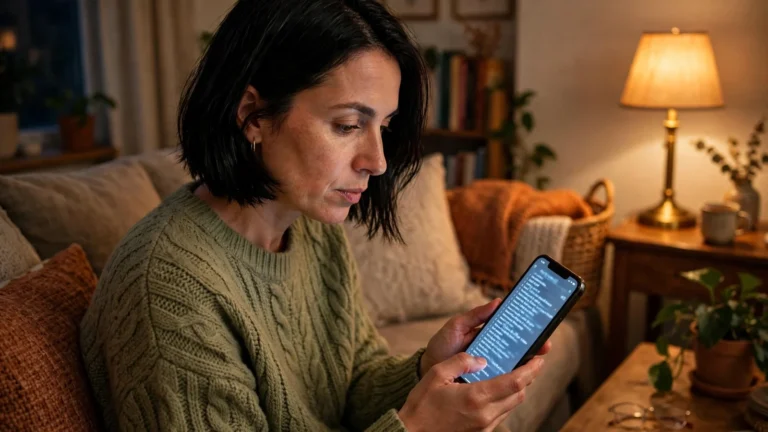
Then, on another night, the same move lands differently. You are telling your sister about a hard day at work, and your wife finishes your sentence with the wrong word, or the wrong feeling, and suddenly the story is not yours anymore. You smile and let it pass, but something small tightens in your chest. You wanted to be heard to the end of the sentence, and instead you got a shortcut.
Both moments are real, and both live in most long marriages. Finishing a sentence can be closeness. It can also be a small cut, repeated so often that one person slowly stops telling stories at all.
The story you both already know

The sweet version usually happens with stories you have told before. A couple who has lived together for years has a shared shelf of anecdotes: the honeymoon hotel with the broken air conditioner, the first apartment with the stove that only worked on one burner, the toddler who hid the car keys in the cereal box. When one of you starts one of those stories, the other one already knows the beats, the punchline, and the exact face you make at the end.
So the finish feels like recognition. Your spouse is saying, without saying it, I was there, I listened, and I kept it. That is why couples laugh when it happens at a dinner table, and why friends sometimes say, with a grin, that you two are one person now. It is not a trick. It is memory, built up over years of ordinary days.
It also happens in small, daily ways that never make it into a story. You start to ask where the scissors are, and he says “top drawer, left side” before you finish. You start to say you are cold, and she is already up getting the blanket from the couch. Those finishes are not about words at all. They are about a house where two people pay attention to each other, and that attention feels good to live inside.
Couples who keep a small daily habit of talking tend to notice these moments more, and to enjoy them more. Our piece on an evening ritual for couples is about making that kind of unhurried talk a regular part of the night, so the good finishes have room to happen.
Why it feels so good

It feels good because you feel known over time, in the way only someone who has heard the story three times before can know it. A stranger can listen politely. A spouse who finishes your sentence has proof: I remember how this ends, and I remember why it mattered to you.
That feeling runs deep in a marriage, because so much of married life is invisible labor and small detail. Someone remembers that you take your coffee with milk and no sugar, that you hate it when the dishwasher is loaded with the bowls on the wrong side, that your mother calls every Sunday at four. When that same person finishes your sentence, it fits the same pattern. You are not explaining yourself from scratch. You are talking to someone who already holds the earlier chapters.
It also feels good because it is playful. Finishing a sentence well takes timing, and timing takes closeness. The couple who can land the same punchline at the same second has practiced each other for years, the way musicians practice a song. When it works, it is funny in a private way, a joke with an audience of two, and that private humor is part of what keeps a marriage light. Our piece on couples who laugh at the same joke is about that exact kind of shared humor, and why it matters more than it looks like it should.
The good version has one clear mark: the person whose sentence got finished smiles, and keeps talking. The finish adds energy instead of taking it away. It is a duet, and both voices are still in it.
When it crosses a line

The line gets crossed when the finish changes the story, rushes it, or takes it over. Correcting is the first form. You say the plumber came on Tuesday, and your spouse cuts in with “Wednesday, it was Wednesday,” and now the table is listening to a correction instead of your story. The fact might be right, and it still steals the moment, because the point of the story was never the day of the week.
Rushing is the second form. You are working your way toward a feeling, maybe a sad one, maybe an angry one, and your spouse jumps to the ending because the middle feels slow or uncomfortable. You wanted to say how the meeting left you feeling small. Your spouse finishes with “and then you came home,” and the feeling never gets said out loud. Over time, a person who gets rushed like that learns to keep the feeling to herself, because saying it takes too long.
Taking over is the third form, and it is the one to watch. One spouse starts most stories, and the other spouse finishes most of them, week after week, until the first spouse is really only providing prompts. At a family dinner, that looks like a couple telling a story together. At home, later, it can feel like one person does the talking and the other person does the editing, and editing starts to feel like control.
Watch for the quiet signs. Your spouse goes silent after you finish a sentence for them. They say “yeah, what she said” and look down at their plate. They stop starting stories in groups, because they expect you to take them over. They tell a story to a friend on the phone, in another room, with a freedom they do not use at your table. Those signs are not proof of a big problem. They are a nudge to change a small habit before it hardens.
The gentle fix

The fix is simple, and it starts with letting the sentence land. When your spouse starts a story, even one you have heard four times, let them get to the last word before you add anything. Count it as a gift, not a delay. The ending they choose might be different from the one you remember, and that difference is often the most interesting part, because it shows you how they remember it now.
If you catch yourself jumping in, a short repair works better than a long apology. Try this, word for word:
“Go on, I want to hear how you tell it.”
Then stay quiet, and mean it. Do not add the detail you were holding back. Do not correct the day of the week unless the story truly depends on it, and most stories do not. If the detail matters, save it for after, in private, with a light touch: “I think it was Wednesday, but I loved how you told it.” The story stays theirs, and the fact still gets a home.
Agree on a private signal for the nights when one of you is doing it without noticing. A light touch on the arm, or a small smile and a pause, can say “let me finish this one” without making a scene at the table. The point of the signal is not to police each other. It is to give the talker a way to ask for the floor back, kindly, before resentment builds up.
It also helps to hand stories over on purpose. If you know your spouse tells the plumber story better than you do, say so, and then sit back and enjoy it. If your spouse knows you tell the work story with more fire, let them start it and step back. Trading the floor, on purpose, turns finishing sentences from a habit into a choice, and a choice both people make feels very different from a habit one person endures.
Small, steady kindnesses like this add up, in talk and outside it. Our piece on tiny ways to say I love you is full of them, and letting a sentence land belongs right beside them: it costs nothing, and the person across the table feels it at once.
So, which one are you in your house, the finisher or the one who gets finished, and what would change if you let one more sentence land all the way to its last word this week? Tell us in the comments. Your answer might help another couple hear the difference between a duet and an interruption.
Frequently asked questions
Is finishing sentences always a bad sign?
No. When both people enjoy it, and the talker keeps talking with more energy after the finish, it is usually a sign of closeness and shared memory. It becomes a problem only when one person regularly feels cut off, corrected, or rushed, or starts telling fewer stories because of it.
What if my spouse gets annoyed when I ask them to let me finish?
Keep it light and specific, and pick a calm moment, not the middle of a story. Name one recent moment, say how it felt in plain words, and ask for one change: let me reach the last word first. A small, concrete ask is easier to grant than a general complaint about interrupting.
What if we both finish each other’s sentences all the time?
If you both laugh and both keep talking, enjoy it. That is the playful version, and many couples would love to have it. Just check in now and then, especially on serious topics, where a finished sentence can accidentally finish a feeling before it has been said.
Keep Reading
If this hit home, these might too:
Going through something similar?
Share your experience anonymously with the Ever After Daily community. Every story is read by a human editor before anything is published.
Share Your Story