
The 30-Second Good Morning Ritual Couples Love
Most couples start the day side by side and barely look at each other. One 30-second greeting, eyes up and phone down, can change the whole tone of the morning.
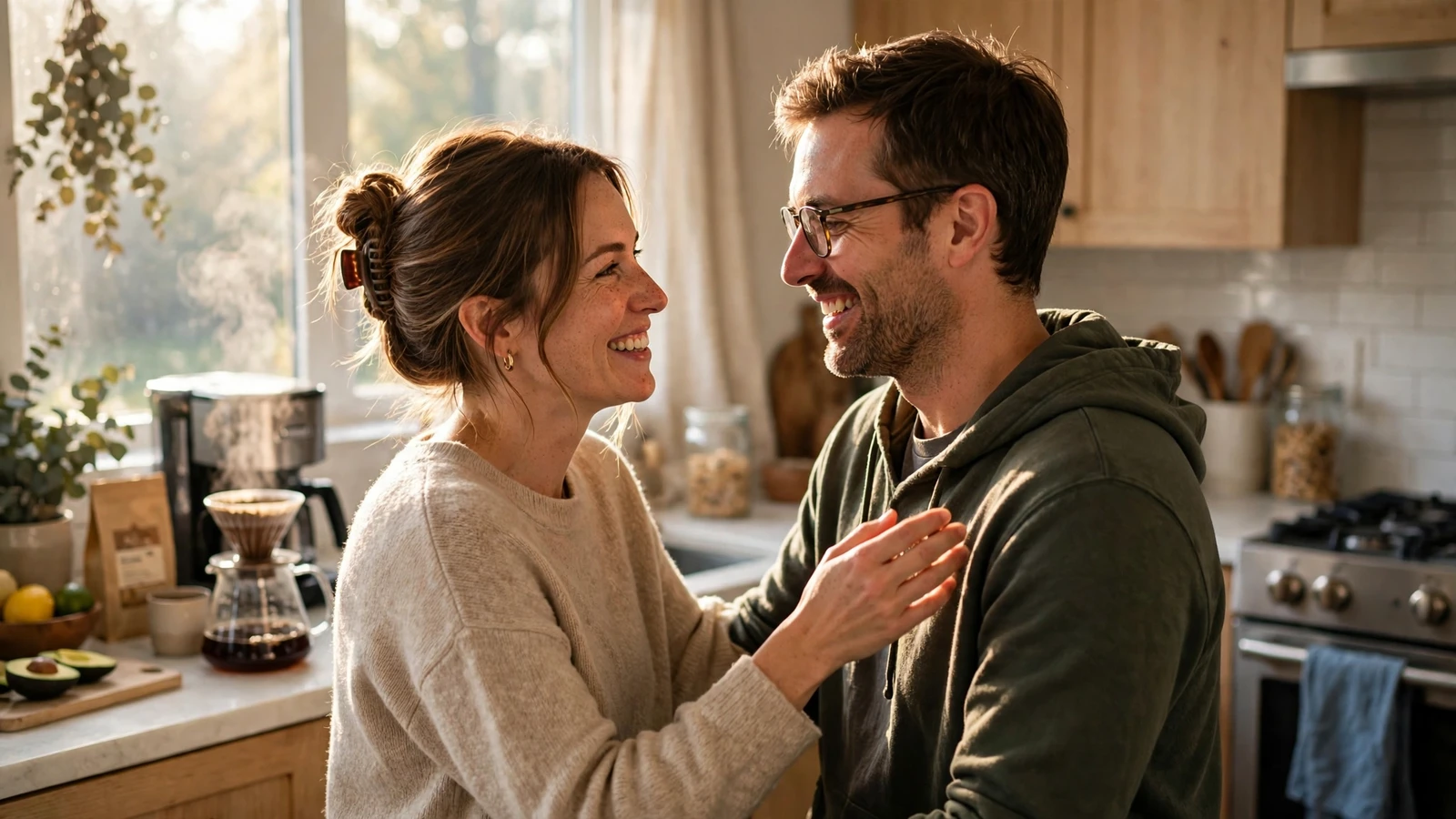
The 30-Second Good Morning Ritual Couples Love
It takes thirty seconds. Eyes up, phone down, one real sentence to the person you married. That is the whole ritual, and couples who do it say it changes the day in a way that feels out of proportion to the effort. Not because thirty seconds is magic, but because most mornings give a spouse less attention than the weather app gets.
Think about your own morning. The alarm goes off, one of you grabs the phone, the other heads for the shower, and the first real words between you might be about trash day or a missing sock. Nobody means to be cold. The morning just moves fast, and the person closest to you becomes the easiest one to skip. By the time you both leave the house, you have spent more focused attention on your inbox than on each other, and that quiet start follows both of you into the day.
A good morning ritual fixes that with almost no effort. It does not ask for a new schedule, a new habit tracker, or a 5 a.m. wake-up. It asks for thirty seconds of actual attention, before the day starts pulling you apart.
The greeting itself

Here is the ritual, exactly as couples describe it. When you first see each other in the morning, stop what you are doing for a moment. Put the phone face down. Look at your partner, really look, and say one sentence that is true and specific to them. Not “morning.” Not a grunt. One real sentence.
It can be simple. “Good morning. You look rested, and I am glad you are here.” It can be warm. “Good morning. I slept better with you next to me.” It can be small and honest. “Good morning. I am still half asleep, but I am happy it is you I woke up next to.” The sentence does not need to be clever. It needs to be meant, and your partner can tell the difference between a line you mean and a line you recite.
The phone part matters as much as the sentence. A greeting delivered while scrolling is not a greeting. It is a notification with a voice attached. Your partner knows, instantly, whether they have your eyes or just your mouth. Put the phone down for thirty seconds. The messages will still be there at 7:05, and they will not love you back.
Some couples add a touch: a hand on the shoulder, a kiss on the forehead, a hug that lasts a beat longer than a polite one. Touch is optional, and the sentence is the core. If mornings in your house are rushed, do it in the kitchen while the coffee brews, the same small window where a morning coffee ritual already slows couples down. Thirty seconds fits anywhere. That is the point.
Try it tomorrow with words like these: “Good morning. Before the day gets busy, I want you to know I am glad I get to start it with you.” Say it once, mean it, and watch what happens to your partner’s face. Most people soften in a way that tells you everything about how long it has been since someone greeted them first, before the phone, before the news, before the to-do list.
Why mornings go silent

Mornings go silent for three ordinary reasons, and none of them mean your marriage is in trouble. The first is rush. Two people, two schedules, one bathroom, and a clock that does not forgive. When every minute is spoken for, attention feels like a luxury, and spouses spend it on the kids, the commute, and the boss, in that order.
The second is routine. After years together, you know each other’s mornings by heart, so you stop noticing them. You assume your partner knows you love them, because you loved them yesterday and the day before. But a feeling nobody says out loud starts to feel like a feeling nobody has, and routine turns a warm marriage quiet without either partner choosing that.
The third is harder to admit, and it is worth naming. Sometimes mornings go silent because something is unresolved from the night before, a sharp word, a cold shoulder, a conversation that ended too soon. Silence in the morning can be a way of carrying a fight forward without saying so. If that sounds familiar, the greeting matters even more, because it breaks the pattern before the day cements it. A soft first sentence does not solve the argument, but it tells your partner that the argument is not the whole story.
The good news is that each of these causes loses ground to the same small fix. You do not need to fix your schedule, your marriage, or your feelings before you start. You just need to greet your spouse like they matter more than your phone, because they do, and because they need to hear it from you.
A short, honest check-in once a week helps too, the kind described in a weekly marriage check-in, where you can say out loud whether mornings feel warm or rushed. But the daily greeting is what carries the week, one morning at a time.
Rebuild it in a week

You can rebuild a morning greeting in seven days, and the plan is deliberately easy, because a hard plan dies by Wednesday. Here is one version that works:
Day one: agree on it together, tonight, before bed. Say, “Can we try greeting each other first in the morning, before our phones, just for a week?” A shared yes beats a solo surprise.
Day two: set both phones face down the night before, on the dresser, not on the nightstand. Distance makes the first thirty seconds easier.
Day three: pick your sentence tonight, so you are not inventing one while half asleep. Write it on a sticky note if that helps. Nobody will grade you for it.
Day four: add the touch, if you both like it. A hand squeeze, a forehead kiss, a hug that lasts one breath longer than usual.
Day five: notice what changed, and say so at breakfast. “I liked our mornings this week” is a small sentence that keeps the ritual alive.
Day six: if one morning falls apart because of a late alarm or a sick kid, skip it without guilt and restart the next day. A ritual that forgives a missed morning lasts. A ritual that demands perfection does not.
Day seven: decide together whether to keep it. Most couples do, because by day seven the greeting feels stranger to skip than to do, and mornings feel a little warmer for almost no cost.
If your partner forgets, do not keep score. Greet them anyway. A ritual that only works when both people remember it perfectly is a test, not a gift. The partner who keeps greeting, even on the mornings the other forgets, is the one who turns thirty seconds into a habit that lasts for years. Couples who keep small rituals like this often find their evenings warm up too, the way an evening ritual for couples closes the day the way a greeting opens it.
Frequently asked questions

What if my spouse thinks a planned greeting feels fake?
That worry is fair, and the answer is that planned does not mean fake. Birthday cards are planned, and nobody calls them fake. The greeting feels real when the sentence is true and specific, not when it is spontaneous. Start with something you honestly feel, even if it is small, and let the habit grow into something natural over a week or two.
What if we wake up at different times?
Greet each other at the first overlap, not at the first alarm. If one of you rises at five and the other at seven, the ritual happens at seven, when you first see each other, even if one of you is already dressed. If your schedules never overlap in the morning, leave a short note by the coffee maker. A written sentence, read first, counts, and it still beats a morning with no greeting at all.
Does it have to be every single morning?
Aim for most mornings, not perfect ones. A ritual kept five days out of seven still changes the tone of a week. The danger is not a missed morning. The danger is letting one missed morning become a reason to quit. Miss, forgive, restart, and keep going. That rhythm is what turns thirty seconds into a lasting part of your marriage.
Thirty seconds. Eyes up, phone down, one real sentence. It will not fix everything in a marriage, and it does not claim to. But it will make your spouse feel seen before the world gets a turn, and that feeling has a way of lasting past breakfast, past the commute, and into the evening, when you see each other again. What would your first sentence be tomorrow morning? Tell us in the comments. Your line might be the one another couple borrows to start their day better.
Keep Reading
If this hit home, these might too:
- The morning coffee habit that starts the day on the same side
- A weekly check-in that keeps small resentments from growing
- An evening ritual that helps couples reconnect after a long day
Going through something similar?
Share your experience anonymously with the Ever After Daily community. Every story is read by a human editor before anything is published.
Share Your Story


