The Quiet House: First Week After the Kids Leave
The last box is out the door, the house is quiet, and dinner is for two. What the first week after the kids leave feels like, and three small things that help.

The Quiet House: First Week After the Kids Leave
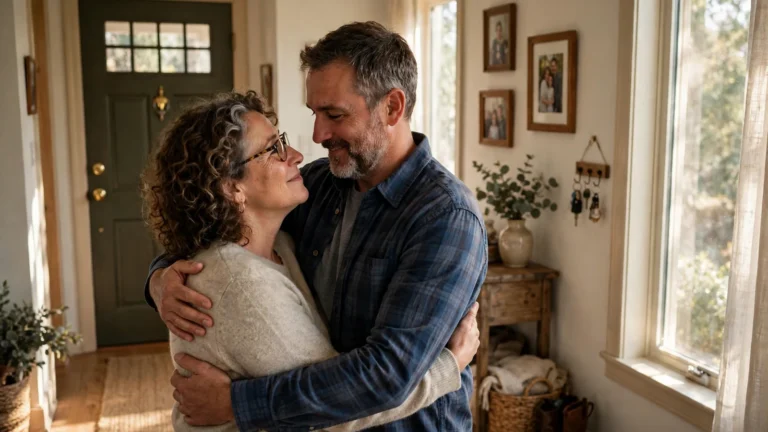
The car pulls away, and the house does something it has not done in twenty years. It goes quiet. Not the quiet of a late night, when everyone is asleep upstairs and the dishwasher hums in the dark. This quiet is different. It is the quiet of rooms with nobody in them, of a driveway with one car instead of three, of a front door that nobody is about to burst through asking what is for dinner.
You stand in the hallway for a minute, maybe longer, holding the grocery bag you carried in on autopilot. The house feels bigger than it did this morning. It feels like it is waiting for someone to come home, and you have to remind yourself that nobody is coming. The kids left. The house is yours again. And the first thing most couples feel, before anything else, is how strange that sounds when you say it out loud.
That first week is not one feeling. It is a dozen small ones, stacked on top of each other. Relief, then guilt about the relief. Sadness, then a laugh at something silly on the radio. A room that looks wrong without a backpack on the floor. A table set for four out of habit. If your first week feels messy like that, it is not a sign that something is wrong with your marriage. It is a sign that a whole chapter just closed, and the two of you are standing in the doorway of the next one, still holding the box.
The last box out the door


The last box is always smaller than you expect. After the furniture, the suitcases, the carloads of clothes and books and chargers, there is one last box. It holds the things nobody could sort until the end: a phone charger, a chipped mug, a pair of shoes, a framed photo that lived on the dresser since middle school. You carry it out to the car, and that is the moment it hits you. This is the last one. There is no next trip.
The sound of the house after the car leaves is the thing couples tell us about most. The refrigerator clicks on. The clock ticks in the hallway. A floorboard creaks where you stepped, and nobody else is there to hear it. The house sounds the way it sounded before the kids came, if you can remember that far back, and that is part of the strangeness. You have been here before, the two of you, in a quiet house, and it feels like meeting an old version of yourselves.
Do not rush to fill the quiet that first day. Leave the kid’s room as it is for now. Sit on the couch with a cup of coffee, or stand at the kitchen counter, and let the house settle. Some couples say the hardest hour is the first one after the door closes. After that, the quiet starts to feel less like an empty space and more like room to breathe. The couples who do well in that first week are not the ones who fill every minute. They are the ones who let the quiet sit there for a while, and then decide together what to do with it. If you want a steadier way to face that quiet, the advice in our empty nest guide starts with exactly this: one honest conversation, before any big decisions.
The first dinner for two

The first dinner for two is where the week gets real. You cook too much food, because your hands still think they are feeding a crowd. The pot is too big. The salad bowl could feed six. You put the plates down, you sit across from each other, and the table feels too long and too quiet at the same time.
The quiet at the table is the hard part. For years, dinner came with noise: someone talking about practice, someone asking for a ride, someone stealing fries off your plate. Now it is just the two of you, the clink of forks, and the space where the talk used to be. Do not panic if the first dinner feels awkward. It is awkward. Two people who have spent years talking through their kids have to learn how to talk straight to each other again, and the first dinner is the first lesson.
Here is a trick that helps. Cook less, and cook something you both actually like. One pan, one salad, one glass each, and the good plates you usually save for company. Say this when you sit down, out loud: “Tonight we eat what we want, and we talk about whatever comes up.” That one sentence takes the pressure off. You are not performing a romantic dinner. You are two people eating together, which is something you used to do every day before life got crowded.
Some couples find the second dinner easier than the first, and the third easier still. By the end of the week, the table starts to feel like yours again. The food gets smaller, the talk gets longer, and the chairs that used to hold kids start to hold a different kind of evening. A small evening ritual after dinner, even just tea on the couch, can give that quiet table a second act instead of letting it end with the plates.
Three small things that first week

The first week does not need a grand plan. It needs three small things, and they work best when you do them on purpose, together, in this order.
One walk. Not a hike, not a workout, just a walk around the block after dinner, the way you used to before the kids’ schedules ran the evenings. Leave the phones at home. Walk slow enough to talk, and let the talk go wherever it goes. Some nights the talk will be about the kids, and that is fine. Some nights it will be about nothing at all, and that is fine too. The walk is not about the topic. It is about two people moving in the same direction again.
One honest talk. Pick a time, sit down together, and say the thing you have both been thinking but neither has said. It might be “I miss them already.” It might be “I am relieved, and I feel bad about it.” It might be “I do not know what we do now.” Say it plainly, then listen while your spouse says their version. No fixing, no advice, just the truth out on the table between you. That one talk does more than a week of small talk, because it tells you both that you are on the same side of this change.
One plan. Pick one thing to look forward to, and put it on the calendar before the week ends. A day trip on Saturday. A restaurant you have meant to try. A project in the yard, or a class you take together. It does not have to be big. It has to be yours, and it has to be on the calendar, in ink, so the week ahead has something in it besides empty rooms. A weekly check-in can hold this plan in place; a simple weekly check-in is the habit many couples use to keep the small plans from slipping away.
One walk, one talk, one plan. That is the whole first week, and it is enough. The house will still be quiet next week, and the week after. But by then the quiet will start to sound less like something you lost and more like something you get to use.
Frequently asked questions
How long does the empty feeling last after the kids leave?
It comes in waves, not in one long stretch. The first week is the sharpest, then the feeling eases and returns on ordinary days, like a birthday or a Tuesday that used to be practice night. Most couples say the house starts to feel like theirs again within a few weeks, once new routines take hold.
Is it normal to feel relieved when the kids move out?
Yes, and the relief is not a failure of love. You raised them to leave, and the house going quiet means the job worked. Relief and sadness can sit at the same table. Saying the relief out loud, to each other, keeps it from turning into guilt you carry alone.
Should we change the kid’s room right away?
Wait a few weeks. The room holds a lot of feeling in the first days, and a rushed change can feel like erasing the years. Live with the quiet first, talk about what you want the room to become, and change it when the plan feels like a beginning instead of a reaction.
What did your first week sound like after the kids left, and what was the first small thing you did together? Tell us in the comments, if you are willing. Your answer might be the exact thing another couple needs to hear tonight.
Going through something similar?
Share your experience anonymously with the Ever After Daily community. Every story is read by a human editor before anything is published.
Share Your Story