The Couple Who Still Has a Date Night at 75
At 75, they still take the same booth every Friday night. A warm look at one couple’s date night, the week they almost skipped it, and why it still matters.
The Couple Who Still Has a Date Night at 75
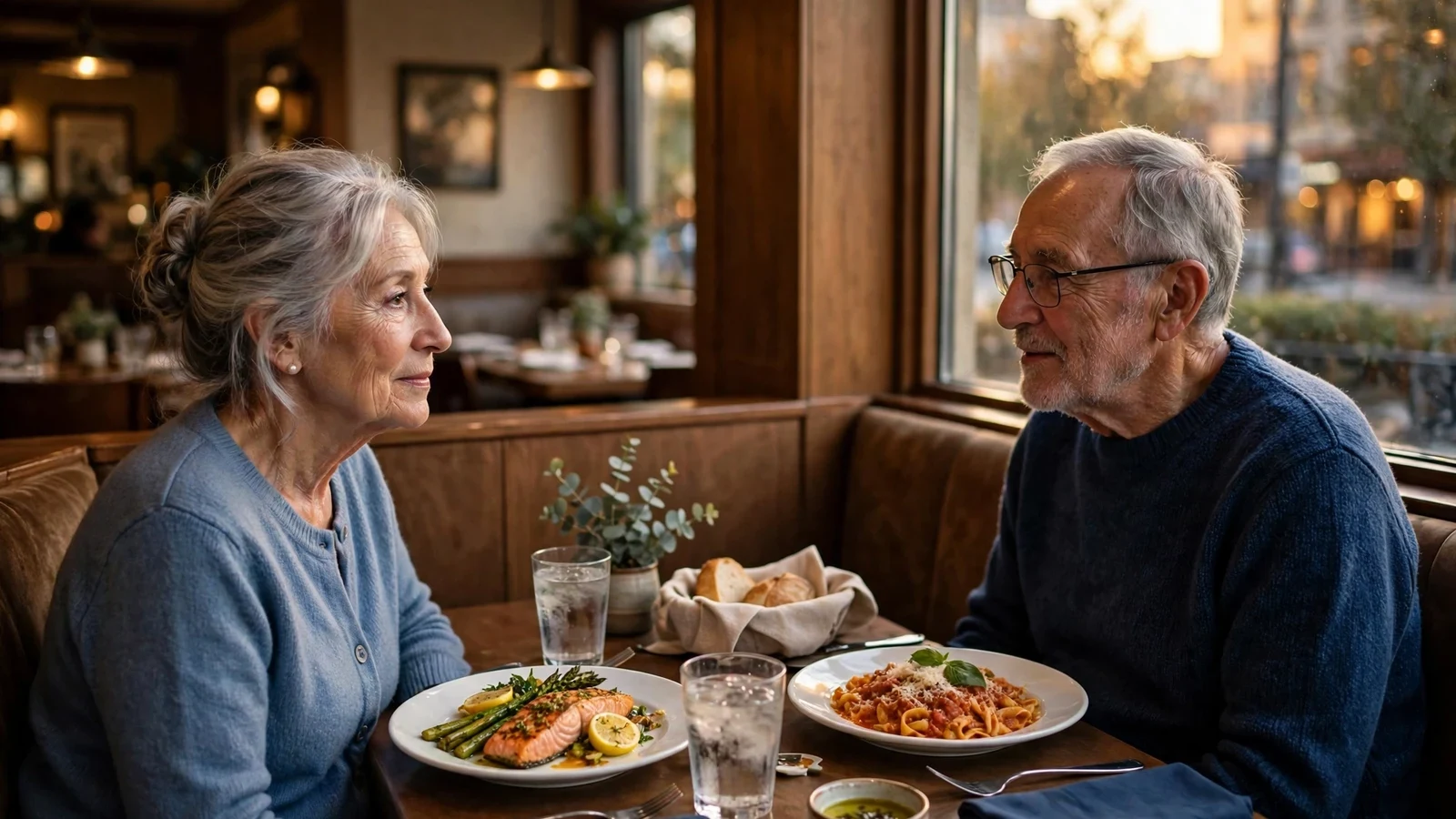
Every Friday at half past five, June slides into the corner booth at Mario’s and hangs her coat on the hook by the window. Harold follows with the menus, even though they both know the menu by heart, and he orders the same thing he has ordered for eleven years: the chicken piccata, extra lemon, no olives. June gets the salmon when she feels like fish and the pasta when she does not. Rosa, the waitress, stopped writing the order down years ago.
Both seventy-five, married fifty-two years, they raised three kids in a house twenty minutes from this restaurant, and for most of those years Friday night meant a babysitter, a rushed dinner, and one eye on the clock. When the last kid left, the Friday dinner stayed. It just got slower. Now they arrive early on purpose, because the early crowd is quieter and the light through the window is the color of tea, and they stay until the plates are cleared and the coffee has gone cold twice.
People who see them assume the date night is the point. The dinner is only the setting. The point is that for one evening a week, they are not the couple who manages the house, the pills, the plumber, the grandkids’ birthday money. They are June and Harold, two people at a table, talking the way they talked before any of that existed. The booth is where that version of them still lives.
The booth that knows their names
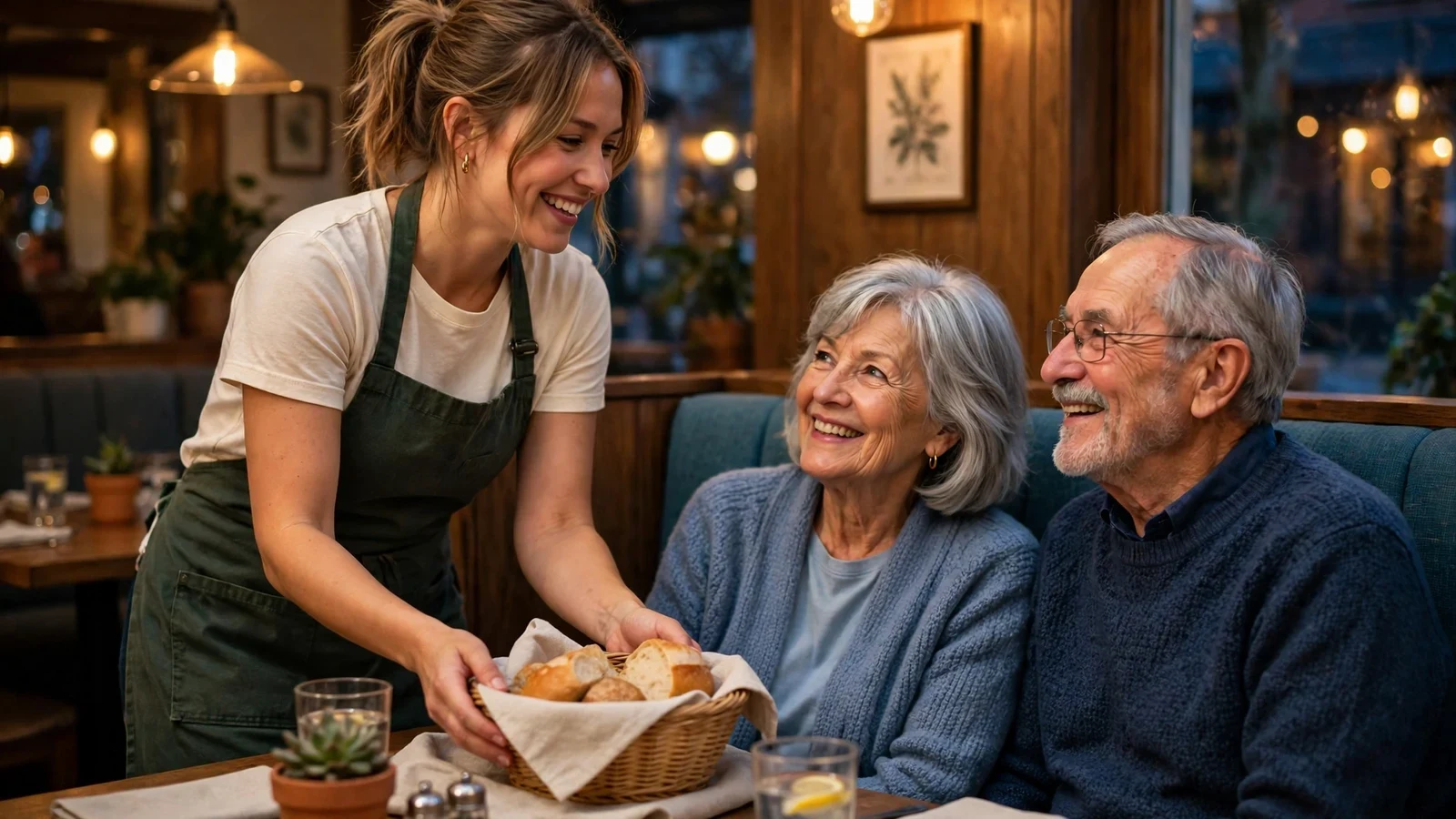
The booth is the third one from the door, on the window side, with the cracked vinyl on the left cushion that Harold always takes. They did not pick it for the view. They picked it because on their first Friday back after the kids left, that was the table that was open, and it became theirs by habit, the way a chair at the kitchen table becomes yours without anyone ever deciding it.
Rosa has worked at Mario’s for nine years. She knows Harold wants the bread basket before the water, June likes the lemon in a separate dish because she squeezes it herself, and they split one dessert and argue, lightly, over who gets the last bite. She leaves the check face down and comes back for it when Harold taps the edge of the table twice, his signal that they are ready and not a second sooner. Nobody taught Rosa any of this. She learned it by watching them, the way you learn anything about a couple you have seen every week for years.
There is a small comfort in being known by a place. June says the booth feels like a room in their own house, except someone else does the dishes. Harold says it is the one chair in town that does not ask him to fix anything. They have eaten at fancier restaurants, on anniversaries, on trips, at their children’s houses with the good plates. They always come back to the booth, because it never asks them to be impressive. It only asks them to show up.
The regulars notice, too. The man who runs the hardware store sits two booths down most Fridays and waves his fork at them. The woman with the poodle who eats at the counter told June once that she hopes to have what they have someday, and June laughed and said, “It is mostly showing up, dear. The rest is gravy.” Fifty-two years turns out to be a long series of Friday nights, most of them ordinary, all of them counted.
The date itself: early dinner, slow walk, same jokes
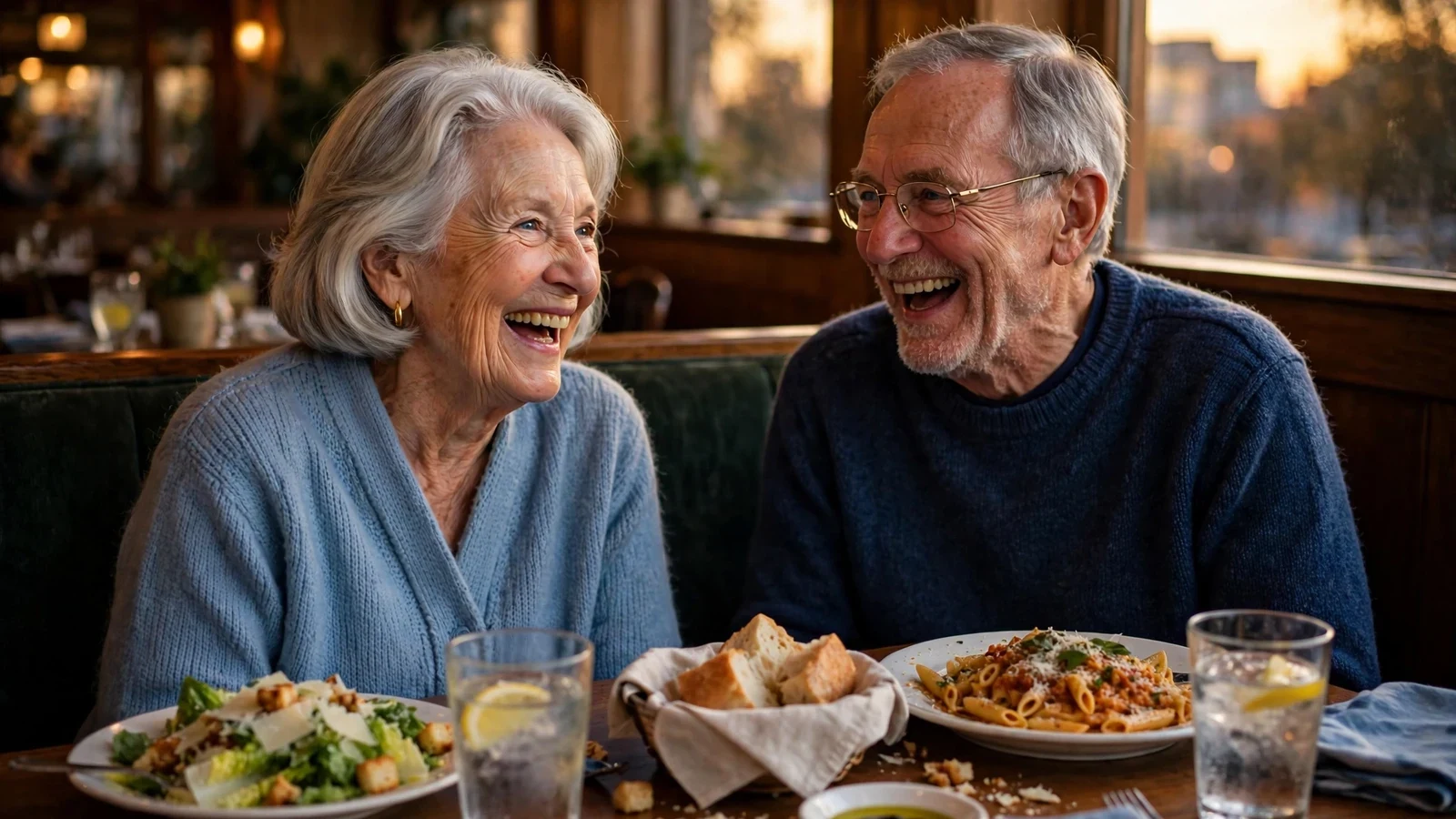
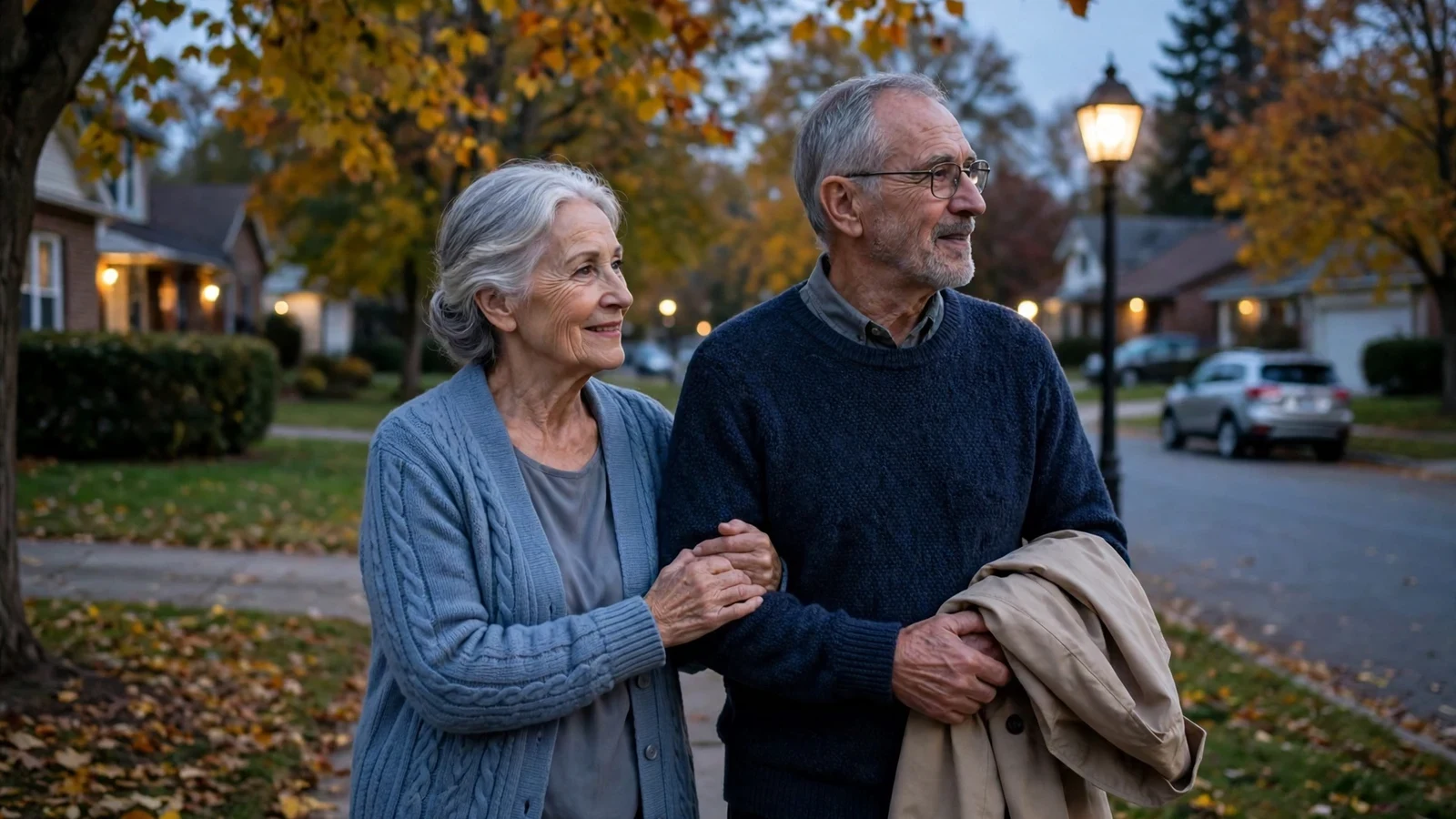
The date runs on a shape so fixed you could set a watch by it, and that is exactly why it works. They order, they eat slowly, they talk. Then they pay and walk home, nine blocks away, because the walk is the second half of the date. Harold carries June’s coat over his arm, and June holds his elbow on the uneven sidewalk by the park. They pass the same houses, the same dark windows, the same dog barking from behind the same fence, the same jokes about that dog, four years running.
The talk on a date night is different from the talk at home. At home it is a list: the roof, the prescription refill, the grandson’s trumpet recital, the light bulb in the hallway that needs changing. At the booth, the talk wanders. June tells Harold about the woman at the library who shelved the same book twice. Harold tells June about the neighbor who tried to fix his own gutter and now owns a ladder he is afraid of. They talk about the kids the way you talk about people you love who live far away, with fondness and without worry attached. They talk about the old days lightly, the way you turn over a photograph and put it back.
The jokes are the same ones, and that is the point of them. Harold still says, “Extra lemon, no olives,” in a voice like a man ordering for a king, and June still rolls her eyes and says, “You have ordered that eleven years, Harold, and it has never once come with olives.” He still pretends the bread basket is a race, and she still wins it by taking the warm roll first while he is reading the specials board he has already memorized. A joke told a hundred times carries a small proof inside it: you have a history together, and the history still makes you laugh.
They are home by eight. June puts the kettle on. Harold finds the evening news, and they sit on the couch, and the date is over, and the week feels complete in a way it does not when Friday passes without it. The evening is plain, and nobody would film it. A marriage that has lasted fifty-two years is built from Friday nights like this one, that happen whether you feel like it or not, and from a walk home in the dark with someone holding your elbow.
If the walk home sounds like the best part, it might be, and a simple evening ritual for couples does the same job at home: a small repeated ending to the day that belongs to both of you. And if the date itself feels out of reach on a tight budget, a cheap date night at home can hold the same shape, a table, a meal, and an hour with no chores in it.
The week they almost skipped it
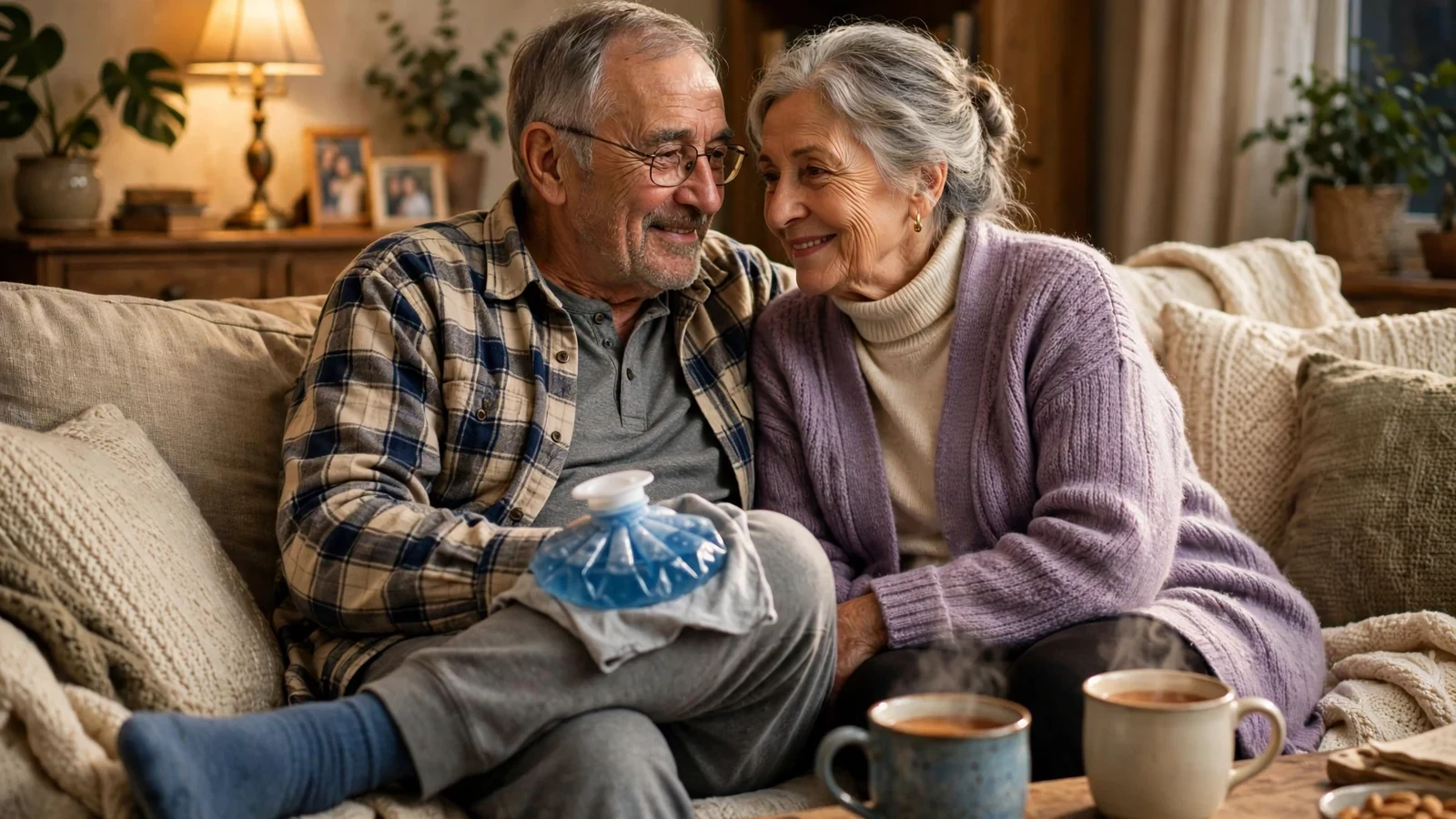
It was a February, cold and wet, and Harold had a knee that had been bothering him since Christmas. The doctor had said to rest it, and rest it meant the couch, the ice pack, the pills lined up on the kitchen counter in their little plastic box. Friday came, and Harold said, “Maybe we skip this week,” and June said, “All right,” and they both knew she did not mean it and he did not either.
They stayed home. June made soup, Harold iced his knee, and they ate at the kitchen table. The soup was good, the evening was fine, and it was not a date. They watched the news and went to bed at nine. On Saturday, June caught herself looking at the clock at half past five and feeling annoyed at nothing, and Harold caught himself reaching for his coat before he remembered they were not going anywhere.
The next Friday, the knee was no better, and the rain was worse, and Harold said, “Let’s go anyway,” and June drove, and they took the booth, and Rosa brought the bread basket without being asked, and Harold ordered the chicken piccata, extra lemon, no olives, and the whole week exhaled. June said later that the skipped week taught her something the fifty years of going had not: the dinner mattered less than the decision to go, and the meal was only where the decision happened.
That is the part couples miss when they think about starting a date night late in life. They imagine they need the right restaurant, the right budget, the right energy. What they need is a night, a place, and a promise to each other that the night counts even when the week has been hard. A weekly check-in is the same kind of promise, made at the kitchen table instead of a booth: a short, regular time that belongs to the marriage, not to the errands. And if you are only now finding your footing in the quiet house, the first week after the kids leave is as good a time as any to pick a night and claim it.
June and Harold still go every Friday. The knee still bothers Harold when it rains. Rosa still brings the bread basket first. The dog still barks from behind the same fence. Nothing about the date has changed in eleven years, and that is the whole story. They show up, order the same things, walk home in the dark, and do it again next week. A marriage does not need a new plan every year. Sometimes it needs one good plan, kept.
Frequently asked questions
Do they ever get tired of the same restaurant?
They say no, because the restaurant is only the setting. The point is the booth, the hour, and sitting across from each other with nothing to fix. A different restaurant would give them a different menu, not Rosa, or the cracked vinyl, or eleven years of Friday nights in one place.
What if we cannot afford a weekly date night?
Then do not buy a weekly date night. Cook the meal at home, set the table like it matters, and guard the hour the way June and Harold guard theirs. What matters is sitting down together, on purpose, once a week, with the phones in another room and the chores waiting until morning.
How do you start a date night habit this late in a marriage?
Pick one night, one place, and one time, and keep it for a month before you judge it. The first night will feel stiff, the second easier, and by the fourth you will have a joke about the bread basket and the habit will start carrying itself. Start small, start close to home, and let the night be ordinary. Ordinary is what lasts.
If you and your spouse had a Friday booth, a table that knew your names, what night would it be, and what would you order first? Tell us in the comments, if you are willing. Your answer might be the nudge another couple needs to pick a night of their own.
Going through something similar?
Share your experience anonymously with the Ever After Daily community. Every story is read by a human editor before anything is published.
Share Your Story