
Our Marriage Got Better in a Smaller House
They traded four bedrooms for two and lost the spare room, the junk drawer, and the distance. A warm look at how a smaller house brought one couple closer.
Our Marriage Got Better in a Smaller House
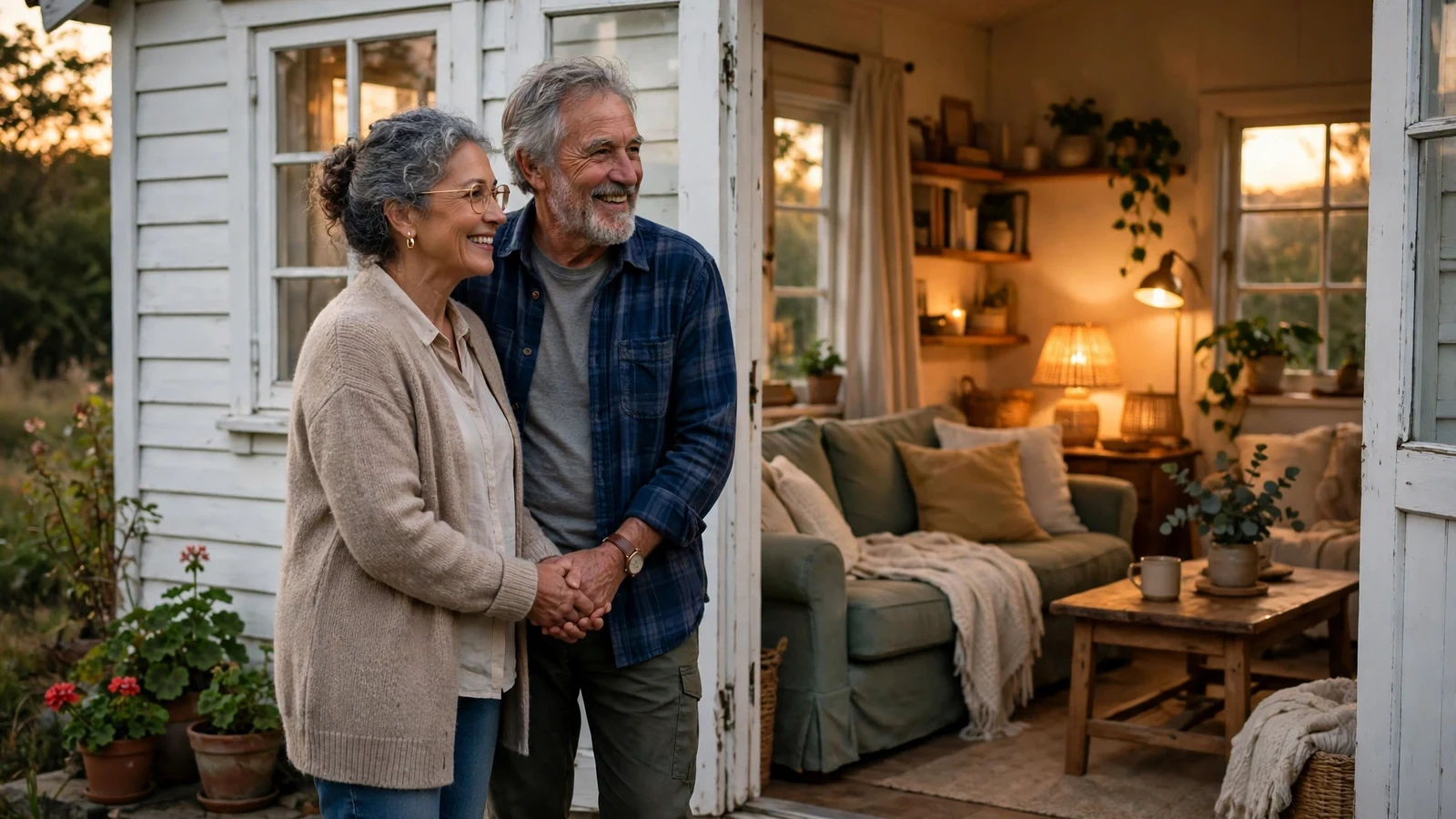
Ray and Carol sold the four-bedroom house on a Tuesday in March, signed the papers at a folding table in the title office, and drove home to a two-bedroom cottage with a kitchen the size of their old pantry. The movers had already left. The boxes were stacked in the living room, the couch was against the wrong wall, and Carol stood in the doorway with her keys still in her hand and said, “Well. There is nowhere left to hide.”
She meant it as a joke. Ray laughed. Then they both stood there a minute longer than a joke needed, because it was also true.
They had lived in the big house for twenty-six years. The kids grew up there, moved out, and the house kept growing around them in the way empty houses do. A bedroom became a storage room. The storage room became a place where broken lamps went to wait. Carol had a sewing room she used twice a year. Ray had an office where he paid bills and avoided conversations he did not want to have. They loved each other, they said so, and they were spending most evenings in separate rooms, which is a strange way to love someone under the same roof.
The cottage was not a dream house. It was a plain white house with a small yard, a kitchen with one oven, and a living room where the couch faced the television and the television faced the couch, and that was the whole floor plan. They bought it because the mortgage was half what they had been paying, because the yard took twenty minutes to mow, and because Carol was tired of cleaning rooms nobody slept in. They did not buy it to fix their marriage. They bought it because they were tired. The marriage part happened anyway.
The move: what stayed and what went

The move took three weekends and one rented truck, and it sorted their marriage the way a move sorts everything: by forcing a decision on each thing you own. They kept the kitchen table where the kids did homework. They kept the blue armchair Ray falls asleep in. They kept the coffee mugs with the chipped handles, because Carol said a mug you have held for twenty years fits your hand and a new one does not, and Ray did not argue, because she was right.
What went was harder to say out loud. The treadmill went, because neither of them had used it since 2019 and it had become a very expensive place to hang coats. The dining room set went, because a table for eight in a house for two is a piece of furniture that only reminds you who is not coming home. The boxes of old school papers went to the kids, with a note that said, “Yours now. Love, Mom and Dad.” Carol cried over one box of baby clothes and kept exactly three pieces, folded small, in a drawer. The rest went to a young mother down the street, who cried a little too, for different reasons.
Ray said the hardest part was not the lifting. It was standing in the spare bedroom and admitting that the room had been his way of leaving a conversation without leaving the house. “I would go in there to check email,” he said, “and I would stay in there for two hours, and I would call it work.” Carol said she had done the same thing with the sewing room. They stood in the empty bedroom and laughed, and then they did not laugh, because it was the truest thing either of them had said in a while.
They made a rule for the new house that night, sitting on the floor with pizza boxes between them: nothing in this house gets a room of its own unless both of us use it. One spare room became a guest room with a real bed, not a storage room with a bed in it. The other became a room they share, with Ray’s desk on one wall and Carol’s sewing table on the other, and a door they almost never close. If you are living in a house with rooms you use to get away from each other, a weekly marriage check-in can do the same work the move did: a short, regular time when you sit down and say what is actually going on.
One kitchen, one couch, no hiding places
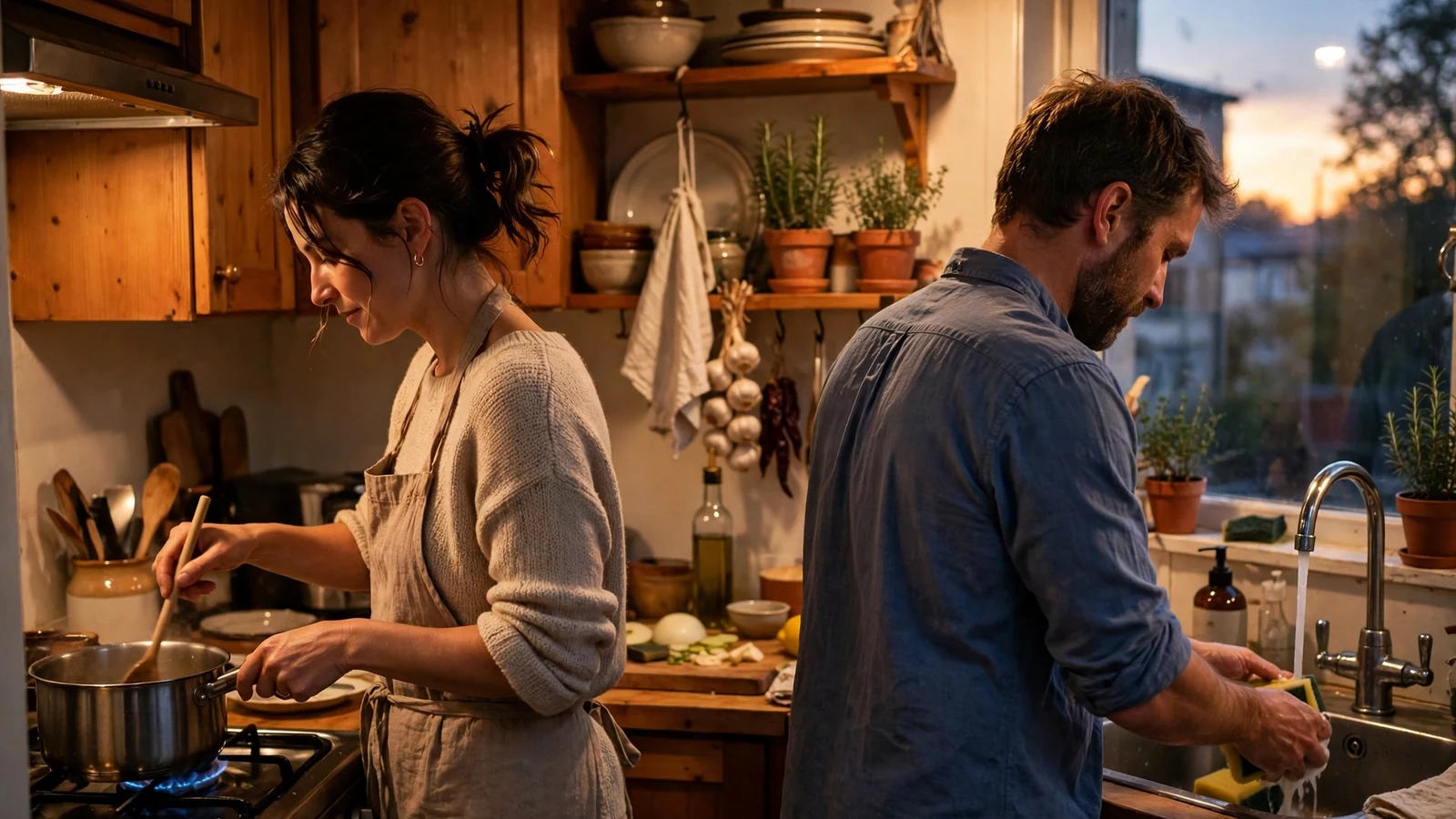
The cottage kitchen fits two people if one of them is at the stove and the other is at the sink, and it fits two people badly if both of them are trying to cook. Carol cooks. Ray chops, washes, and dries, and they have worked out a small dance around each other that involves a lot of “behind you” and “your turn” and stepping aside at the exact right second. In the old house, Carol cooked alone while Ray watched the news in another room. Now he is in the kitchen because there is nowhere else to be while dinner is happening, and she says the food tastes better, which Ray says is nonsense, and then he admits she might be right.
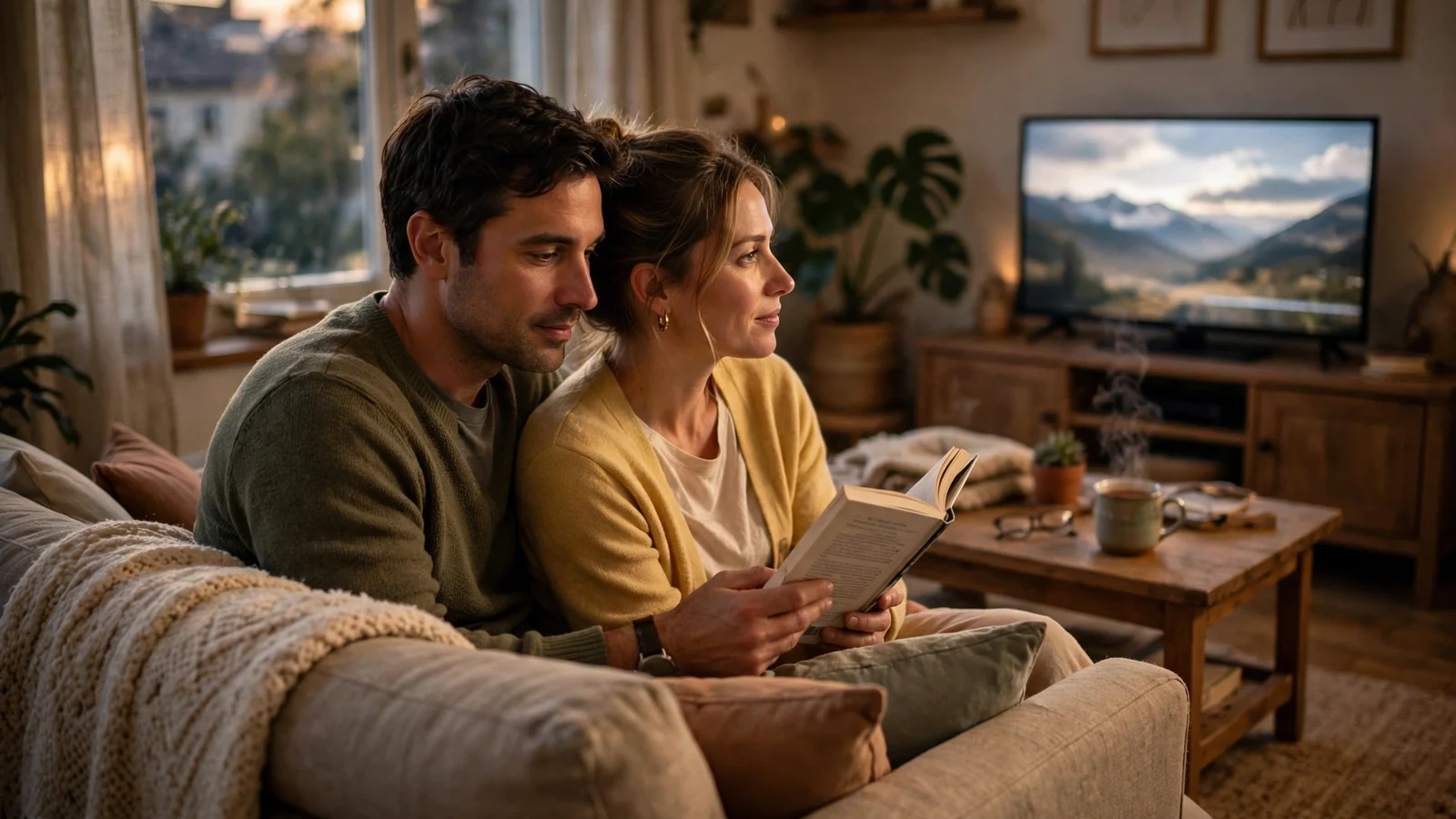
The couch is the other room. It is a three-seat couch in a living room that holds a couch, a chair, and a television, and nothing else. There is no second couch. There is no den. When Ray wants to watch the ball game and Carol wants to read, they sit on the same couch, and the game plays quietly, and Carol reads with one ear on the game, and Ray explains the bad call to her, and she nods without looking up. It sounds like nothing. It is the whole point. In the big house, Ray watched the game downstairs and Carol read upstairs, and at ten o’clock they met in the hallway like roommates who happened to share a last name.
The first month, the closeness felt crowded. Ray bumped into Carol three times in one morning and said, “This kitchen is too small,” and Carol said, “The kitchen is fine. We are just used to being apart.” She was right again, and Ray has stopped keeping score on that. By the second month, they stopped bumping into each other, because they had learned each other’s patterns: who stands where, who moves first, who pours the coffee while the other gets the mugs. A small house teaches you your spouse’s habits the way a big house lets you forget them.
They still fight. The fights are shorter now, because there is no room to storm off to. The one time Ray tried, he went to the guest room, sat on the bed for four minutes, and came back out, because the guest room is eight steps from the living room and the silence in it felt ridiculous. “I could hear you making tea,” he told Carol later, “and I realized I would rather be out here, annoyed, than in there, alone.” Carol said, “Good. The tea was for you anyway.” Couples who want a gentler way to argue at home often find that a simple evening ritual for couples gives a hard day the same soft landing: a small repeated habit that says the day is over and you are still on the same side.
The thing they did not expect
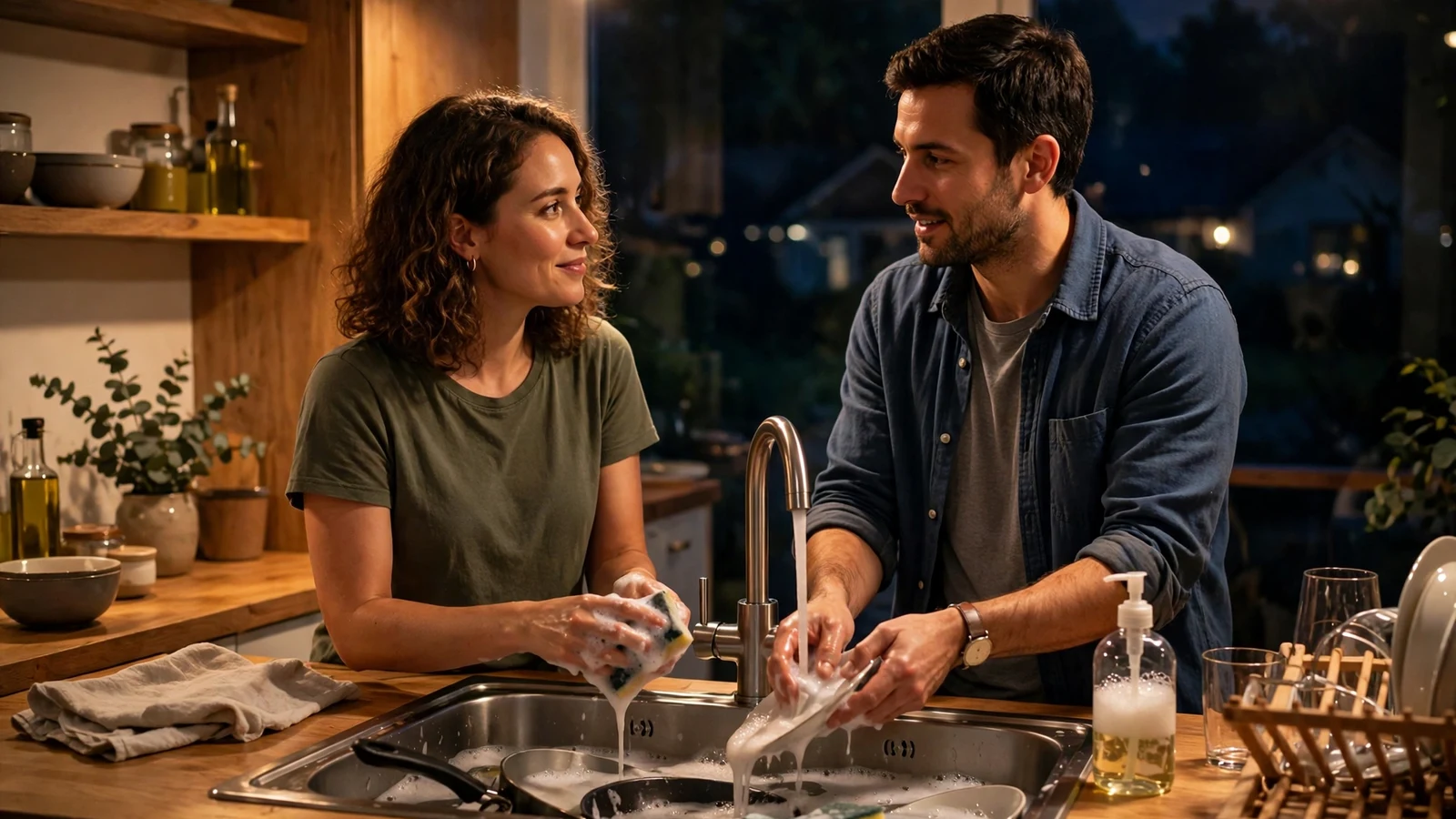
What Ray and Carol did not expect was the talking. They talk more now, and about smaller things, and the smaller things turn out to matter more than the big ones did. They talk about the leak under the sink, and whether the roses need cutting back, and what the neighbor said about the fence, and somewhere inside those small talks, the bigger talks slip in without an announcement. Ray told Carol last month that he worries about getting older, and he said it while they were washing dishes, because the dishes gave his hands something to do while his mouth said a hard thing. Carol told Ray she sometimes misses the kids so much it wakes her up at night, and she said it while they were folding laundry on the bed, because the laundry gave her a reason to stay in the room.
In the big house, those talks waited for a moment that never came. There was always a better room to be in, a better time to bring it up, a door to close. In the cottage, the talk happens while you are already doing something else, and that is what makes it possible. You do not sit down across a table and say, “We need to talk.” You say, “Hand me the soap,” and then you say the other thing, and the soap is still in your hand, and the room is still warm, and nobody has to make a speech.
They fight less, too, and not because the house made them nicer. They fight less because the small stuff gets said when it is still small. In the old house, Ray would leave his shoes in the hallway for a week, and Carol would say nothing for six days, and on the seventh day she would say something about the shoes that was really about everything else. Now she says, “Shoes, please,” on day one, and he moves them, and the week goes on. The house did not teach them that. The house just took away the rooms where the small stuff used to wait and grow.
What they do differently now
They eat at the kitchen table every night, because the table is ten steps from the stove and there is no television in the kitchen to pull them away. They sit on the same couch after dinner, because there is only one couch, and Ray reads the paper out loud sometimes, the parts he thinks Carol will laugh at, and she does. They walk to the mailbox together in the evening, because the walk is short and the air is good and there is nothing else to do with the last light of the day.
They still miss the big house sometimes. Carol misses the pantry. Ray misses the garage. They miss the yard where the kids played, and they say so, and then they go back to the cottage, which is warm, and paid for, and full of the two of them. The house is smaller. The marriage is not. It is bigger in the only way that counts: there is less space between them now, and they like it that way.
If your house has rooms you use to get away from each other, you do not have to sell it to find out what Ray and Carol found. Try one room, one evening, one couch. Sit where your spouse is sitting, even when the other room is quieter. Tell us in the comments what happened on the first night you tried it, if you are willing. Your answer might be the nudge another couple needs to close the extra door.
Frequently asked questions
Does a smaller house really help a marriage, or is it just less cleaning?
It is mostly less cleaning, and that is part of the help. Fewer rooms means fewer chores, fewer bills, and fewer places to spend an evening apart. The house itself does not fix anything. It just makes it harder to avoid each other, and for Ray and Carol, that was enough to start talking again.
What if my spouse loves our big house and I want to downsize?
Do not make it a fight about square feet. Talk about what the house costs you in time and money, and what you would do with that time and money instead. Visit a smaller place together, sit in the kitchen, and see how it feels. If your spouse still says no, the talk itself matters. You have said what you want out loud, and that is a start.
How do you downsize without throwing away things that matter?
Keep what you use and what you love, and let the rest go to people who will use it. Carol kept three pieces of baby clothes and gave the rest to a young mother. The test is simple: if you have not touched it in a year and it does not make you smile when you hold it, it is taking up room that your marriage could use.
Going through something similar?
Share your experience anonymously with the Ever After Daily community. Every story is read by a human editor before anything is published.
Share Your Story


